Digestive Health Institute
by Dr. Muffi

Digestive Health Institute
by Dr. Muffi
When to Worry About Hernia Pain: Signs, Risks & When You Need Surgery
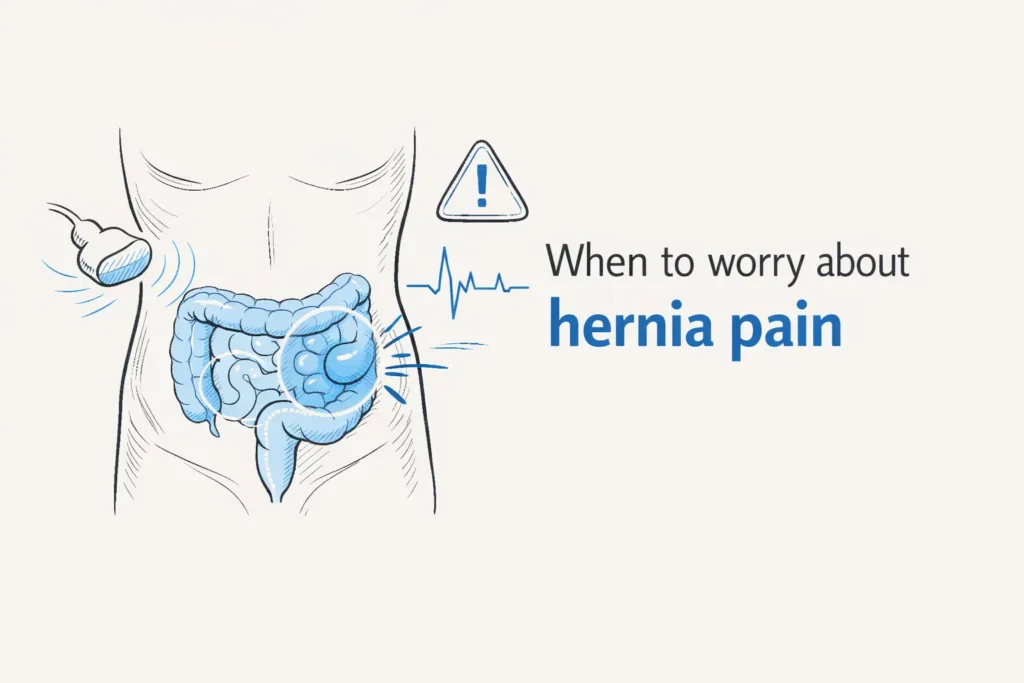
Hernias are a common medical condition, especially among adults, but not all hernias require immediate surgery. Many people live with mild symptoms for years. However, understanding when to worry about hernia pain is crucial because ignoring warning signs can lead to serious complications.
In this comprehensive guide, we will explain when to worry about hernia pain, what symptoms indicate danger, types of hernias, and when surgical treatment becomes necessary.
What Is a Hernia?
A hernia occurs when an internal organ pushes through a weak spot in the surrounding muscle or tissue. It most commonly affects the abdominal wall.
Common Types of Hernia
| Type of Hernia | Location | Common in |
|---|---|---|
| Inguinal hernia | Groin | Men |
| Umbilical hernia | Near belly button | Infants & adults |
| Hiatal hernia | Upper stomach | Adults |
| Incisional hernia | Surgical scar area | Post-surgery patients |
Is Hernia Pain Always Dangerous?
Not always. Mild discomfort or a visible bulge may not be immediately serious. However, knowing when to worry about hernia pain can help prevent emergencies.
When to Worry About Hernia Pain
Here are the key warning signs that indicate your hernia may be serious:
1. Sudden Increase in Pain
This is one of the first signs of when to worry about hernia pain.
| Symptom | What It Means |
|---|---|
| Sharp or worsening pain | Possible complication |
| Pain during movement | Increased pressure |
2. Bulge Becomes Hard or Cannot Be Pushed Back
| Condition | Risk Level |
|---|---|
| Reducible hernia (pushes back) | Low |
| Non-reducible (stuck) | High |
A stuck hernia may indicate incarceration, a serious condition.
3. Nausea and Vomiting
| Symptom | Possible Cause |
|---|---|
| Vomiting | Bowel obstruction |
| Nausea | Digestive blockage |
This is a major red flag for when to worry about hernia pain.
4. Fever with Hernia Pain
| Symptom | Meaning |
|---|---|
| Fever | Infection |
| Chills | Systemic response |
Could indicate strangulated hernia, a medical emergency.
5. Redness or Discoloration Around the Hernia
| Color Change | Concern |
|---|---|
| Red/Purple | Reduced blood supply |
| Darkening skin | Tissue damage |
6. Inability to Pass Gas or Stool
| Symptom | Risk |
|---|---|
| Constipation | Bowel blockage |
| No gas passage | Severe obstruction |
This clearly signals when to worry about hernia pain.
Serious Hernia Complications
1. Incarcerated Hernia
- Hernia gets trapped
- Cannot be pushed back
2. Strangulated Hernia (Most Dangerous)
| Feature | Description |
|---|---|
| Blood supply cut off | Tissue death |
| Severe pain | Emergency |
| Requires surgery | Immediate |
This is the most critical stage of when to worry about hernia pain.
What Causes Hernia Pain to Worsen?
| Trigger | Explanation |
|---|---|
| Heavy lifting | Increases pressure |
| Chronic cough | Weakens muscles |
| Obesity | Adds strain |
| Constipation | Straining worsens hernia |
When Should You See a Doctor?
You should consult a doctor if:
- Pain is increasing
- Bulge is growing
- Daily activities are affected
Early consultation helps determine when to worry about hernia pain before complications arise.
Diagnosis of Hernia
| Method | Purpose |
|---|---|
| Physical exam | Detect bulge |
| Ultrasound | Confirm diagnosis |
| CT scan | Complex cases |
Treatment Options for Hernia
In most moderate to severe cases, hernia surgery in Mumbai is the most effective and permanent solution. Treatment depends on severity. Many patients also explore whether can hernia be treated without surgery, but long-term solutions usually require intervention.
1. Watchful Waiting (Mild Cases)
Small, painless hernias
Regular monitoring
2. Hernia Surgery (Definitive Treatment)
Types of Surgery
Surgery Type | Benefits |
Laparoscopic | Minimal pain, faster recovery |
Open surgery | Used for complex cases |
Recovery After Hernia Surgery
Factor | Timeline |
Light activity | 1–2 weeks |
Full recovery | 3–6 weeks |
Post-Surgery Tips
Avoid heavy lifting
Maintain healthy weight
Follow doctor advice
Patients often ask is hernia surgery dangerous, but modern techniques make it a safe and effective procedure.
Prevention Tips
Tip | Benefit |
Maintain healthy weight | Reduces pressure |
Avoid heavy lifting | Prevents strain |
Treat chronic cough | Protects muscles |
Eat fiber-rich diet | Prevents constipation |
FAQs: When to Worry About Hernia Pain
- What are the dangers of a hernia?
A hernia can lead to complications like blockage or loss of blood supply (strangulation), which may become life-threatening if untreated. - Can you live your life with a hernia?
Yes, some people live with small hernias, but they can worsen over time and may eventually need treatment. - What are the danger signs for hernia?
Severe pain, a bulge that won’t go back in, redness, vomiting, and fever are warning signs that need urgent care. - How can I tell if I have a hernia?
A visible bulge, pain when lifting or coughing, and a heavy or burning sensation in the abdomen or groin are common signs. - How long can a hernia go without surgery?
Some hernias can be monitored for years if mild, but surgery is often recommended if symptoms worsen. - What is the 2 finger test for hernia?
It’s a basic check where a doctor feels the groin area while you cough to detect a bulge or weakness. - What not to eat with a hernia?
Avoid heavy, spicy, fatty foods, caffeine, and carbonated drinks that can increase pressure or acid reflux. - Is hernia curable without operation?
No, hernias do not heal on their own; surgery is the only permanent cure. - How long can you live with a stomach hernia?
You can live many years with a small hernia, but untreated cases may lead to complications over time.