Digestive Health Institute
by Dr. Muffi

Digestive Health Institute
by Dr. Muffi
Is Apple Cider Vinegar Good for Gallstones?
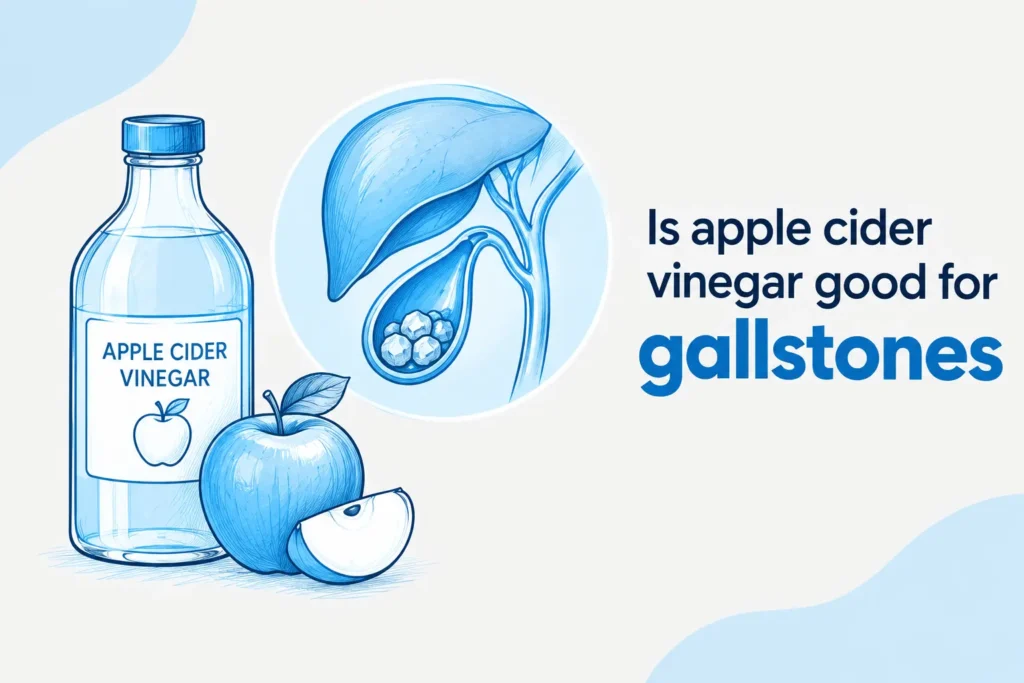
Apple cider vinegar (ACV) is not a proven treatment for gallstones. Although it is often promoted online as a natural remedy that can “dissolve” gallstones or help the gallbladder flush them out, there is not enough clinical evidence to show that drinking apple cider vinegar can remove or dissolve gallstones.
Gallstones are hardened deposits that form inside the gallbladder. Some people have gallstones without any symptoms and may not need treatment. Others develop gallstone attacks, inflammation or complications that require medical evaluation and treatment.
If you have been diagnosed with gallstones, apple cider vinegar should not be used as a substitute for appropriate medical care.
What Are Gallstones?
Gallstones are solid particles that develop in the gallbladder. They form when substances in bile, such as cholesterol or bilirubin, become imbalanced and crystallise.
Gallstones can vary in size. Some may be as small as grains, while others can be larger.
There are two main types:
- Cholesterol stones: These are the most common type and are mainly made from cholesterol.
- Pigment stones: These contain higher amounts of bilirubin and are associated with certain medical conditions.
Some people have gallstones without knowing they are present. These are sometimes called silent gallstones because they do not cause symptoms.
When a gallstone blocks a bile duct, however, it can cause significant pain and other symptoms.
Is Apple Cider Vinegar Good for Gallstones?
There is no established evidence that apple cider vinegar dissolves gallstones or removes them from the gallbladder.
ACV contains acetic acid, and laboratory or animal findings about individual compounds should not be interpreted as proof that drinking vinegar can dissolve gallstones in humans.
Gallstones are formed through complex changes involving bile composition, gallbladder function and other factors. Drinking apple cider vinegar does not have a demonstrated ability to reverse these processes.
Therefore, if you have gallstones, you should not rely on ACV as a treatment.
Can Apple Cider Vinegar Dissolve Gallstones?
There is no reliable clinical evidence that drinking apple cider vinegar can dissolve established gallstones.
Some internet remedies claim that vinegar can break down gallstones because of its acidity. However, the digestive system does not work like a container in which an acidic liquid dissolves a gallstone.
The type, size and composition of a gallstone also matter when considering whether it can be treated medically.
If gallstones cause symptoms, a doctor can determine whether observation, medication, surgery, or another approach is appropriate.
Does Apple Cider Vinegar Clean the Gallbladder?
There is no established medical evidence that apple cider vinegar “cleanses” or “detoxifies” the gallbladder.
The gallbladder stores and releases bile produced by the liver. It does not require a vinegar cleanse to perform this function.
Similarly, so-called gallbladder or liver “flushes” promoted online have not been established as a reliable way to remove gallstones.
Products or mixtures that cause bowel movements or changes in stool appearance should not be assumed to have removed gallstones.
Can Apple Cider Vinegar Prevent Gallstones?
There is also insufficient evidence to recommend apple cider vinegar as a method for preventing gallstones.
Gallstone risk is influenced by several factors, including body weight, rapid weight loss, diet, age, sex, genetics, certain medical conditions and some medications.
Rather than relying on a single food or drink, maintaining an overall healthy eating pattern and avoiding extreme or rapid weight-loss methods can be more relevant to gallstone risk.
Why Do People Recommend Apple Cider Vinegar for Gallstones?
The idea that ACV can help gallstones is largely based on claims made in home-remedy and alternative-health content.
Common claims include that apple cider vinegar can:
- Dissolve gallstones
- Flush stones from the gallbladder
- Improve bile flow
- Cleanse the gallbladder
- Prevent new stones
These claims should be distinguished from established medical treatment.
A food or supplement may have biological effects without being an effective treatment for an existing disease. At present, apple cider vinegar should not be considered a proven therapy for gallstones.
Is Apple Cider Vinegar Safe to Drink?
Apple cider vinegar is commonly consumed in small amounts as a food ingredient or diluted beverage. However, more is not necessarily better.
Undiluted or excessive vinegar consumption can irritate the mouth, throat and digestive tract. Regular exposure can also contribute to dental enamel erosion.
Apple cider vinegar may also interact with certain medications or affect potassium levels in some circumstances.
If you choose to consume ACV, avoid treating it as a medical therapy for gallstones and do not use large amounts in an attempt to dissolve stones.
People with existing medical conditions or those taking regular medication should discuss supplements or concentrated vinegar use with a healthcare professional.
What Is the Medical Treatment for Gallstones?
Treatment depends on whether gallstones are causing symptoms or complications.
Silent Gallstones
If gallstones are discovered incidentally and are not causing symptoms, treatment may not always be necessary.
A healthcare professional can determine whether monitoring is appropriate based on the individual’s circumstances.
Medicines for Certain Gallstones
In selected situations, medicines containing ursodeoxycholic acid (ursodiol) may be used to dissolve certain cholesterol gallstones.
However, this approach is not suitable for every person or every type of gallstone. It can also take a considerable amount of time and stones may recur after treatment.
Medication should therefore be used only when recommended by a doctor.
Gallbladder Surgery
For people with recurrent symptomatic gallstones or certain complications, the standard treatment may be cholecystectomy, which is surgical removal of the gallbladder.
The gallbladder is not essential for normal digestion. After gallbladder removal, bile continues to be produced by the liver and flows into the intestine.
Whether surgery is appropriate depends on the individual’s symptoms, diagnosis and overall health.
Can Diet Help if You Have Gallstones?
Diet cannot reliably dissolve an existing gallstone, but eating patterns may help some people manage symptoms and support overall health.
If fatty meals trigger discomfort, reducing very high-fat meals may help reduce symptoms for some individuals.
A balanced diet can include:
- Vegetables and fruits
- Whole grains
- Lean sources of protein
- Adequate fibre
- Moderate amounts of healthy fats
- Appropriate portions
Very rapid weight loss should generally be avoided because rapid weight loss can increase the risk of gallstone formation.
If you are trying to lose weight, the goal should be a sustainable approach rather than an extreme diet.
Frequently Asked Questions About Apple Cider Vinegar and Gallstones
Can apple cider vinegar dissolve gallstones?
No reliable clinical evidence shows that drinking apple cider vinegar can dissolve established gallstones. It should not be used as a substitute for medical treatment.
Can apple cider vinegar remove gallstones naturally?
There is no established evidence that ACV can physically remove gallstones from the gallbladder or bile ducts.
How much apple cider vinegar should I drink for gallstones?
There is no medically established dose of apple cider vinegar for treating gallstones because ACV has not been proven to treat or dissolve them.
Can apple cider vinegar prevent gallstones?
There is insufficient evidence to recommend apple cider vinegar for gallstone prevention. Gallstone risk is influenced by multiple factors, including weight changes, diet, genetics and certain medical conditions.
Is apple cider vinegar good for gallbladder health?
Apple cider vinegar has not been established as a treatment or cleanser for the gallbladder. A balanced diet and appropriate medical care are more important when managing gallbladder problems.
Can I drink apple cider vinegar if I have gallstones?
Small amounts of diluted ACV may be tolerated by some people, but it should not be used to treat gallstones. If it causes digestive symptoms or you have a medical condition or take regular medication, discuss its use with your healthcare professional.
What dissolves gallstones naturally?
There is no reliable home remedy that can be recommended to dissolve gallstones. Certain medicines can dissolve selected cholesterol stones in appropriate patients, while symptomatic gallstones may require surgical treatment.
Does apple cider vinegar help gallstone pain?
There is no good evidence that apple cider vinegar treats gallstone pain. Significant or persistent gallstone pain should be medically assessed, particularly when accompanied by fever, jaundice or vomiting.
Can gallstones go away without treatment?
Some people have gallstones that remain silent and never cause symptoms. Once gallstones have formed, however, they do not reliably disappear because of dietary remedies such as apple cider vinegar.
The Bottom Line
Apple cider vinegar is not a proven treatment for gallstones. There is no reliable clinical evidence that drinking ACV can dissolve gallstones, flush them from the gallbladder or prevent gallstone attacks.
If you have gallstones without symptoms, you may not need immediate treatment. If gallstones cause recurrent pain or complications, medical treatment may be necessary.
A balanced diet and sustainable weight management can support overall health, but they should not replace appropriate treatment for symptomatic gallstones.
If you experience severe or persistent abdominal pain, fever, jaundice, repeated vomiting or other concerning symptoms, seek medical attention rather than relying on apple cider vinegar or a gallbladder cleanse.
Medical Disclaimer
This article is for educational purposes only and should not replace professional medical advice, diagnosis, or treatment. Symptoms and treatment approaches may vary between individuals. Please consult a qualified healthcare professional for personalized medical guidance.