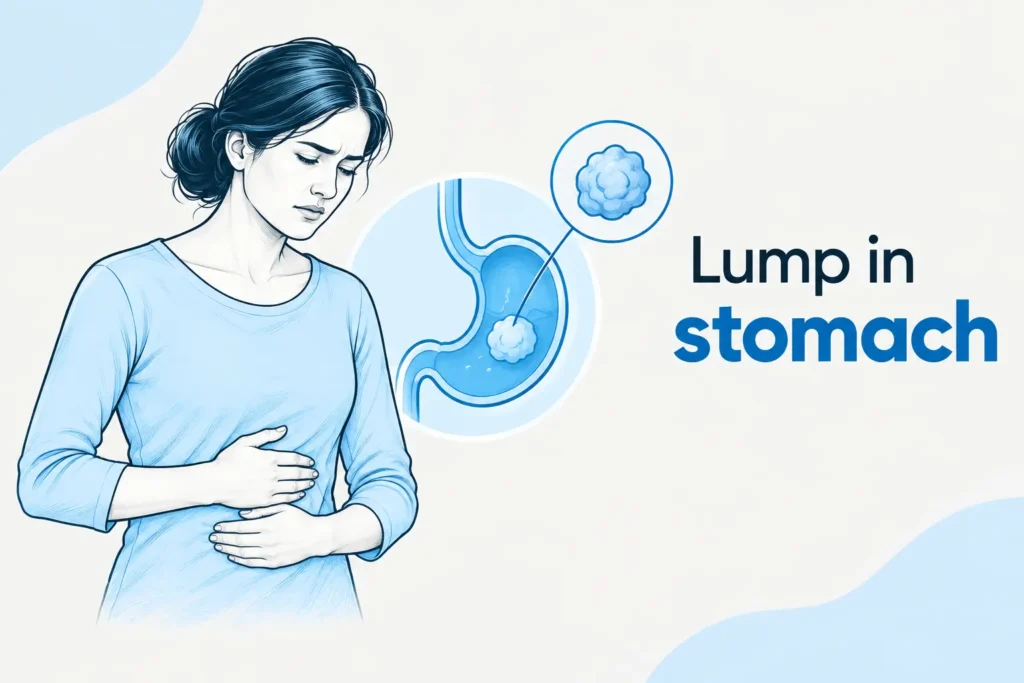
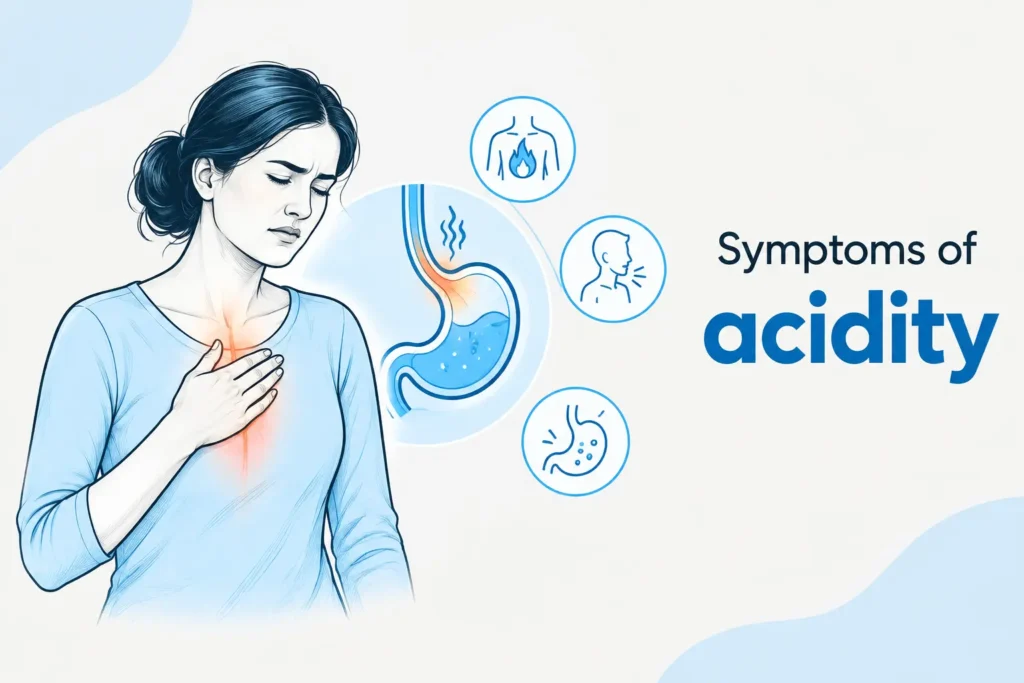
what are the symptoms of stomach cancer
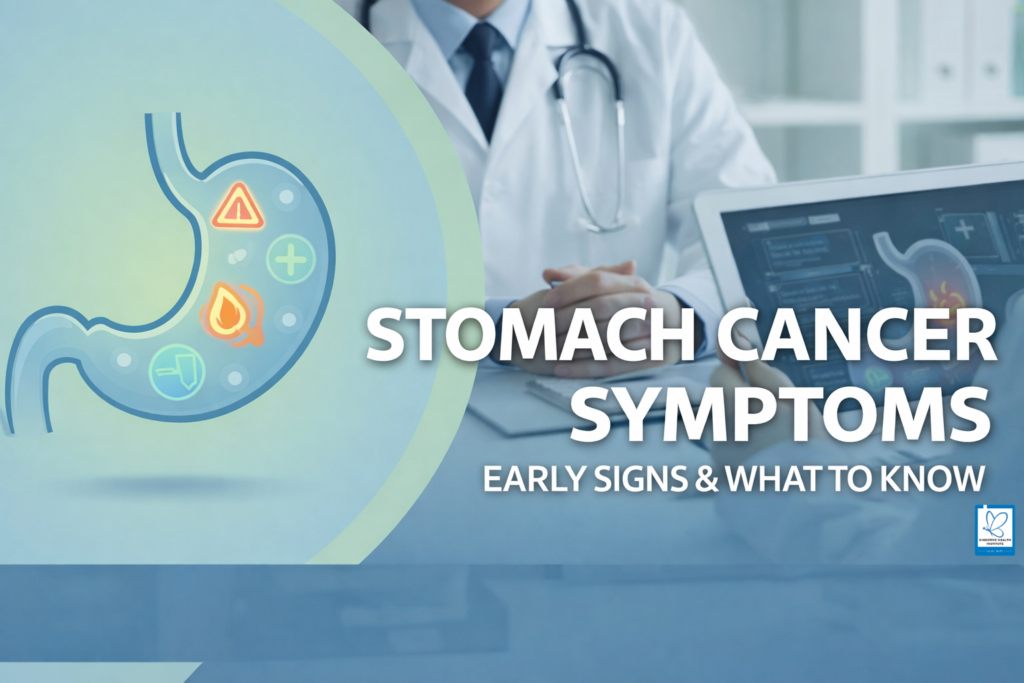
Common stomach cancer symptoms include persistent indigestion, feeling full quickly, nausea, loss of appetite, and fatigue. Advanced symptoms include severe abdominal pain, vomiting blood, black stools, and significant weight loss.
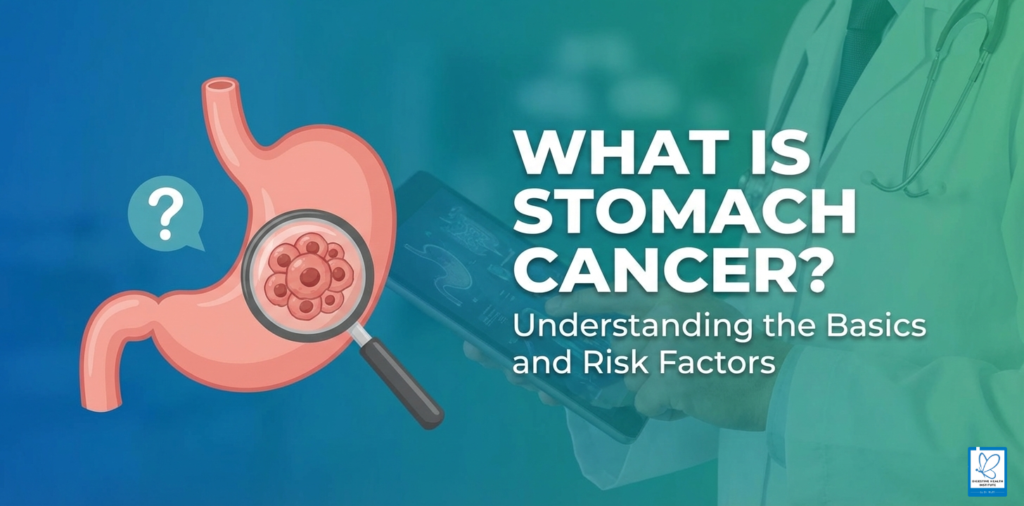
What Is Stomach Cancer?
Stomach cancer, also called gastric cancer, occurs when abnormal cells grow uncontrollably in the stomach lining. Over time, these cells can spread deeper into the stomach wall and to nearby organs.
Who Is at Higher Risk?
- Age above 40 years
- Long-term acidity or indigestion
- Infection with Helicobacter pylori (H. pylori)
- Smoking or heavy alcohol use
- Family history of gastric cancer
- Diet high in salty, smoked, or processed foods
Early Stomach Cancer Symptoms (Stage 1)
In early stages, symptoms are mild and often mistaken for common digestive issues.
Common early signs:
- Persistent indigestion or acidity
- Feeling full after eating small amounts (early satiety)
- Mild nausea
- Occasional stomach discomfort
- Loss of appetite
- Unexplained fatigue
Important: If these symptoms last more than 2–3 weeks, do not ignore them.
Stage 2 Stomach Cancer Symptoms
As cancer grows, symptoms become more noticeable.
Stage 2 symptoms include:
- Ongoing stomach pain or burning
- Persistent bloating after meals
- Nausea and vomiting
- Unintentional weight loss
- Difficulty digesting food
- Mild anemia (weakness, dizziness)
Late-Stage Stomach Cancer Symptoms (Stage 3 & 4)
In advanced stages, symptoms become severe and require urgent care.
Warning signs include:
- Severe, constant abdominal pain
- Vomiting blood
- Black or tarry stools
- Rapid weight loss
- Difficulty swallowing
- Severe anemia
- Ascites (fluid in abdomen)
- Jaundice (yellowing of eyes/skin)
- Extreme fatigue
Medical emergency: Blood in vomit or stool requires immediate attention.
Stomach Cancer Symptoms by Stage
| Symptom | Stage 1 | Stage 2 | Stage 3–4 |
|---|---|---|---|
| Indigestion | Mild | Persistent | Severe |
| Appetite loss | ✓ | ✓ | ✓ |
| Nausea | Occasional | Frequent | Severe |
| Pain | Mild | Moderate | Severe |
| Weight loss | Rare | Noticeable | Significant |
| Vomiting blood | ✗ | Rare | ✓ |
| Black stools | ✗ | Rare | ✓ |
Stomach Cancer vs Acidity vs Ulcer
| Feature | Stomach Cancer | Acid Reflux (GERD) | Ulcer |
|---|---|---|---|
| Response to medication | Poor | Good | Moderate |
| Weight loss | Common | Rare | Rare |
| Appetite loss | Common | Rare | Sometimes |
| Symptom trend | Worsens over time | Fluctuates | Fluctuates |
Key insight: If symptoms don’t improve with treatment, get tested.
When Should You See a Doctor?
Consult a doctor immediately if you have:
- Indigestion lasting more than 2–3 weeks
- Unexplained weight loss
- Loss of appetite
- Persistent nausea or vomiting
- Blood in vomit or stool
- Ongoing stomach pain
How Is Stomach Cancer Diagnosed?
Doctors use the following tests:
- Upper GI Endoscopy (most important)
- Biopsy (confirms cancer)
- CT scan or PET scan
- Blood tests
- Endoscopic ultrasound
Early diagnosis = better survival outcomes.
Can Stomach Cancer Be Misdiagnosed?
Yes. Early symptoms often look like:
- Gastritis
- Acid reflux (GERD)
- Peptic ulcer
- Food intolerance
This is why persistent symptoms should never be ignored.
Is Stomach Cancer Curable?
Yes especially if detected early.
Treatment options include:
- Surgery
- Chemotherapy
- Targeted therapy
- Immunotherapy (in selected cases)
Early-stage patients have significantly higher survival rates.
Stomach Cancer in India (Important Insight)
- Among top cancers in Indian men
- High prevalence of H. pylori infection
- Many cases diagnosed at late stages
Awareness of symptoms is critical for early detection.
Final Thoughts
Stomach cancer symptoms often start small but worsen over time. Ignoring early warning signs can delay diagnosis and reduce treatment success.
If symptoms persist, don’t self-medicate get evaluated early.
FAQs: What Are the Symptoms of Stomach Cancer?
What is the biggest symptom of stomach cancer?
The most common early symptom of stomach cancer is persistent indigestion or acidity that does not improve with medication. Other warning signs include loss of appetite, feeling full quickly, and unexplained fatigue.
When should you worry about stomach cancer?
You should be concerned if symptoms like indigestion, stomach pain, or bloating last more than 2–3 weeks, especially if they are combined with weight loss, vomiting, or loss of appetite. Immediate medical attention is needed if there is blood in vomit or black stools.
How do I know if I have stomach cancer?
Stomach cancer cannot be confirmed based on symptoms alone. However, signs like persistent indigestion, early fullness, nausea, weight loss, and fatigue may indicate a problem. A doctor will confirm the diagnosis using tests like an endoscopy and biopsy.
How is stomach cancer detected early?
Early detection is done through upper GI endoscopy, where a camera examines the stomach lining. If abnormal tissue is found, a biopsy is taken. Detecting cancer early significantly improves treatment success.
Is stomach cancer curable?
Yes, stomach cancer is highly treatable if detected early. Early-stage cancer can often be treated with surgery alone, while advanced stages may require chemotherapy, targeted therapy, or immunotherapy.
What are stage 1 stomach cancer symptoms in females?
In females, early-stage stomach cancer symptoms are often subtle and may include indigestion, bloating, mild nausea, fatigue, and loss of appetite. These symptoms are frequently mistaken for hormonal or digestive issues, which can delay diagnosis.
What are stage 4 stomach cancer symptoms?
Stage 4 stomach cancer symptoms are severe and may include intense abdominal pain, vomiting blood, black stools, extreme weight loss, difficulty swallowing, jaundice, and fluid buildup in the abdomen.
Can stomach cancer be mistaken for acidity or gas?
Yes, early stomach cancer is often misdiagnosed as acidity, gas, or gastritis because symptoms are very similar. However, unlike common digestive issues, cancer-related symptoms persist and worsen over time