Digestive Health Institute
by Dr. Muffi
|
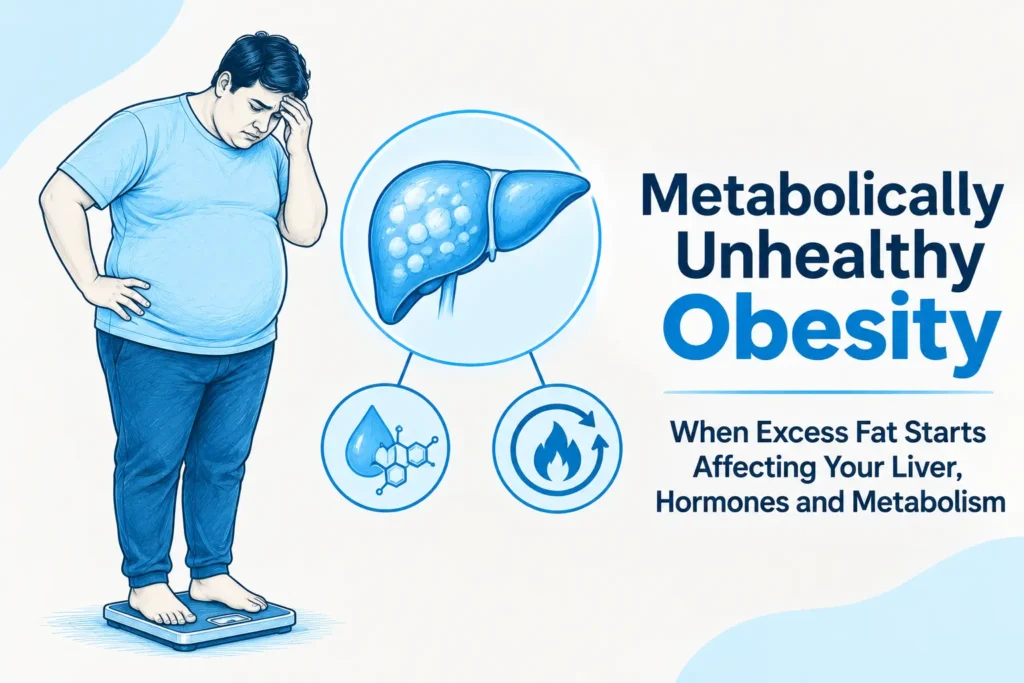
Metabolically Unhealthy Obesity: When Excess Fat Starts Affecting Your Liver, Hormones and Metabolism
Two people can weigh the same and have very different health risks. One may have normal blood sugar, healthy cholesterol and a clean liver scan. The other may already have fatty liver, rising blood sugar and blood pressure that needs medication. The difference is not only how much fat the body carries, but where it sits and how it behaves. Doctors call the second picture metabolically unhealthy obesity (MUO).
Understanding metabolically unhealthy obesity
What is it? Obesity is an excess or abnormal accumulation of body fat that affects health. In MUO, that excess fat comes with measurable metabolic problems:
- Insulin resistance, pre-diabetes or type 2 diabetes
- High blood pressure
- Abnormal cholesterol or triglycerides
- Fatty liver (now called metabolic dysfunction-associated steatotic liver disease, or MASLD)
Some people with obesity have normal metabolic markers, often called “metabolically healthy obesity”. It is not a permanent safe zone, because many people move to the unhealthy category over time.
Why does it happen? Fat is an active organ that releases hormones and inflammatory signals. When fat builds up deep in the abdomen, around the liver and intestines (visceral fat), it tends to:
- Release more inflammatory chemicals
- Make cells less responsive to insulin
- Send excess fatty acids to the liver, where fat starts to accumulate
- Disturb the hormones that control hunger and fullness
This becomes a cycle. Insulin resistance raises insulin levels, high insulin promotes fat storage, and more fat deepens insulin resistance.
Risk factors
- Abdominal weight gain, even at a modest BMI
- Family history of diabetes, heart disease or fatty liver
- Sedentary lifestyle and low muscle mass
- Diets high in refined carbohydrates, sugary drinks and ultra-processed foods
- Poor sleep and untreated sleep apnoea
- Chronic stress, PCOS, and menopause
South Asians tend to develop metabolic problems at lower weights and smaller waist sizes. Asian-specific cut-offs apply, with overweight generally starting at a BMI of 23 and obesity at 25.
Symptoms and signs. Many people have none for years. Things to watch for:
- A growing waistline (above about 90 cm in men and 80 cm in women for Asians)
- Tiredness, especially after meals
- Increased thirst or frequent urination
- Dark, velvety skin patches on the neck or underarms, and skin tags
- Loud snoring or disturbed sleep
- Irregular periods or excess hair growth in women
How is it identified?
A doctor does not diagnose MUO from the weighing scale alone.
Clinical assessment: BMI with Asian ranges, waist circumference, blood pressure, and your history, medications, sleep, diet and activity.
Tests a doctor may consider
- Blood sugar: fasting glucose, HbA1c, sometimes an oral glucose tolerance test
- Insulin resistance: fasting insulin, sometimes HOMA-IR
- Lipid profile: cholesterol, LDL, HDL, triglycerides
- Liver tests: ALT, AST, GGT
- Liver imaging: abdominal ultrasound, and where needed a FibroScan to measure liver fat and stiffness
- Others as indicated: uric acid, kidney function, thyroid (TSH), vitamin D and B12, hormone tests if PCOS or another endocrine cause is suspected, and a sleep study if sleep apnoea is suspected
Important: investigations are chosen based on your individual history, symptoms and risk. Not everyone needs every test.
What does the diagnosis mean for you?
“Metabolically unhealthy” can feel alarming, but it is useful information. It tells you the issue is not just weight. It is how your body handles energy, and that can be improved.
- Higher risk of type 2 diabetes, heart disease and stroke, which is why sugar, blood pressure and cholesterol are tracked together
- Fat in the liver, which in some people progresses to inflammation and scarring
- Hormonal effects, including PCOS and fertility issues in women and lower testosterone in some men
- Added strain on joints, sleep and mood
The encouraging part is that these changes respond to treatment. A modest, sustained weight loss of around 5-10% can improve blood sugar, blood pressure, cholesterol and liver fat. Health markers often improve before the scale moves dramatically.
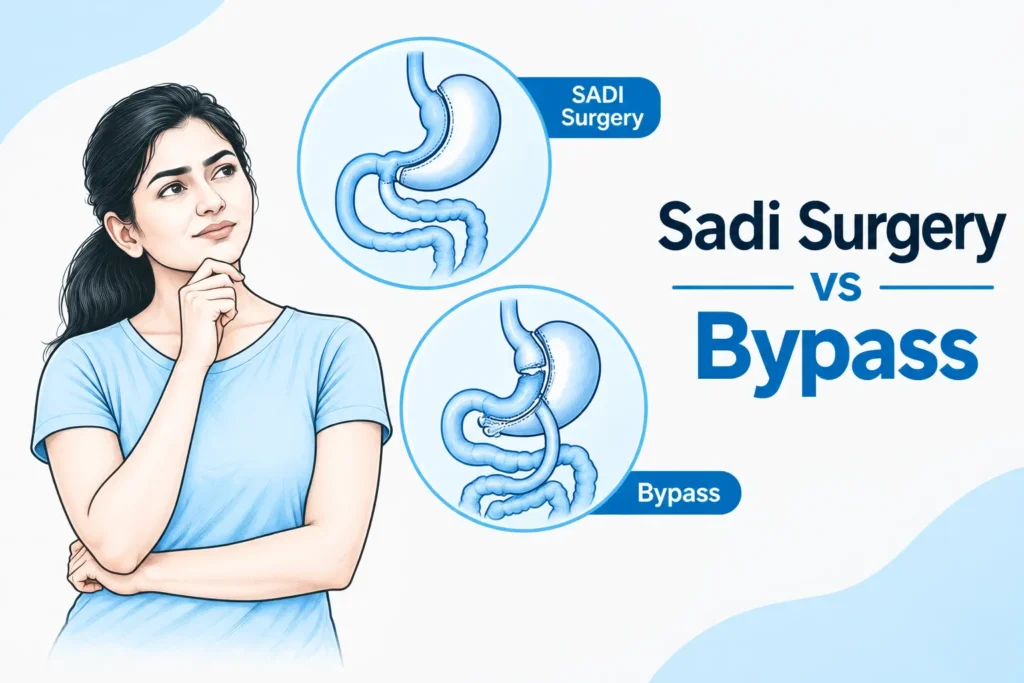
Which Surgery Leads to More Weight Loss?
Both SADI-S and Roux-en-Y gastric bypass can lead to substantial weight loss. However, it is not possible to determine which operation will produce the best result for every individual based on the procedure name alone.
Weight-loss outcomes depend on several factors, including:
- Starting weight and body mass index (BMI)
- Metabolic health and obesity-related conditions
- The surgical technique and the patient’s anatomy
- Eating habits and physical activity after surgery
- Medication use and other health conditions
- Attendance at follow-up appointments and adherence to nutritional recommendations
Some studies report greater average weight loss after SADI-S than after certain other bariatric procedures. However, results differ across studies, and comparisons may involve different patient groups and follow-up periods. Greater weight loss must also be considered alongside the risk of nutritional complications.
A bariatric surgeon can explain the expected outcomes for each option based on current evidence and the patient’s individual circumstances. No procedure can guarantee a particular amount of weight loss.
Treatment and management
Treatment depends on your health profile, severity and goals.
Nutrition
- Build meals around vegetables, pulses, whole grains, nuts, fish, eggs and lean protein
- Cut back on sugary drinks, refined flour, fried foods and packaged snacks
- Keep protein adequate to preserve muscle while losing fat
- Eat at regular times, and avoid crash diets that cause muscle loss and rebound gain
Physical activity
- At least 150 minutes of moderate activity a week
- Resistance training two or three times a week, since muscle helps the body use glucose
- Less sitting, and short walks after meals
Sleep and stress: aim for around 7-9 hours of sleep, treat sleep apnoea if present, and manage chronic stress, which raises cortisol and drives cravings.
Medical management: where lifestyle alone is not enough, doctors may prescribe medication for weight, blood sugar, blood pressure, cholesterol or liver health. Newer anti-obesity medicines can help selected patients but need supervision, monitoring and long-term follow-up.
Surgical and interventional options: for higher BMI or significant obesity-related disease, metabolic and bariatric surgery (such as sleeve gastrectomy or gastric bypass) can bring large, durable improvements in diabetes, fatty liver and blood pressure. Guidelines allow it to be considered at lower BMIs in Asian populations, especially with diabetes or other metabolic disease. Suitability needs a specialist assessment.
What should you do next?
- Know your numbers. With a larger waist, a family history of diabetes or fatty liver, or any signs above, ask for a metabolic screening. A normal BMI doesn’t rule out a problem.
- Seek assessment if you’ve been told you have fatty liver, pre-diabetes, high blood pressure or high cholesterol, even if you feel well.
- Avoid quick fixes such as detox plans, extreme diets and unregulated supplements.
- Set realistic targets: steady fat loss, better lab values and more energy, not a specific number.
- Plan for the long term. Obesity is chronic, and follow-up matters as much as the first phase.
How OG Health fits into your journey
At OG Health, obesity is treated as a metabolic and gut health condition, not a number on the scale. Care comes together in one personalised plan:
- Comprehensive assessment of metabolic, liver, hormonal and gut health
- Clinical nutrition tailored to your needs and medical conditions
- Lifestyle support for activity, sleep and behaviour change
- Medical management where appropriate
- Specialist and surgical care for those who need it, with long-term follow-up
If you’re concerned about how excess weight may be affecting your liver, hormones or metabolism, a structured assessment is a good first step. Book a consultation.
FAQs
Can someone with a normal BMI have MUO? Yes. Metabolic problems can occur at lower BMIs, especially in South Asians, who tend to store more visceral fat. Waist size and lab markers give a fuller picture.
Is fatty liver reversible? Early fatty liver can improve significantly with weight loss, better nutrition and activity. Advanced scarring is harder to reverse, so early detection matters.
Do I need to lose a lot of weight to benefit? Not necessarily. Around 5-10% of body weight can noticeably improve markers.
Will I need medication or surgery? Not always. Many people improve with structured lifestyle and nutrition changes. Medication or surgery depends on your health profile, severity and response.
Medical disclaimer: This article is for educational purposes only and does not replace individual medical advice, diagnosis or treatment. Bariatric surgery eligibility and procedure selection require assessment by a qualified healthcare professional.