Digestive Health Institute
by Dr. Muffi
Digestive Health Institute
by Dr. Muffi
Symptoms of Acidity: Signs, Causes, Treatment & When to See a Doctor
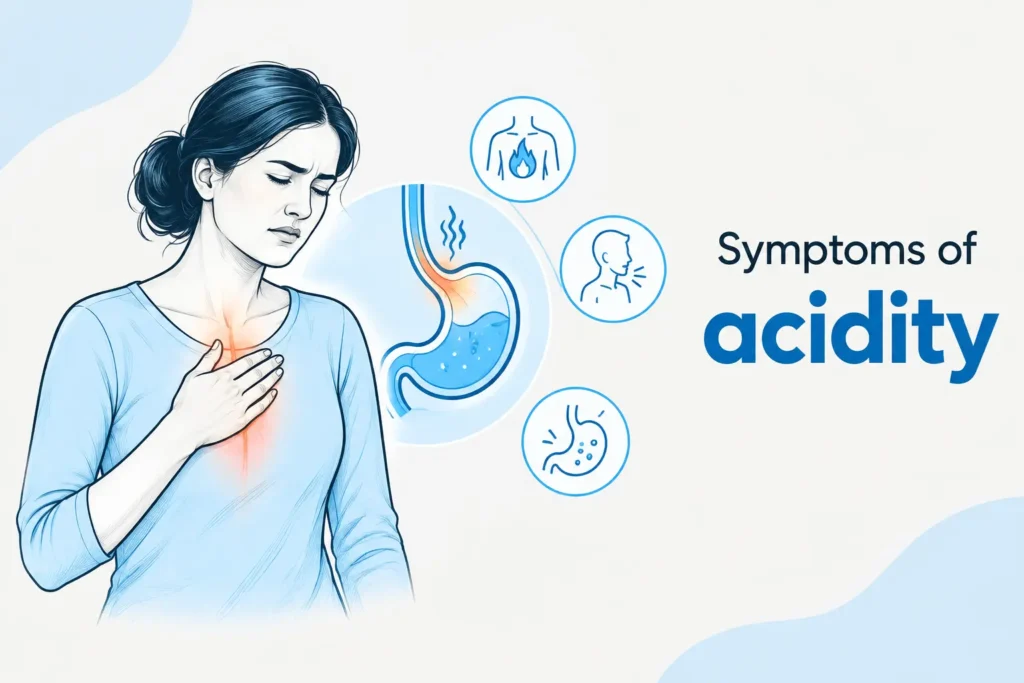
Symptoms of acidity can include heartburn, a sour or bitter taste in the mouth, frequent burping, regurgitation, upper-abdominal discomfort, bloating and nausea. These symptoms may become more noticeable after eating or when lying down.
However, “acidity” is a commonly used term rather than one specific medical diagnosis. Similar symptoms can occur with acid reflux, gastroesophageal reflux disease (GERD), indigestion and other digestive conditions.
Understanding what your symptoms feel like, when they occur and how often they happen can help determine whether you need lifestyle changes or medical evaluation.
What Is Acidity?
People commonly use the word “acidity” to describe symptoms they associate with excess stomach acid or acid coming back into the food pipe.
Your stomach naturally produces acid to help digest food. Normally, the contents of the stomach remain in the stomach. When stomach contents flow back into the oesophagus, it is called acid reflux.
When reflux happens repeatedly and causes troublesome symptoms or complications, it may be diagnosed as gastroesophageal reflux disease (GERD).
This distinction is important because not every episode of indigestion, bloating or stomach discomfort is necessarily caused by acid reflux.
What Are the Symptoms of Acidity?
The symptoms associated with acidity can vary between people. Some people experience a burning sensation in the chest, while others notice a sour taste, regurgitation or upper-abdominal discomfort.
Common symptoms include:
- Heartburn or burning in the chest
- Sour or bitter taste in the mouth
- Acid or food coming back into the mouth
- Upper-abdominal discomfort
- Frequent burping
- Bloating
- Nausea
- Indigestion
- Feeling uncomfortably full
- Symptoms that become worse after meals
- Symptoms that become more noticeable when lying down
Heartburn or Burning Sensation
Heartburn is a burning sensation that can occur behind the breastbone or move upward from the upper abdomen towards the chest or throat.
Despite its name, heartburn is not a problem with the heart. It is commonly associated with acid reflux.
Heartburn may occur after eating, particularly after a large meal, and can become more noticeable when lying down.
Sour or Bitter Taste in the Mouth
Acid or stomach contents moving upwards can sometimes leave a sour or bitter taste in the mouth.
Some people may notice this particularly after meals or when bending over or lying down.
Acid or Food Coming Back Up
Regurgitation refers to stomach contents flowing back into the throat or mouth.
You may notice a sour or acidic liquid, partially digested food or an unpleasant taste.
This is different from vomiting, which involves forceful expulsion of stomach contents.
Upper Abdominal Discomfort
Some people use the word acidity to describe burning, discomfort or uneasiness in the upper abdomen.
However, upper-abdominal discomfort can have many possible causes. Persistent or severe symptoms should therefore not automatically be attributed to acidity.
Burping and Bloating
Frequent burping and bloating can occur alongside digestive discomfort.
However, these symptoms are not specific to acid reflux. They may also occur because of swallowed air, certain foods, constipation, food intolerances or other digestive problems.
Nausea and Indigestion
Some people with reflux or digestive problems may experience nausea or indigestion.
Indigestion itself is a broad term covering symptoms such as upper-abdominal discomfort, early fullness, bloating or nausea.
If these symptoms repeatedly occur, a medical evaluation can help determine the underlying cause.
Acidity Symptoms After Eating
Acidity or reflux symptoms may become noticeable after meals.
Large meals, eating quickly, lying down soon after eating and individual food triggers may contribute to symptoms in some people.
Keeping track of what you eat and when symptoms occur can help identify personal patterns.
Acidity Symptoms at Night
Reflux symptoms may become more noticeable at night, particularly when lying down.
If symptoms repeatedly disturb your sleep or occur several nights a week, it is worth discussing them with a healthcare professional.
What Does Acidity Feel Like?
Acidity does not feel exactly the same for everyone.
You may experience:
Symptom | What it may feel like |
Heartburn | Burning behind the breastbone or in the upper chest |
Regurgitation | Sour or bitter fluid or food coming back into the mouth |
Upper-abdominal discomfort | Burning or uncomfortable sensation in the upper abdomen |
Burping | Frequent release of gas, sometimes with a sour taste |
Bloating | Feeling unusually full or swollen |
Nausea | Feeling sick or uncomfortable in the stomach |
The location, severity and duration of symptoms can vary.
Most importantly, chest discomfort should not automatically be assumed to be acidity, especially when it is severe, persistent or associated with other concerning symptoms.
What Causes Acidity?
The causes of symptoms described as “acidity” can vary.
When symptoms are related to acid reflux, they occur because stomach contents move back into the oesophagus.
Factors that can contribute to reflux symptoms include:
Eating large meals
Lying down soon after eating
Certain foods or drinks
Being overweight or obese
Smoking
Pregnancy
A hiatal hernia
Some medications
Conditions affecting the normal function of the digestive tract
Large or Heavy Meals
A large meal can increase pressure within the stomach and may make reflux symptoms more likely in some people.
Eating smaller meals may help some people manage their symptoms.
Lying Down Soon After Eating
Gravity normally helps keep stomach contents from moving upwards.
Lying down soon after eating can make reflux symptoms more noticeable for some people.
Certain Foods and Drinks
Food triggers vary from person to person.
Commonly reported triggers can include fatty or fried foods, spicy foods, chocolate, caffeine, alcohol and acidic foods or drinks.
However, it is not necessary for everyone with reflux to avoid every food on this list.
Identifying your own triggers is more useful than following an unnecessarily restrictive diet.
Being Overweight or Obese
Excess body weight can increase the likelihood of reflux symptoms in some people.
For people who are overweight or obese and have reflux, medically appropriate weight management may form part of symptom management.
DHI also provides resources on weight loss and fat loss and sustainable weight-management approaches.
Smoking and Alcohol
Smoking can affect the normal functioning of the digestive system and is associated with reflux.
Alcohol may also trigger symptoms in some people.
If you notice that particular drinks consistently worsen your symptoms, reducing or avoiding them may help.
Pregnancy
Hormonal changes and pressure on the stomach during pregnancy can contribute to reflux symptoms.
Persistent symptoms during pregnancy should be discussed with an appropriate healthcare professional before starting any medication.
Hiatal Hernia and Other Conditions
A hiatal hernia occurs when part of the stomach moves upwards through an opening in the diaphragm.
It can be associated with reflux.
Other digestive conditions can produce symptoms that feel similar to acidity, which is one reason persistent symptoms should not simply be self-diagnosed.
Acidity vs Acid Reflux vs GERD
These terms are often used interchangeably, but they are not exactly the same.
Acidity is a commonly used term for symptoms people associate with stomach acid.
Acid reflux describes the movement of stomach contents back into the oesophagus.
GERD is a chronic condition in which reflux causes troublesome symptoms or complications.
This distinction matters because occasional heartburn after a meal is not necessarily the same as having GERD.
If symptoms are frequent, persistent or affecting your daily life, medical assessment can help determine what is causing them.
What Foods Can Trigger Acidity?
There is no universal acidity diet that works identically for everyone.
Some people notice symptoms after eating:
- Fried or high-fat foods
- Very spicy foods
- Chocolate
- Coffee or other caffeinated drinks
- Alcohol
- Carbonated beverages
- Certain acidic foods or drinks
However, a food that triggers symptoms for one person may not affect another person in the same way.
Rather than eliminating many foods unnecessarily, pay attention to patterns between meals and symptoms.
Eating large meals and lying down soon afterwards may also contribute to symptoms independently of the specific food consumed.
How Is Acidity Diagnosed?
Occasional symptoms may not require extensive testing.
When symptoms are frequent, severe, persistent or unusual, a doctor may assess your medical history, symptoms, medications and lifestyle before deciding whether further testing is necessary.
When a Doctor May Diagnose Acid Reflux or GERD
A doctor may consider acid reflux or GERD when symptoms such as heartburn or regurgitation occur repeatedly and fit the clinical pattern.
The frequency and severity of symptoms, response to treatment and presence of warning signs can all influence the evaluation.
Tests That May Be Recommended
Depending on the symptoms and clinical situation, a doctor may recommend tests such as:
Upper gastrointestinal endoscopy
Ambulatory oesophageal pH monitoring
Other tests to evaluate the oesophagus or digestive tract
Not everyone with acidity symptoms needs these tests.
The appropriate investigation depends on the individual’s symptoms and medical history.
How to Manage Acidity Symptoms
Simple lifestyle changes can help some people reduce reflux symptoms.
Eat Smaller Meals
Large meals can increase stomach fullness and may worsen reflux symptoms.
Eating moderate portions and avoiding overeating may help.
Avoid Lying Down Immediately After Eating
Try to remain upright after meals rather than lying down immediately.
This can be particularly useful for people who experience symptoms at night.
Identify Your Food Triggers
Keep track of foods and drinks that appear to trigger symptoms.
Instead of avoiding an unnecessarily large number of foods, focus on the specific triggers that consistently affect you.
Maintain a Healthy Weight
If excess weight is contributing to reflux symptoms, gradual and medically appropriate weight management may help.
A sustainable approach is generally more useful than extreme diets or rapid weight-loss methods.
Make Lifestyle Changes
Other changes that may help some people include:
Avoiding smoking
Limiting alcohol if it triggers symptoms
Avoiding very large meals
Staying upright after eating
Following an appropriate sleep routine
Identifying individual food triggers
If weight management is part of your health plan, DHI also discusses how to start your weight loss journey and the role of diet and exercise.
Home Remedies for Acidity Relief
People often look for quick home remedies when acidity symptoms occur.
Some simple measures, such as avoiding a large meal, staying upright after eating and identifying foods that trigger symptoms, may help reduce symptoms.
However, home remedies should not be presented as a substitute for medical evaluation when symptoms are severe, persistent or recurrent.
Be cautious with popular remedies that claim to “neutralise acid” or permanently cure acidity. A remedy that works for one person may not be appropriate for another.
If you regularly need home remedies or over-the-counter medicines to control symptoms, discuss the problem with a healthcare professional.
Can Acidity Cause Chest Pain?
Acid reflux can cause a burning sensation or discomfort in the chest, commonly known as heartburn.
However, chest pain can also be caused by conditions involving the heart, lungs, muscles or other organs.
Therefore, it is unsafe to assume that new or severe chest pain is simply acidity.
Seek urgent medical attention for chest pain that is severe, persistent, occurs with shortness of breath, sweating, fainting, or pain spreading to the arm, jaw, neck or back.
When Should You See a Doctor for Acidity?
Occasional acidity symptoms may not be serious, but frequent or persistent symptoms deserve medical attention.
Speak with a healthcare professional if:
- Symptoms occur frequently
- Heartburn repeatedly interferes with daily activities or sleep
- Symptoms do not improve with appropriate lifestyle measures
- You have difficulty or pain when swallowing
- Food feels stuck when swallowing
- You have persistent vomiting
- You have unexplained weight loss
- You vomit blood
- Your stools are black or tar-like
- Symptoms are becoming more severe
Seek urgent medical attention for severe or unexplained chest pain, particularly when it occurs with symptoms such as breathlessness, sweating, fainting or pain spreading to the arm, jaw, neck or back.
What Happens If Acidity Keeps Coming Back?
Repeated reflux symptoms may indicate a condition such as GERD rather than occasional indigestion.
Persistent reflux can affect quality of life and, in some people, may lead to complications.
Acid Reflux and GERD
GERD occurs when reflux repeatedly causes troublesome symptoms or complications.
People with frequent reflux may need a more structured evaluation and treatment plan.
Possible Complications
Long-standing reflux can sometimes lead to complications involving the oesophagus.
These may include inflammation of the oesophagus and narrowing caused by scar tissue. In some people, chronic reflux can also be associated with changes in the lining of the oesophagus.
This is one reason persistent symptoms should not simply be ignored or repeatedly self-treated.
Frequently Asked Questions About Acidity Symptoms
What are the symptoms of acidity?
Common symptoms associated with acidity include heartburn, a sour or bitter taste, regurgitation, upper-abdominal discomfort, burping, bloating, nausea and indigestion. Symptoms may be more noticeable after meals or when lying down.
What are the symptoms of high acidity?
People commonly use “high acidity” to describe symptoms such as heartburn, acid reflux, sour taste, regurgitation or upper-abdominal burning. However, “high acidity” is not a specific medical diagnosis, so persistent symptoms should be assessed based on their underlying cause.
How do I know if I have acidity?
Heartburn, sour or bitter regurgitation and symptoms that occur after meals or when lying down can be consistent with acid reflux. However, similar symptoms can occur with other digestive conditions, so recurrent or concerning symptoms should be evaluated by a healthcare professional.
What does acidity feel like?
Acidity may feel like burning in the chest or upper abdomen, a sour taste in the mouth, food or acid coming back up, bloating or nausea. The exact symptoms vary between individuals.
Can acidity cause chest pain?
Acid reflux can cause heartburn and chest discomfort. However, chest pain can have serious causes unrelated to the digestive system. New, severe or unexplained chest pain should not automatically be considered acidity.
Can acidity cause gas and bloating?
Bloating and burping may occur alongside reflux or indigestion, but they are not specific to acidity. Gas and bloating can have many possible causes.
Can acidity cause nausea?
Nausea can occur with reflux and other digestive conditions. If nausea is persistent, severe or accompanied by vomiting or other warning signs, medical evaluation is appropriate.
Why does acidity happen after eating?
Symptoms can occur after eating because meals temporarily increase the amount of food and pressure within the stomach. Large meals, eating quickly, lying down soon after eating and individual food triggers may contribute to reflux symptoms.
Why does acidity happen at night?
Lying down removes the effect of gravity that helps keep stomach contents down. People with reflux may therefore notice symptoms more when they lie down or sleep.
How can I get relief from acidity?
Depending on the cause, relief may come from avoiding large meals, staying upright after eating, identifying personal food triggers and making appropriate lifestyle changes. Medicines may also be recommended when clinically appropriate.
When should I see a doctor for acidity?
See a doctor if symptoms are frequent, persistent, worsening or affecting your sleep or daily life. Difficulty swallowing, persistent vomiting, unexplained weight loss, vomiting blood or black stools are warning signs requiring medical assessment.
The Bottom Line
The most common symptoms associated with acidity include heartburn, sour or bitter taste, regurgitation, upper-abdominal discomfort, burping, bloating and nausea.
These symptoms can be related to acid reflux or GERD, but “acidity” is a broad term and similar symptoms can occur with other digestive conditions.
Occasional symptoms may improve with appropriate lifestyle changes, while frequent or persistent symptoms may require medical evaluation and treatment.
Most importantly, do not assume severe chest pain is acidity. Seek urgent medical attention when chest pain is severe, unexplained or accompanied by other concerning symptoms.
Understanding when symptoms are occasional and when they need medical attention is an important part of maintaining digestive health.
Medical Disclaimer
This article is for educational purposes only and should not replace professional medical advice, diagnosis, or treatment. Symptoms and treatment approaches may vary between individuals. Please consult a qualified healthcare professional for personalized medical guidance.