Digestive Health Institute
by Dr. Muffi
Digestive Health Institute
by Dr. Muffi
Will Constipation Make You Gain Weight? Understanding the Connection
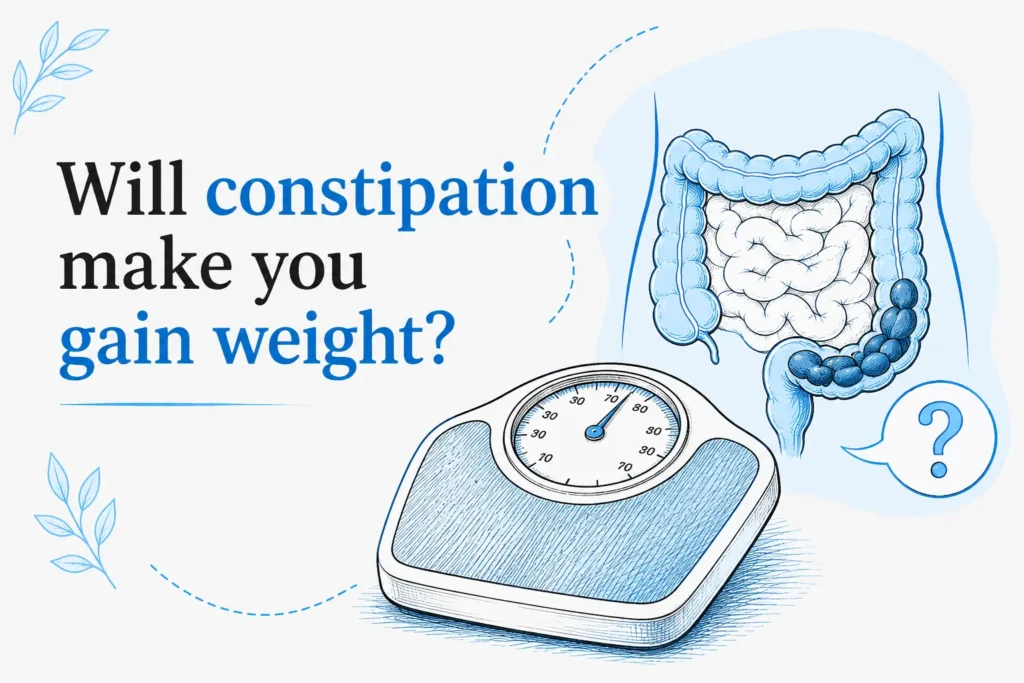
Yes, constipation can cause a temporary increase in body weight, but it does not directly cause fat gain. When stool remains in the intestines for longer than normal, waste accumulates in the digestive tract. This can make you feel heavier, bloated, and uncomfortable. However, the increase you see on the scale is usually due to retained stool and fluid rather than an increase in body fat.
For most people, the temporary weight gain associated with constipation resolves once regular bowel movements return.
What Is Constipation?
Constipation is a common digestive condition characterised by infrequent bowel movements, difficulty passing stool, or a feeling of incomplete evacuation.
While bowel habits vary from person to person, constipation is generally associated with:
- Fewer than three bowel movements per week
- Hard or dry stools
- Straining during bowel movements
- A sensation that the bowel has not emptied completely
- Abdominal discomfort or bloating
Occasional constipation is common, but persistent symptoms may require medical attention.
Can Constipation Really Make You Gain Weight?
Many people notice an increase on the weighing scale when they are constipated.
The answer is yes, but the type of weight gain matters.
Temporary Weight Gain vs Fat Gain
There is an important difference between:
Temporary Weight Gain
Caused by:
Retained stool
Increased water retention
Abdominal bloating
This weight often disappears once bowel movements return to normal.
Fat Gain
Caused by:
Consistently consuming more calories than the body burns
Long-term energy imbalance
Constipation itself does not cause your body to store additional fat.
Why Constipation Can Make the Scale Go Up
1. Stool Accumulation
The most obvious reason is the buildup of waste material inside the colon.
When stool remains in the digestive tract for several days, it adds physical weight to the body.
Depending on the severity of constipation, this may contribute to noticeable fluctuations on the scale.
2. Water Retention
The colon absorbs water from stool.
When stool remains in the intestines longer than usual, additional water may be absorbed, making stools harder and potentially contributing to feelings of heaviness.
Water retention can also cause temporary changes in body weight.
3. Bloating
Constipation often leads to:
Gas accumulation
Abdominal distension
Feelings of fullness
Many people interpret bloating as weight gain because their abdomen appears larger than usual.
However, bloating is not the same as increased body fat.
How Much Weight Can Constipation Add?
The amount varies significantly between individuals.
Factors include:
- Severity of constipation
- Duration of symptoms
- Dietary habits
- Fluid intake
- Body size
Some people may notice only minor fluctuations, while others may experience more significant temporary changes.
Once bowel movements normalize, body weight often returns closer to baseline.
Common Symptoms of Constipation
In addition to temporary weight gain, constipation may cause:
- Hard stools
- Straining during bowel movements
- Abdominal pain
- Bloating
- Excess gas
- Reduced appetite
- Nausea
- A feeling of incomplete bowel emptying
Persistent symptoms should not be ignored, especially if accompanied by unexplained weight loss, bleeding, or severe pain.
What Causes Constipation?
Many factors can contribute to constipation.
Low Fiber Intake
Fiber helps add bulk to stool and supports healthy bowel movements.
Low-fibre diets often contribute to constipation.
Sources of fibre include:
Fruits
Vegetables
Lentils
Beans
Whole grains
Traditional diets rich in these foods can support digestive health. In fact, understanding whether Indian food is healthy can help people make dietary choices that promote both gut health and overall wellness.
Inadequate Hydration
Not drinking enough water can make stools harder and more difficult to pass.
Hydration is essential for healthy digestion. In fact, dehydration can sometimes be mistaken for hunger, leading people to eat more when their body actually needs fluids.
Lack of Physical Activity
Regular movement supports healthy bowel function. Activities such as walking for weight loss may help stimulate intestinal movement and support digestive health.
Physical activity helps create a calorie deficit. Understanding how many calories are burned in 1000 steps can help put daily activity into perspective.
Dietary Changes
Sudden changes in eating patterns can affect bowel habits.
Common triggers include:
Traveling
Major diet changes
Increased processed food consumption
Certain Medications
Some medications may contribute to constipation, including:
Certain pain medications
Some antidepressants
Iron supplements
Certain blood pressure medications
Always discuss concerns with your healthcare provider.
Can Constipation Affect Weight Loss Efforts?
Yes, but usually indirectly.
When people feel bloated and uncomfortable, they may:
- Exercise less
- Feel less motivated
- Experience changes in appetite
- Misinterpret temporary weight gain as fat gain
This can create frustration during a weight-loss journey.
However, constipation itself is not preventing fat loss.
If you’re trying to lose weight, remember that sustainable results depend on factors such as calorie balance, activity levels, and dietary quality. Many people also wonder how many steps it may take to lose 1kg while working toward their weight-loss goals.
For example, many people wonder whether rice is healthy for weight loss. The answer depends more on portion size and overall diet than on the rice itself.
When Should You See a Doctor?
Occasional constipation is common.
However, medical evaluation may be necessary if constipation is:
- Persistent
- Severe
- Accompanied by bleeding
- Associated with unexplained weight loss
- Associated with severe abdominal pain
- Accompanied by vomiting
These symptoms may indicate an underlying condition that requires professional assessment.
Conclusion: Will constipation make you gain weight
So, will constipation make you gain weight? The answer is yes—but usually only temporarily. Constipation can increase body weight due to retained stool, bloating, and fluid retention, but it does not directly cause fat gain.
Most constipation-related weight changes resolve when normal bowel movements return. Maintaining adequate hydration, eating a fiber-rich diet, staying physically active, and supporting digestive health can help reduce the likelihood of constipation.
If you experience persistent constipation, digestive discomfort, or unexplained changes in weight, seeking professional medical advice is important. For personalized guidance on digestive health, nutrition, and weight management, you can book an appointment with our specialists to discuss your concerns and develop an individualized plan.
Medical Disclaimer
This article is for educational purposes only and should not replace professional medical advice, diagnosis, or treatment. Symptoms and treatment approaches may vary between individuals. Please consult a qualified healthcare professional for personalized medical guidance.