Digestive Health Institute
by Dr. Muffi

Digestive Health Institute
by Dr. Muffi
Can a hernia burst and kill you
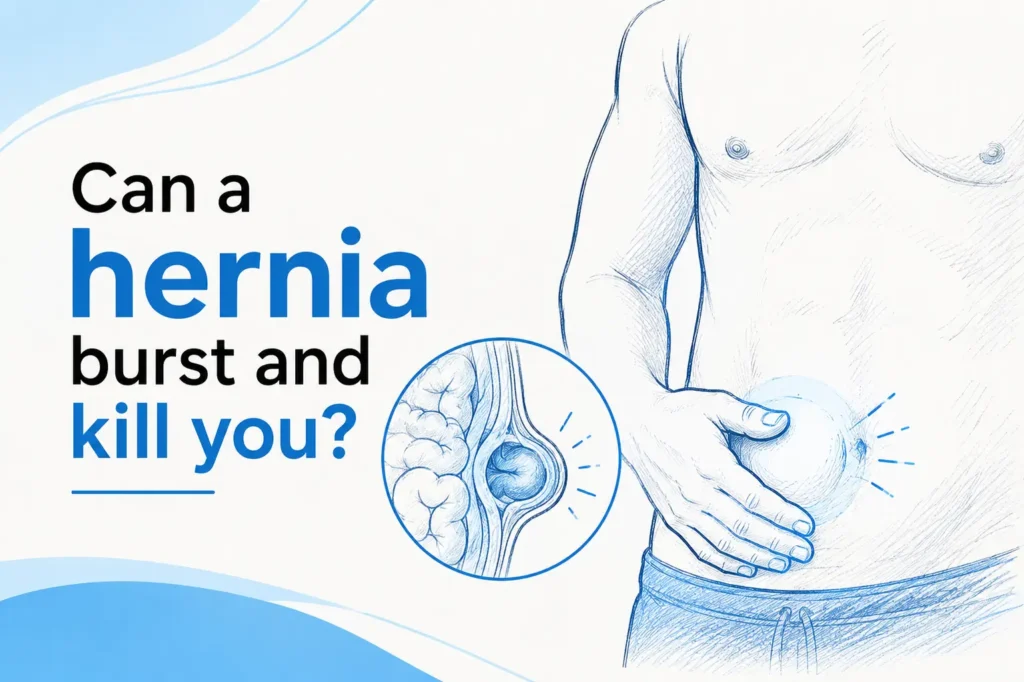
A hernia usually does not “burst” the way people imagine, but it can become dangerous or even life-threatening if left untreated. In some cases, a hernia can trap part of the intestine and cut off its blood supply — a serious condition called a strangulated hernia. Without urgent treatment, this may lead to bowel obstruction, tissue death, infection, or sepsis.
Many people ignore a small hernia bulge because it may not hurt initially. However, sudden pain, nausea, vomiting, swelling, or a bulge that becomes hard and cannot be pushed back in can signal a medical emergency. Understanding when a hernia becomes dangerous can help prevent severe complications and emergency surgery.
A hernia rarely “bursts,” but it can become life-threatening if trapped tissue loses blood supply. This condition, called a strangulated hernia, may cause severe pain, bowel obstruction, infection, and sepsis. Immediate medical care is important if a hernia becomes painful, swollen, hard, or causes vomiting or fever.
Can a Hernia Burst?
Technically, a hernia does not usually “burst” like an organ rupturing. A hernia occurs when an internal organ or fatty tissue pushes through a weak spot in the abdominal wall or surrounding muscles.
However, people often use the phrase “hernia burst” to describe a situation where the hernia suddenly becomes:
- Extremely painful
- Swollen or discolored
- Hard and trapped
- Associated with vomiting or fever
In medical terms, this is more likely to be:
- An incarcerated hernia
- A strangulated hernia
- A hernia causing intestinal blockage
These conditions can become dangerous because the trapped intestine loses blood flow, leading to tissue damage and possible infection.
Can a Hernia Rupture Internally?
A hernia itself does not usually rupture internally. The real danger comes from blood flow restriction to the trapped intestine. If untreated, bowel tissue can die, increasing the risk of perforation, infection, and sepsis.
This is why doctors advise patients not to ignore worsening hernia symptoms, even if the hernia has been painless for years.
Can a Hernia Kill You?
Yes, in rare but serious situations, an untreated hernia can become fatal.
Most hernias are not immediately dangerous. Many remain stable for years. But complications can develop suddenly, especially if a part of the intestine becomes trapped inside the hernia opening.
A hernia can become life-threatening when it causes:
- Strangulation of the intestine
- Bowel obstruction
- Loss of blood supply
- Tissue death
- Severe infection
- Sepsis
A strangulated hernia is considered a surgical emergency because delayed treatment increases the risk of complications significantly.
Can a Hernia Become Fatal?
A strangulated hernia can become fatal if not treated promptly. Once blood supply is cut off, bowel tissue may die within hours. This can lead to infection spreading throughout the body.
Early diagnosis and emergency hernia surgery dramatically reduce these risks.
What Is a Strangulated Hernia?
A strangulated hernia happens when tissue trapped inside the hernia loses its blood supply. Without oxygen-rich blood, the tissue begins to die.
This condition requires urgent medical attention.
How Does It Happen?
A hernia may first become incarcerated, meaning the tissue becomes trapped and cannot return to the abdomen. If swelling increases, blood vessels may become compressed.
This causes:
Blood flow restriction
Tissue damage
Intestinal blockage
Risk of perforation
How Do I Know If My Hernia Is Strangulated?
Common strangulated hernia symptoms include:
Sudden severe pain
A hard or tender hernia bulge
Redness or dark discoloration
Nausea and vomiting
Fever
Abdominal swelling
Inability to pass stool or gas
Rapid worsening of symptoms
If these symptoms occur, seek emergency medical care immediately.
Warning Signs of a Dangerous Hernia
Not every hernia is an emergency, but certain symptoms should never be ignored.
Dangerous Hernia Symptoms
Seek urgent evaluation if you experience:
Emergency Warning Signs
- Severe or worsening hernia pain
- A bulge that becomes hard or stuck
- Red, purple, or dark skin over the hernia
- Fever or chills
- Persistent nausea and vomiting
- Bloating or abdominal distension
- Difficulty passing stool or gas
- Sudden enlargement of the hernia
These symptoms may indicate bowel strangulation or obstruction.
Is a Painful Hernia an Emergency?
Mild discomfort after physical activity is common with some hernias. However, sudden intense pain or pain accompanied by vomiting, fever, or swelling can indicate a medical emergency.
A specialist should always evaluate a painful hernia if symptoms worsen rapidly.
What Happens If a Hernia Is Left Untreated?
Some small hernias may remain stable temporarily, but untreated hernias can enlarge over time and increase the risk of complications.
Untreated Hernia Complications
Potential complications include:
1. Incarcerated Hernia
The trapped tissue cannot return to its normal position.
2. Bowel Obstruction
The intestine becomes blocked, preventing food or waste from passing normally.
Symptoms include:
- Severe abdominal pain
- Constipation
- Vomiting
- Bloating
3. Strangulation
Blood supply to the trapped tissue is cut off.
4. Tissue Death
Lack of oxygen causes bowel tissue damage.
5. Sepsis
In severe cases, infection can spread through the bloodstream and become life-threatening.
Which Hernias Are Most Dangerous?
Certain hernias carry a higher risk of complications than others.
1. Femoral Hernias: Femoral Hernias occur near the upper thigh or groin and are more likely to become strangulated.
2. Inguinal Hernias: Common in men, these occur in the groin area. Many are manageable initially, but larger hernias may become incarcerated.
3. Incisional Hernias: These develop at previous surgical sites where the abdominal wall has weakened.
4. Umbilical Hernias: Common near the belly button. Large untreated hernias can occasionally trap the intestine.
5. Epigastric Hernias: Epigastric Hernias occur between the chest and belly button due to abdominal wall weakness.
When Is Hernia Dangerous?
A hernia becomes dangerous when it causes:
Severe pain
Trapped intestine
Blood flow restriction
Vomiting
Signs of infection
Intestinal blockage
Even a previously painless hernia can suddenly become complicated.
Is Hernia Surgery Dangerous?
All surgeries carry some risks, but hernia repair is generally considered safe when performed by experienced surgeons.
Delaying treatment often creates more risk than planned surgery.
Can a Hernia Be Treated Without Surgery?
Lifestyle changes and supportive measures may temporarily reduce symptoms in select cases, but they do not permanently repair the hernia defect.
Before and After Hernia Surgery
Patients are often concerned about recovery, activity restrictions, and recurrence prevention.
Why Early Treatment Matters
Early hernia management may:
- Prevent bowel strangulation
- Reduce emergency surgery risk
- Improve recovery outcomes
- Lower complication rates
- Reduce chronic pain
Planned surgery is generally safer than emergency surgery performed after tissue damage has occurred.
Dr. Muffazal Lakdawala and the team at Digestive Health Institute in Mumbai manage complex gastrointestinal and abdominal wall conditions using evidence-based surgical techniques and patient-centered care.
Conclusion
So, can a hernia burst and kill you? While hernias do not usually “burst” in the traditional sense, they can become dangerous if trapped tissue loses blood supply. A strangulated hernia is a medical emergency that can lead to bowel obstruction, infection, tissue death, and even life-threatening complications if untreated.
The good news is that early diagnosis and timely treatment can prevent most serious outcomes. If you notice severe pain, vomiting, swelling, or a hernia bulge that becomes hard and stuck, seek urgent medical care immediately.
If you have ongoing hernia symptoms or concerns about treatment options, consulting an experienced specialist can help you understand the safest next steps.
Medical Disclaimer
This article is for educational purposes only and should not replace professional medical advice, diagnosis, or treatment. Symptoms and treatment approaches may vary between individuals. Please consult a qualified healthcare professional for personalized medical guidance.