Digestive Health Institute
by Dr. Muffi
Digestive Health Institute
by Dr. Muffi
10 Signs of an Unhealthy Gut: Symptoms You Should Not Ignore
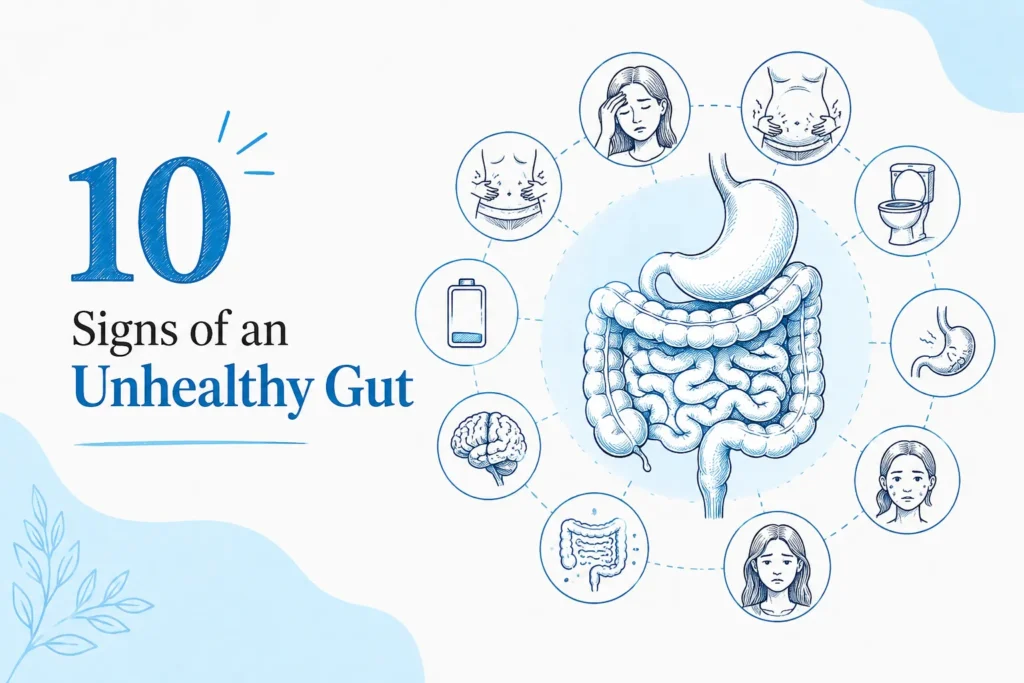
10 Signs of an Unhealthy Gut
Your gut does much more than digest food. It also plays an important role in:
- Immunity
- Nutrient absorption
- Energy levels
- Metabolism
- Overall health
When the digestive system is not functioning properly, the body may start showing different symptoms. Recognizing the 10 signs of an unhealthy gut may help patients improve digestive health early.
Many gut-related symptoms are often ignored because they may appear mild in the beginning.
This guide explains the common warning signs, possible causes, and ways to support better gut health.
What Is Gut Health?
Gut health refers to the proper functioning of the digestive system and the balance of healthy bacteria in the intestines.
A healthy gut may help with:
- Smooth digestion
- Better nutrient absorption
- Regular bowel movements
- Immune support
Poor gut health may contribute to digestive discomfort and other health problems.
10 Signs of an Unhealthy Gut
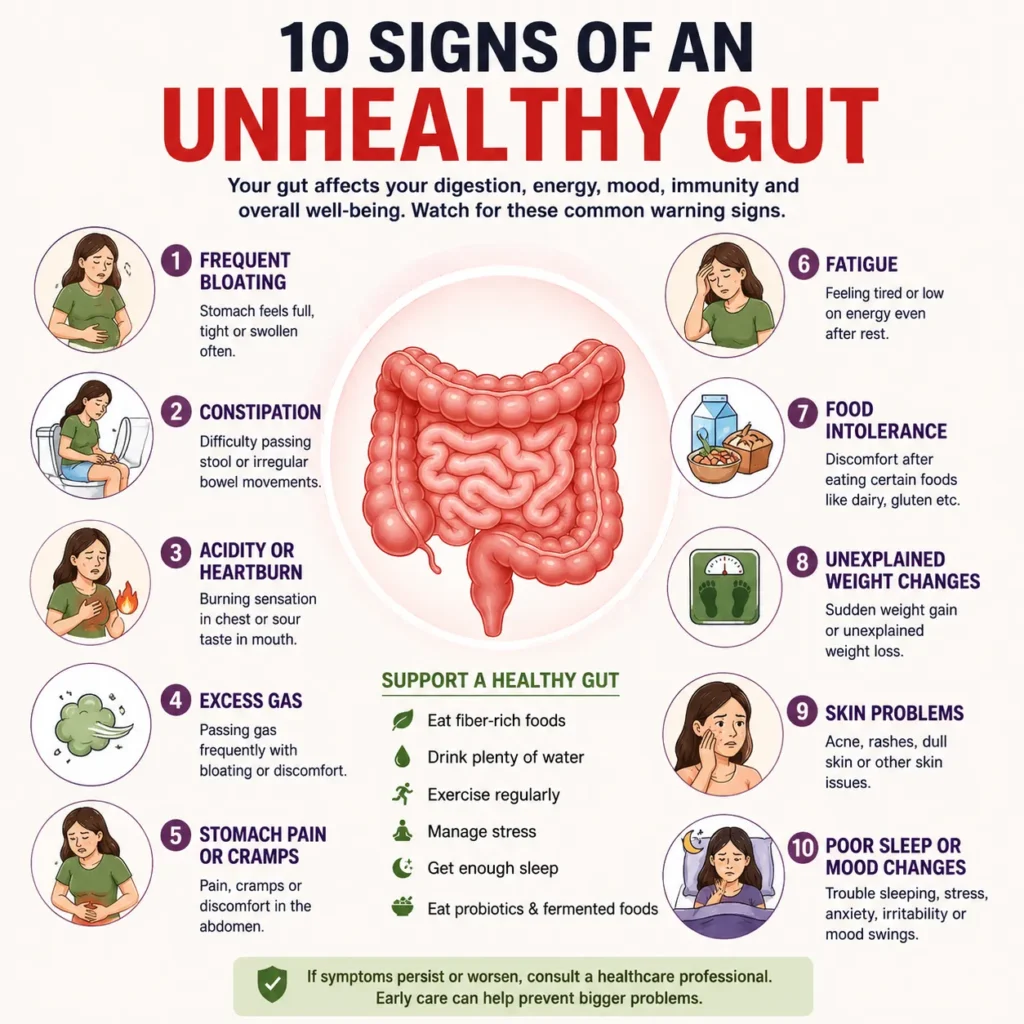
1. Frequent Bloating
Bloating is one of the most common signs of digestive imbalance.
You may experience:
- Tight stomach
- Swelling after meals
- Excess gas
- Discomfort in the abdomen
2. Constipation or Irregular Bowel Movements
Difficulty passing stool regularly may suggest poor digestive function.
Symptoms may include:
- Hard stools
- Straining
- Feeling of incomplete bowel emptying
- Fewer bowel movements
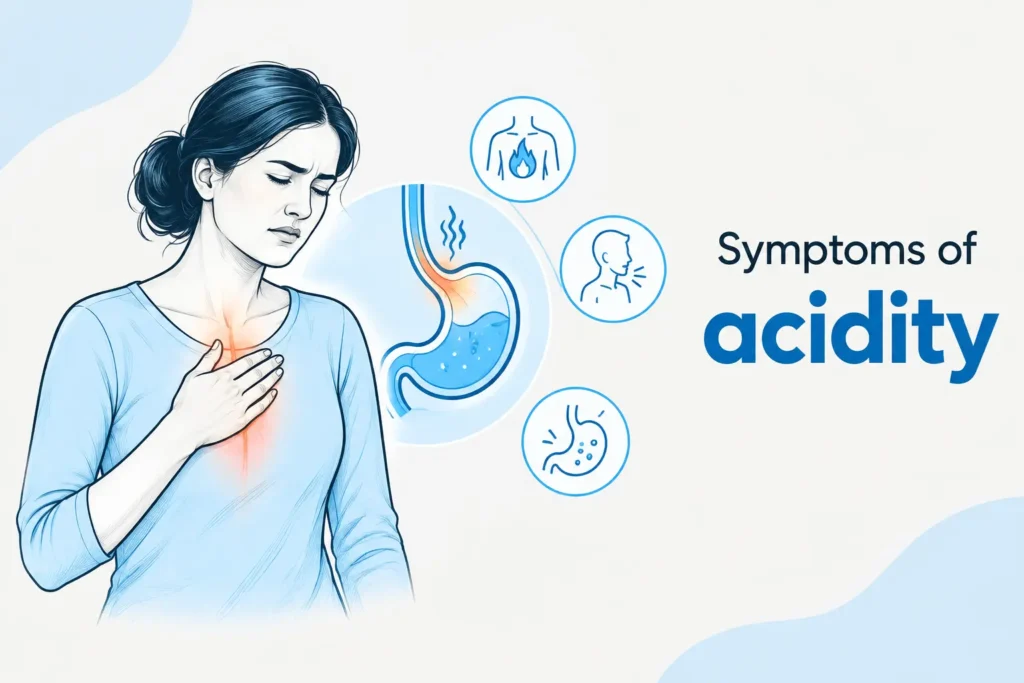
3. Frequent Acidity or Heartburn
Common symptoms:
- Burning sensation in chest
- Sour taste in mouth
- Stomach irritation
- Discomfort after eating
4. Excess Gas
Gas formation is normal, but excessive gas may sometimes indicate:
- Poor digestion
- Food intolerance
- Gut bacteria imbalance
- Constipation
5. Stomach Pain or Cramps
Abdominal discomfort may develop due to:
- Indigestion
- Gastritis
- Irritable bowel syndrome (IBS)
- Food sensitivity
6. Feeling Tired Frequently
Poor gut health may sometimes affect:
- Energy levels
- Nutrient absorption
- Overall well-being
7. Food Intolerance
Common trigger foods include:
- Dairy products
- Spicy foods
- Fried foods
- Gluten-containing foods in some people
8. Unexplained Weight Changes
Poor gut health may sometimes contribute to:
- Weight gain
- Difficulty losing weight
- Unintentional weight loss
9. Skin Problems
Certain digestive imbalances may sometimes be associated with:
- Acne
- Skin irritation
- Dull skin
- Inflammation
10. Poor Sleep or Mood Changes
Some people with digestive problems may also experience:
- Poor sleep
- Stress
- Mood changes
- Irritability
Common Causes of Poor Gut Health
Cause | Possible Effect on Gut |
Processed foods | Digestive imbalance |
Low fiber diet | Constipation |
Stress | May worsen digestion |
Poor sleep | May affect gut function |
Excess sugar intake | Gut bacteria imbalance |
Lack of exercise | Slower digestion |
Antibiotic overuse | Changes in healthy gut bacteria |
Foods That May Support Better Gut Health
Gut-Friendly Foods | Possible Benefits |
Yogurt | May support healthy bacteria |
Fruits | Fiber and nutrients |
Vegetables | Digestive support |
Whole grains | Better bowel movement |
Water | Helps digestion |
Fermented foods | May support gut balance |
How to Improve Gut Health Naturally
- Eating more fiber-rich foods
- Drinking enough water
- Staying physically active
- Limiting ultra-processed foods
- Managing stress
- Sleeping adequately
- Eating meals on time
When Should You See a Doctor?
Consult a healthcare professional if you experience:
- Severe stomach pain
- Blood in stool
- Ongoing constipation or diarrhea
- Unexplained weight loss
- Persistent bloating
- Frequent vomiting
Conclusion
Recognizing the 10 signs of an unhealthy gut may help patients take early steps toward better digestive health. Symptoms like bloating, acidity, constipation, fatigue, and stomach pain can sometimes indicate underlying digestive imbalance.
Healthy eating habits, hydration, regular activity, and timely medical advice may help support better gut function and overall well-being.
Medical Disclaimer
This article is for educational purposes only and should not replace professional medical advice, diagnosis, or treatment. Symptoms and treatment approaches may vary between individuals. Please consult a qualified healthcare professional for personalized medical guidance.