Digestive Health Institute
by Dr. Muffi

Digestive Health Institute
by Dr. Muffi
Difference Between Weight Loss and Fat Loss
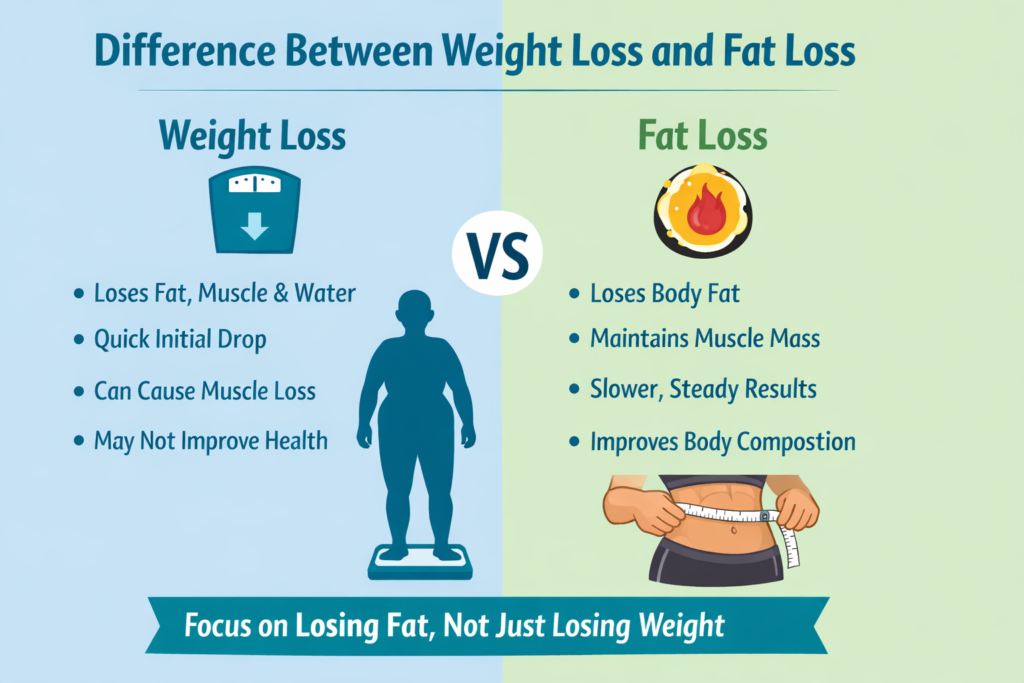
Many people use the terms weight loss and fat loss interchangeably, but they are not the same. Weight loss refers to a reduction in overall body weight, including fat, muscle, and water. Fat loss specifically means reducing body fat while preserving muscle mass, which leads to healthier and more sustainable results.
Understanding the difference between weight loss and fat loss can help you choose the right diet, exercise, and lifestyle changes to achieve long-term health and fitness goals.
What Is Weight Loss?
Weight loss refers to a decrease in total body weight. This reduction can come from several components of the body, including:
Body fat
Muscle mass
Water weight
Glycogen stores
For example, when someone follows a crash diet or drastically reduces calorie intake, they may lose weight quickly. However, much of this weight loss may come from water or muscle instead of fat.
Because of this, weight loss alone does not always indicate improved body composition or health.
What Is Fat Loss?
Fat loss specifically refers to the reduction of stored body fat while maintaining muscle mass. This type of weight reduction is considered healthier because it improves metabolism, strength, and body composition.
Fat loss typically occurs when the body uses stored fat as energy. This usually happens through a combination of:
Balanced nutrition
Strength training
Cardiovascular exercise
Adequate sleep and recovery
Unlike rapid weight loss, fat loss usually occurs gradually but produces more sustainable results.
Key Difference Between Weight Loss and Fat Loss
| Factor | Weight Loss | Fat Loss |
|---|---|---|
| Definition | Reduction in total body weight | Reduction in body fat |
| Includes | Fat, muscle, and water | Mainly body fat |
| Speed | Often faster initially | Slower but sustainable |
| Health impact | May not improve body composition | Improves metabolism and health |
| Body appearance | Limited visible change | Better muscle definition |
Why Fat Loss Is More Important Than Weight Loss
Focusing only on weight loss can sometimes lead to muscle loss and metabolic slowdown. Fat loss, however, provides several important health benefits.
Improves Body Composition
Reducing body fat while maintaining muscle leads to a leaner and stronger body.
Boosts Metabolism
Muscle burns more calories than fat, so preserving muscle helps maintain a healthy metabolism.
Reduces Health Risks
Lower body fat levels can reduce the risk of:
Heart disease
Type 2 diabetes
High blood pressure
Obesity-related conditions
Provides Long-Term Results
Fat loss achieved through healthy lifestyle changes is more sustainable than rapid weight loss from crash diets.
How to Focus on Fat Loss Instead of Just Weight Loss
To achieve healthy fat loss, experts recommend the following strategies:
Maintain a Moderate Calorie Deficit
Eating slightly fewer calories than the body burns helps promote fat loss without significant muscle loss.
Prioritize Protein Intake
Protein supports muscle maintenance and fat metabolism.
Include Strength Training
Resistance exercises help preserve and build muscle while promoting fat burning.
Stay Physically Active
Combining cardio and strength training helps the body use stored fat for energy.
Track Body Composition
Instead of relying only on a weighing scale, monitor body measurements, body fat percentage, and physical performance.
Signs You Are Losing Fat Instead of Just Weight
Several indicators suggest that you are losing fat rather than simply losing weight:
Clothes fitting more loosely
Increased muscle definition
Improved strength and endurance
Gradual changes in body shape
Consistent energy levels
These signs often reflect improvements in body composition, even if the scale does not change dramatically.
Conclusion
While weight loss and fat loss are related, they represent different processes in the body. Weight loss refers to a decrease in overall body weight, which may include fat, muscle, and water. Fat loss, on the other hand, focuses specifically on reducing excess body fat while maintaining muscle mass.
For better health, improved metabolism, and long-term fitness results, focusing on fat loss rather than simply lowering body weight is usually the most effective approach.
FAQs: Difference Between Weight Loss and Fat Loss
What is better, fat loss or weight loss?
Fat loss is generally considered better than overall weight loss because it specifically reduces excess body fat while preserving muscle mass. Losing only weight may include water or muscle loss. Fat loss improves body composition, metabolism, and overall health, making it a more sustainable and healthier goal for long-term fitness.
How do you know if you are losing weight or fat?
You can tell if you are losing fat by observing changes in body measurements, muscle definition, and how your clothes fit. If the scale drops but strength decreases or muscles look smaller, you may be losing muscle. Tracking body fat percentage and waist measurements can help confirm fat loss.
Can I lose fat without losing weight?
Yes, it is possible to lose fat without a major change in body weight. This can happen when body fat decreases while muscle mass increases. For example, strength training combined with proper nutrition can improve body composition even if the number on the scale remains the same.
Do I lose weight or fat first?
In the early stages of dieting or lifestyle changes, the body often loses water weight first. After that, the body begins to burn stored fat for energy. Sustainable weight loss over time typically reflects gradual fat loss, especially when combined with healthy eating and regular exercise.
Which body part loses fat first?
Fat loss does not occur in a specific order because it depends on genetics, hormones, and body composition. However, many people tend to lose fat first from areas like the face, arms, or upper body, while areas such as the abdomen or thighs may take longer to reduce.