Digestive Health Institute
by Dr. Muffi

Digestive Health Institute
by Dr. Muffi
How to Sleep After Gallbladder Surgery
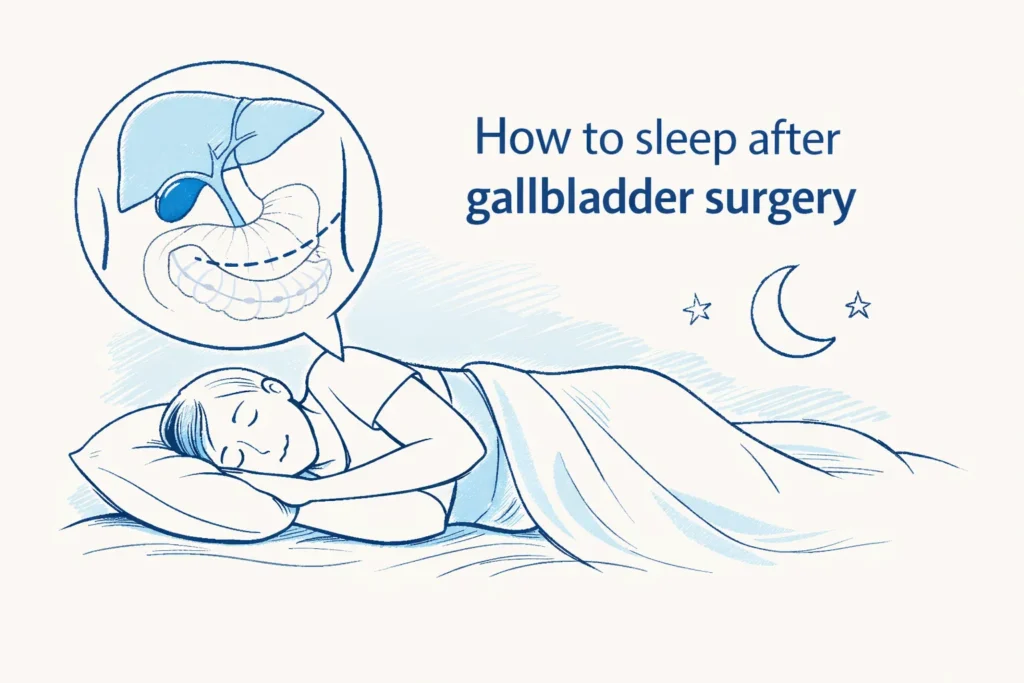
Recovering after gallbladder surgery can feel uncomfortable, especially when it comes to rest. Many patients struggle with pain, bloating, and difficulty finding a comfortable sleeping position. Understanding how to sleep after gallbladder surgery is essential for proper healing, reducing discomfort, and ensuring a smooth recovery.
Whether you have undergone laparoscopic or open surgery, your sleeping posture plays a critical role in preventing strain on your abdomen and promoting faster healing.
In this detailed guide, we will explain how to sleep after gallbladder surgery, the best sleeping positions, what to avoid, and expert recovery tips.
Why Sleep Position Matters After Gallbladder Surgery
After surgery, your body needs time to heal. The abdominal area is sensitive, and improper sleeping positions can:
- Put pressure on incisions
- Increase pain and discomfort
- Slow down recovery
- Disturb sleep quality
That’s why learning how to sleep after gallbladder surgery is a key part of post-operative care.
Best Sleeping Positions After Gallbladder Surgery
1. Sleeping on Your Back (Best Recommended Position)
Why It Works
Keeps pressure off the abdomen
Maintains proper spinal alignment
Reduces risk of irritation
How to Do It
Lie flat on your back
Place a pillow under your knees
Keep your upper body slightly elevated
This is the safest method when learning how to sleep after gallbladder surgery.
2. Sleeping in a Reclined Position
Why It Helps
Reduces abdominal pressure
Helps with digestion
Minimizes acid reflux
How to Do It
Use a recliner chair or adjustable bed
Keep your head elevated at 30–45 degrees
Ideal during the first few days after surgery.
3. Sleeping on Your Left Side (After a Few Days)
Why Left Side?
Improves digestion
Reduces pressure on surgical area
Precautions
Use pillows for support
Avoid twisting your body
Only try this after consulting your doctor while learning how to sleep after gallbladder surgery.
Sleeping Positions to Avoid
Some positions can worsen pain or delay healing.
Sleeping on Your Stomach
Problem | Reason |
Pressure on abdomen | Irritates incision |
Pain increase | Delays healing |
Sleeping on Right Side (Initially)
Problem | Reason |
Pressure on surgery area | Causes discomfort |
Strain on stitches | Risk of irritation |
Avoid these positions when figuring out how to sleep after gallbladder surgery.
Comparison of Sleeping Positions
Position | Comfort Level | Safety | When to Use |
Back sleeping | High | Very Safe | Immediately after surgery |
Reclined | Very High | Very Safe | First few days |
Left side | Moderate | Safe | After initial recovery |
Right side | Low | Risky | Avoid early stage |
Stomach | Very Low | Unsafe | Avoid completely |
How Long Should You Sleep in These Positions?
Surgery Type | Recommended Sleep Position Duration |
Laparoscopic | 1–2 weeks |
Open surgery | 3–4 weeks |
Tips for Better Sleep After Gallbladder Surgery
1. Use Extra Pillows for Support
Pillow Placement | Benefit |
Under knees | Reduces back strain |
Under arms | Prevents rolling |
Behind back | Maintains position |
2. Manage Pain Before Sleeping
- Take prescribed medications
- Avoid skipping doses
3. Avoid Heavy Meals Before Bed
Food Type | Impact |
Fatty foods | Causes discomfort |
Spicy foods | Triggers acidity |
4. Wear Loose Clothing
- Prevents irritation
- Improves comfort
5. Create a Comfortable Sleep Environment
- Keep room quiet
- Maintain proper temperature
- Use soft bedding
Common Problems While Sleeping After Surgery
1. Pain While Turning
Solution:
Move slowly
Use arms for support
2. Difficulty Falling Asleep
Solution:
Practice deep breathing
Maintain a sleep routine
3. Bloating and Gas
Common after laparoscopic surgery
Solution | Benefit |
Walk lightly | Reduces gas |
Stay hydrated | Improves digestion |
When Can You Sleep Normally Again?
Recovery Stage | Timeline |
Initial recovery | 1–2 weeks |
Full comfort | 3–4 weeks |
Gradually transition as you improve while following how to sleep after gallbladder surgery.
Signs You Should Contact a Doctor
While learning how to sleep after gallbladder surgery, watch for:
Symptom | Concern |
Severe pain | Complication |
Fever | Infection |
Redness/swelling | Wound issue |
Persistent vomiting | Digestive problem |
Diet Tips That Improve Sleep & Recovery
Food | Benefit |
Light meals | Easy digestion |
High-fiber foods | Prevent constipation |
Plenty of water | Faster recovery |
Final Thoughts
Understanding how to sleep after gallbladder surgery is a crucial part of recovery that many patients overlook. The right sleeping position not only reduces discomfort but also supports faster healing and better overall outcomes.
By following proper techniques, avoiding risky positions, and listening to your body, you can significantly improve your recovery experience.
If discomfort persists or symptoms worsen, it is always best to consult a qualified surgeon for guidance.
FAQs: How to Sleep After Gallbladder Surgery
- What is the best position to sleep after gallbladder surgery?
Sleeping on your back with your upper body slightly elevated is best to reduce pressure and pain. - Do you need bed rest after gallbladder removal?
Short rest is needed, but light movement is encouraged within a day to promote recovery. - Is sitting good after gallbladder surgery?
Yes, sitting upright helps reduce discomfort and improves digestion, but avoid sitting too long. - Why don’t I feel sleepy after gallbladder removal?
Anesthesia effects, pain, medications, or stress can temporarily disrupt sleep patterns. - How should you feel 3 days after gallbladder removal?
Mild pain, fatigue, and bloating are normal, but symptoms should gradually improve. - Can I sleep on my side after laparoscopic surgery?
Yes, once comfortable usually after a few days preferably on the non-painful side with support pillows. - How many hours does gallbladder surgery take?
Laparoscopic surgery typically takes about 1 to 2 hours.