Digestive Health Institute
by Dr. Muffi
Digestive Health Institute
by Dr. Muffi
Does Diarrhea Cause Weight Loss?
Does Diarrhea Cause Weight Loss? Causes, Risks & When to See a Doctor
Diarrhea is a common digestive problem that most people experience at some point. But many patients wonder: Can diarrhea cause weight loss?
The short answer is yes but usually temporarily. However, in some cases, ongoing diarrhea may lead to significant and unhealthy weight loss that requires medical attention.
Let’s understand why this happens.
Can Diarrhea Really Cause Weight Loss?
Yes, diarrhea can cause weight loss, but it depends on the duration and severity.
When you have diarrhea:
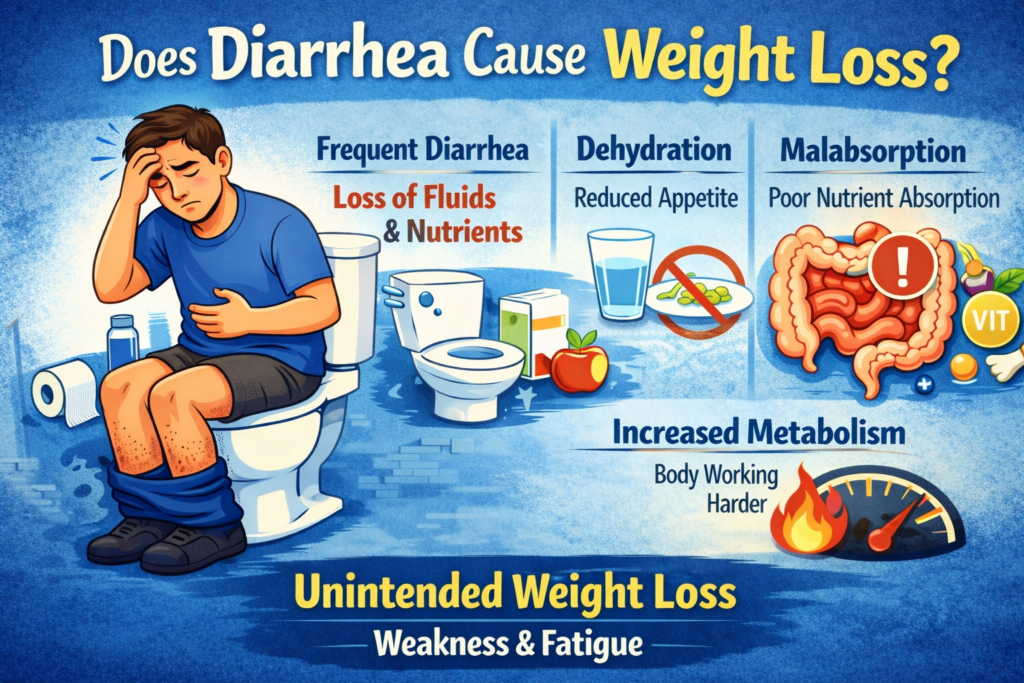
- Your body loses fluids rapidly
- Nutrients pass through the digestive system too quickly
- Food is not properly absorbed
- Dehydration may occur
Most short-term weight loss during diarrhea is due to fluid loss, not fat loss.
Why Does Diarrhea Lead to Weight Changes?
There are two main reasons:
1️ Fluid Loss
Diarrhea causes frequent loose stools, leading to:
- Dehydration
- Temporary drop in body weight
- Electrolyte imbalance
Once hydration is restored, the weight often returns.
2️ Poor Nutrient Absorption
If diarrhea continues for weeks, the body may not absorb:
- Proteins
- Fats
- Vitamins
- Minerals
This can result in true weight loss, muscle weakness, and fatigue.
When Is Weight Loss from Diarrhea Concerning?
You should seek medical evaluation if:
- Diarrhea lasts more than 3–4 days
- You experience unexplained weight loss
- There is blood in stool
- You have persistent abdominal pain
- You feel weak or dizzy
Chronic diarrhea may be linked to conditions such as:
- Infections
- Food intolerance
- Inflammatory bowel disease
- Malabsorption disorders
- Thyroid disorders
Unintentional weight loss should never be ignored.
Can Chronic Diarrhea Cause Long-Term Weight Loss?
Yes.
If diarrhea becomes chronic (lasting more than 4 weeks), it may lead to:
- Nutritional deficiencies
- Muscle wasting
- Vitamin deficiency
- Weak immune system
Long-term digestive issues can significantly affect overall health.
Is Weight Loss from Diarrhea Healthy?
No.
Weight loss caused by diarrhea is not healthy weight loss. It is usually due to dehydration or poor nutrient absorption.
Healthy weight loss occurs gradually through:
- Balanced nutrition
- Controlled calorie intake
- Medical supervision (when needed)
Sudden or unexplained weight loss always requires evaluation.
What Should You Do?
If diarrhea is mild and short-term:
- Drink plenty of fluids
- Use oral rehydration solutions
- Eat light, bland foods
If diarrhea persists or weight loss continues:
- Consult a doctor
- Get blood tests if needed
- Evaluate underlying causes
Early diagnosis prevents complications.
Final Thoughts
Yes, diarrhea can cause weight loss but most of the time it is temporary and related to fluid loss. However, persistent diarrhea with ongoing weight loss may indicate an underlying medical issue.
If you experience prolonged symptoms or unexplained weight changes, medical evaluation is important for proper diagnosis and treatment.
FAQs Does Diarrhea Cause Weight Loss?
1 Can Having Diarrhea Make You Lose Weight?
Yes, diarrhea can cause weight loss, but it is usually temporary. Most of the weight lost during diarrhea comes from water and electrolyte loss rather than fat loss. When your body loses fluids quickly, the number on the scale may drop, but this does not mean you have burned body fat. Once you rehydrate and start eating normally again, your weight typically returns. However, if diarrhea lasts several days or becomes chronic, it can lead to more serious weight loss and dehydration.
2 What Can Cause Rapid Weight Loss?
Rapid or unexplained weight loss can be linked to several medical conditions. Common causes include infections, hyperthyroidism (overactive thyroid), uncontrolled diabetes, chronic digestive disorders, malabsorption problems, and certain cancers. Ongoing diarrhea can also contribute to weight loss by reducing nutrient absorption. If you lose more than 5% of your body weight within 6–12 months without trying, it is important to seek medical advice to rule out underlying health issues.
3 Does Diarrhea Mean You Didn’t Absorb Food?
In some cases, yes. Diarrhea can cause food to pass too quickly through the digestive tract, preventing the small intestine from fully absorbing nutrients such as fats, carbohydrates, proteins, vitamins, and minerals. Short-term diarrhea usually does not cause long-term problems. However, chronic diarrhea may indicate malabsorption disorders like celiac disease, Crohn’s disease, or pancreatic insufficiency, which can lead to nutrient deficiencies over time.
4 What Are the Signs That Your Body Is Burning Fat?
When your body burns fat, it is usually because you are in a calorie deficit. Signs include gradual and steady weight loss, clothes fitting looser, reduced body measurements, and improved body composition. Unlike sudden water loss from dehydration, fat burning happens slowly over weeks or months. Some people may also notice increased energy levels once their body adapts to using fat as fuel.
5 Why Am I Skinnier After Diarrhea?
You may appear skinnier after diarrhea because your body has lost fluids and your digestive system is temporarily emptied. Reduced bloating and inflammation can also make your stomach look flatter. This change is usually temporary and does not reflect true fat loss. After proper hydration and normal eating, your weight and appearance typically return to baseline. If weight loss continues after recovery, medical evaluation may be necessary.