
Digestive Health Institute
by Dr. Muffi

Digestive Health Institute
by Dr. Muffi
Robotic Bariatric Surgery
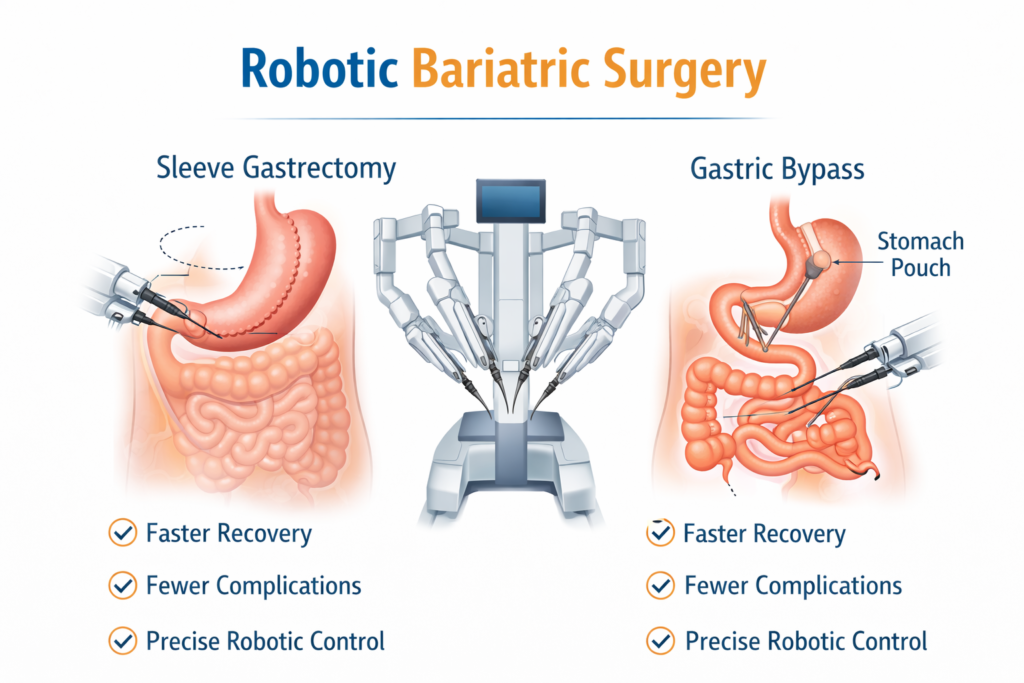
Robotic Bariatric Surgery: A Complete Guide to Advanced Weight Loss Surgery
Robotic bariatric surgery is a modern, minimally invasive approach to weight loss surgery that uses robotic-assisted technology to improve precision, safety, and recovery. It is increasingly used for procedures like gastric sleeve, gastric bypass, and duodenal switch, especially in patients with severe obesity or complex medical conditions.
In this comprehensive guide, you’ll learn what robotic bariatric surgery is, how it works, benefits, risks, recovery, who is eligible, and how it compares to traditional laparoscopic bariatric surgery.
What Is Robotic Bariatric Surgery?
Robotic bariatric surgery is performed using a robotic surgical system controlled entirely by a trained bariatric surgeon. The robot does not operate on its own; instead, it translates the surgeon’s hand movements into highly precise, controlled actions using tiny surgical instruments.
The surgery is done through small incisions, making it a minimally invasive procedure. Common bariatric surgeries performed robotically include:
- Robotic gastric sleeve surgery
- Robotic gastric bypass surgery
- Robotic SADI or duodenal switch surgery
How Does Robotic Bariatric Surgery Work?
During robotic bariatric surgery:
- Small incisions are made in the abdomen
- A high-definition 3D camera provides a magnified view
- Robotic arms hold surgical instruments with enhanced range of motion
- The surgeon controls the robot from a console for precise movements
This technology allows for greater accuracy in suturing, cutting, and reconstruction compared to conventional laparoscopic surgery.
Types of Bariatric Surgery Performed Robotically
Robotic technology can be used for several weight loss procedures:
Robotic Sleeve Gastrectomy
Reduces stomach size by removing about 70–80% of the stomach, limiting food intake and reducing hunger hormones.
Robotic Gastric Bypass
Creates a small stomach pouch and reroutes part of the small intestine to reduce calorie absorption and improve metabolism.
Robotic Duodenal Switch / SADI
Combines sleeve gastrectomy with intestinal bypass for maximum weight loss and diabetes control.
Benefits of Robotic Bariatric Surgery
Robotic-assisted bariatric surgery offers several advantages:
- Greater surgical precision
- Enhanced 3D visualization
- Improved control in complex cases
- Reduced risk of complications
- Less blood loss
- Smaller incisions and less scarring
- Faster recovery and shorter hospital stay
- Better outcomes in revisional bariatric surgery
It is particularly beneficial for patients with high BMI or previous abdominal surgeries.
Robotic Bariatric Surgery vs Laparoscopic Surgery
Feature | Robotic Surgery | Laparoscopic Surgery |
Precision | Very high | High |
Visualization | 3D, magnified | 2D |
Surgeon control | Advanced wristed instruments | Limited range |
Best for complex cases | Yes | Sometimes |
Recovery time | Similar or faster | Standard |
Both methods are safe and effective, but robotic surgery may offer advantages in complex or high-risk cases.
Who Is a Good Candidate for Robotic Bariatric Surgery?
You may be eligible if:
- Your BMI is 40 or higher
- BMI is 35 or higher with obesity-related conditions
- You need revisional bariatric surgery
- You have severe or long-standing obesity
- Your surgeon recommends robotic assistance for precision
Final eligibility is determined after a comprehensive medical evaluation.
Risks and Disadvantages of Robotic Bariatric Surgery
Although safe, robotic bariatric surgery has potential risks:
- Standard surgical risks (bleeding, infection, leaks)
- Longer operating time in some cases
- Higher cost compared to laparoscopic surgery
- Need for experienced robotic bariatric surgeons
Long-term success still depends on lifestyle changes and follow-up care.
Recovery After Robotic Bariatric Surgery
- Hospital stay: 1–3 days
- Return to work: 2–4 weeks
- Full recovery: 4–6 weeks
Most patients experience less pain and faster mobility due to smaller incisions.
Diet and Lifestyle After Surgery
Post-surgery diet follows stages:
- Liquid diet
- Pureed foods
- Soft foods
- Regular high-protein meals
Lifestyle guidelines include:
- Daily vitamin and mineral supplements
- High-protein intake
- Regular physical activity
- Lifelong follow-up with bariatric team
Weight Loss Results and Success Rates
Weight loss results depend on the type of bariatric procedure performed. On average:
- 60–80% excess weight loss within 12–24 months
- Significant improvement or remission of type 2 diabetes
- Long-term weight maintenance with adherence to guidelines
Robotic assistance improves surgical precision but weight loss success depends on patient commitment.
Is Robotic Bariatric Surgery Safe?
Yes, robotic bariatric surgery is considered safe when performed by an experienced bariatric surgeon. The technology enhances accuracy and control, which may reduce complications in complex cases.
Final Thoughts
Robotic bariatric surgery represents a major advancement in weight loss surgery, offering improved precision, safety, and outcomes for many patients. While it may not be necessary for every individual, it can be especially beneficial for high-BMI patients or complex surgical cases.
Consulting an experienced bariatric surgeon is the best way to determine whether robotic bariatric surgery is the right option for your weight loss journey.
Thinking about bariatric surgery?
A consultation with a certified bariatric specialist can help you choose the most effective and safest surgical approach for long-term success.
FAQs About Robotic Bariatric Surgery
What is robotic bariatric surgery?
Robotic bariatric surgery is a minimally invasive weight-loss procedure performed using robotic-assisted technology controlled by a trained surgeon. The system provides enhanced precision, 3D visualization, and improved control, helping surgeons perform bariatric procedures such as gastric sleeve, gastric bypass, and SADI more accurately and safely.
Who is a good candidate for robotic bariatric surgery?
A good candidate for robotic bariatric surgery is someone with a BMI of 40 or higher, or a BMI of 35 or higher with obesity-related conditions such as diabetes or sleep apnea. It is especially beneficial for patients with high BMI, previous abdominal surgeries, or those needing complex or revisional bariatric procedures.
What are the risks of bariatric surgery?
Bariatric surgery carries risks like bleeding, infection, leaks, blood clots, and nutritional deficiencies. Long-term risks may include vitamin and mineral deficiencies if supplements are not taken as prescribed. Choosing an experienced bariatric surgeon and following lifelong medical follow-up significantly reduces these risks.
How long does robotic bariatric surgery take?
Robotic bariatric surgery typically takes 2 to 4 hours, depending on the type of procedure and patient complexity. Robotic assistance may slightly increase operating time, but it often improves surgical precision and outcomes, especially in complex cases.
What is the most successful type of bariatric surgery?
The most successful bariatric surgery depends on individual health goals and medical conditions. Procedures like gastric bypass and SADI offer higher long-term weight loss and diabetes remission, while sleeve gastrectomy is effective with fewer nutritional risks. A bariatric surgeon determines the best option based on patient needs.
-
 Is Stomach Cancer Hereditary
 -
 Difference Between Weight Loss and Fat Loss
 -
 Can I Go Back to Work 2 Weeks After a Hysterectomy?
 -
 why am i bleeding 10 years after a hysterectomy
 -
 Pain in Right Side 2 Years After Gallbladder Removal
 -
 Bariatric Surgery for GERD
 -
 Does Diarrhea Cause Weight Loss
 -
 How Many Steps to Lose 1kg?