
Digestive Health Institute
by Dr. Muffi

Digestive Health Institute
by Dr. Muffi
Body changes after uterus removal
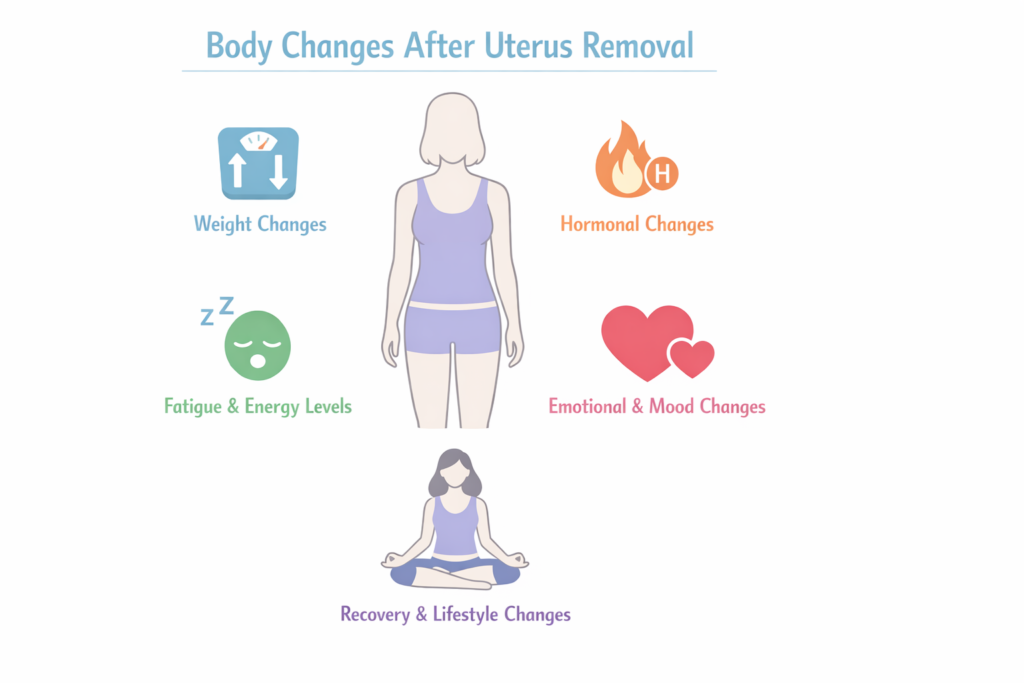
Body Changes After Uterus Removal (Hysterectomy): What to Expect
A hysterectomy is a surgical procedure to remove the uterus. If you are planning or considering hysterectomy surgery in Mumbai, understanding the physical, hormonal, and emotional changes after surgery can help you prepare better and recover confidently.
What is a Hysterectomy?
There are several different types of hysterectomy procedures, and the body changes may vary depending on which surgery is performed.
A hysterectomy is the surgical removal of the uterus, and it may include:
- Cervix – the lower part of the uterus.
- Ovaries – produce estrogen and progesterone.
- Fallopian tubes – carry eggs from ovaries to the uterus.
Why is it performed?
- Fibroids or uterine growths
- Severe endometriosis
- Abnormal or heavy bleeding
- Uterine prolapse
- Certain cancers (uterus, cervix, or ovaries)
- Complications from childbirth
Types of Hysterectomy and How They Affect the Body
Type of Hysterectomy | What is Removed | Body Changes to Expect |
Total Hysterectomy | Uterus + cervix | Menstruation stops; mild pelvic changes; if ovaries are retained, hormonal balance is maintained. |
Partial / Subtotal Hysterectomy | Upper uterus only | Menstruation stops; cervix remains, so Pap tests may still be needed. |
Radical Hysterectomy | Uterus + cervix + surrounding tissues ± part of vagina | Used for cancer; longer recovery; more extensive physical changes. |
Hysterectomy with Bilateral Salpingo-Oophorectomy | Uterus + cervix + ovaries + fallopian tubes | Immediate menopause; hot flashes; weight fluctuations; possible emotional changes. |
Body Changes After Uterus Removal
1️ Immediate Physical Changes
- No menstrual periods
- Soreness or swelling in pelvic/abdominal area
- Temporary urinary or bowel changes
- Mild bloating or digestive discomfort
2️ Hormonal Changes (If Ovaries Are Removed)
- Sudden menopause (hot flashes, night sweats, mood swings)
- Vaginal dryness
- Decreased libido
- Possible weight gain or changes in fat distribution
- Increased risk of osteoporosis
3️ Long-Term Changes
- Shift in pelvic organs (bladder, intestines)
- Changes in sexual function (lubrication, vaginal length)
- Emotional impact (feelings of loss, anxiety, depression)
Potential core muscle weakness
Recovery Timeline
Phase | What to Expect |
First 1–2 weeks | Rest, manage pain, monitor incisions, avoid heavy lifting |
Weeks 3–6 | Gradual activity, short walks, light daily tasks |
After 6 weeks | Return to normal activities, core exercises, sexual activity if cleared by doctor |
Tips for Faster Recovery:
- Eat a balanced, fiber-rich diet
- Stay hydrated
- Take medications as prescribed
- Practice light walking to prevent blood clots
Attend follow-up appointments
Recovery duration may vary depending on the surgical method used, including advanced robot-assisted hysterectomy techniques.
Advantages and Disadvantages of Uterus Removal
Advantages | Disadvantages |
Relief from chronic pain (fibroids, endometriosis) | Permanent loss of fertility |
Stops heavy bleeding and menstrual issues | Hormonal changes if ovaries are removed |
Reduced risk of uterine or cervical cancer | Emotional changes (mood swings, sense of loss) |
Improved quality of life and comfort | Possible vaginal dryness and reduced libido |
No need for birth control | Temporary bladder or bowel changes |
FAQs About Body changes after uterus removal
1️ What are the side effects of removing the uterus?
- Pain and soreness in the pelvic area
- Fatigue and weakness
- Vaginal dryness and changes in libido
- Hormonal changes if ovaries are removed (hot flashes, mood swings)
- Temporary bladder or bowel changes
2️ Do you gain weight after the uterus is removed?
- Weight gain isn’t automatic, but reduced activity and hormonal changes can cause it
- Staying active and following a balanced diet helps prevent weight gain
3️ What vitamins should I take after a hysterectomy?
- Calcium & Vitamin D for bones
- Iron for blood recovery
- B Vitamins for energy
- A multivitamin can help cover general needs
Always check with your doctor before starting supplements
4️ How to lose belly fat after a hysterectomy?
- Eat small, high-protein meals and avoid processed foods
- Start light exercises like walking or yoga
- Gradually include core-strengthening and strength training
- Stay consistent and patient during recovery
5️ What organs are affected by uterus removal?
- Primary: Uterus (removed), cervix (depends on surgery), ovaries and fallopian tubes (sometimes removed)
- Nearby organs: Bladder and intestines may shift temporarily
- Effects: Hormonal changes if ovaries are removed, possible temporary urinary or bowel changes
-
 Is Stomach Cancer Hereditary
 -
 Difference Between Weight Loss and Fat Loss
 -
 Can I Go Back to Work 2 Weeks After a Hysterectomy?
 -
 why am i bleeding 10 years after a hysterectomy
 -
 Pain in Right Side 2 Years After Gallbladder Removal
 -
 Bariatric Surgery for GERD
 -
 Does Diarrhea Cause Weight Loss
 -
 How Many Steps to Lose 1kg?