Digestive Health Institute
by Dr. Muffi

Digestive Health Institute
by Dr. Muffi
Is Gallbladder Wall Thickening Dangerous?
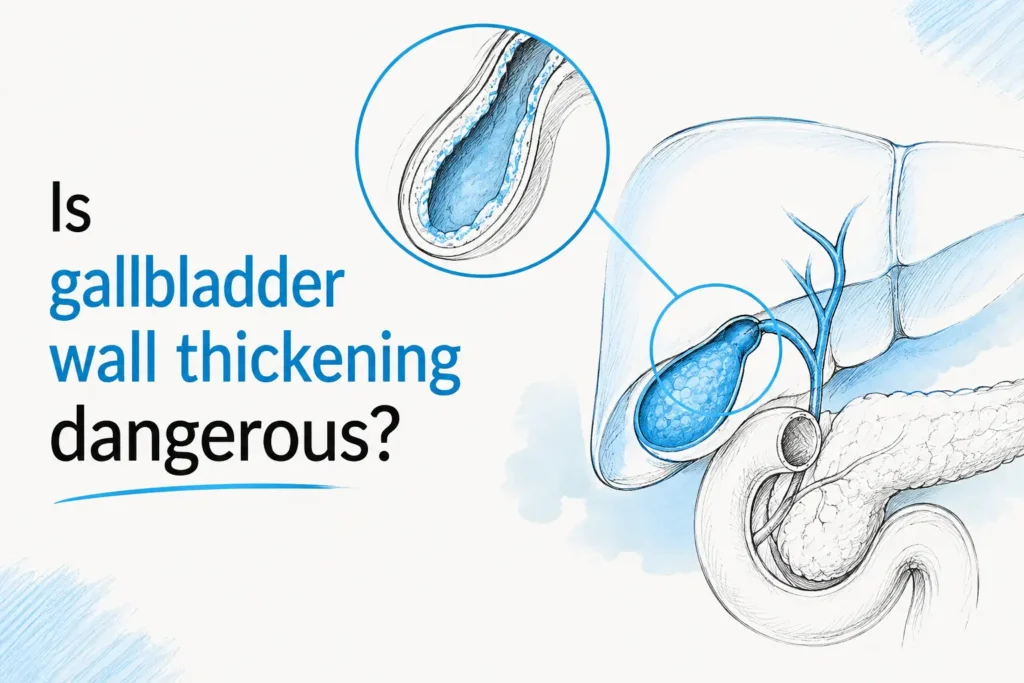
If your ultrasound report mentions gallbladder wall thickening, it’s natural to feel concerned. Many patients immediately wonder: Is gallbladder wall thickening dangerous?
The answer depends on the underlying cause. Gallbladder wall thickening is not a disease itself but a sign that something may be affecting the gallbladder. In some cases, it is caused by inflammation due to gallstones, while in others it may be related to liver disease, infection, heart failure, or other medical conditions.
While mild gallbladder wall thickening may not be dangerous, significant thickening associated with symptoms often requires medical evaluation.
Quick Answer: Is Gallbladder Wall Thickening Dangerous?
Finding | Risk Level |
Mild thickening without symptoms | Usually low risk |
Thickening with gallstones | Moderate to high risk |
Thickening with infection | Potentially serious |
Thickening causing severe pain | Requires prompt medical evaluation |
Thickening associated with suspected cancer | Serious |
Key Takeaway: Gallstones are one of the most common causes of gallbladder wall thickening. Larger stones may increase the risk of inflammation and blockage. Learn more about which size of gallbladder stone is considered dangerous and how stone size can affect treatment decisions.
What Is Gallbladder Wall Thickening?
The gallbladder is a small organ located beneath the liver that stores bile.
Normally, the gallbladder wall is thin.
Normal vs Thickened Gallbladder Wall
Gallbladder Wall Measurement | Interpretation |
Less than 3 mm | Generally normal |
More than 3 mm | Considered thickened |
Significantly thickened | May indicate underlying disease |
What Causes Gallbladder Wall Thickening?
There are many possible causes.
Common Causes of Gallbladder Wall Thickening
Cause | How It Affects the Gallbladder |
Gallstones | Can trigger inflammation |
Acute cholecystitis | Causes swelling and thickening |
Chronic cholecystitis | Long-term inflammation |
Liver disease | May cause fluid accumulation |
Heart failure | Can lead to gallbladder wall edema |
Kidney disease | Fluid retention may contribute |
Infections | Cause inflammation |
Gallbladder cancer | Rare but important cause |
Is Gallbladder Wall Thickening Dangerous With Gallstones?
One of the most common reasons people ask “Is gallbladder wall thickening dangerous?” is because their ultrasound shows both gallstones and a thickened gallbladder wall.
Gallstones + Wall Thickening
Ultrasound Finding | What It May Mean |
Gallstones only | May be asymptomatic |
Gallstones + wall thickening | Suggests inflammation |
Gallstones + thickening + pain | May indicate acute cholecystitis |
Gallstones + fever | Possible infection |
When gallstones block bile flow, inflammation can cause the gallbladder wall to thicken. In patients with larger gallstones, the risk of recurrent inflammation and gallbladder attacks may be higher. For example, a 15 mm gallbladder stone often requires careful evaluation to determine whether surgery is necessary.
Symptoms That May Indicate a Serious Problem
Seek Medical Attention If You Have:
Symptom | Possible Cause |
Severe upper abdominal pain | Gallbladder attack |
Fever | Infection |
Chills | Acute inflammation |
Nausea and vomiting | Gallbladder disease |
Yellow skin or eyes | Bile duct blockage |
Persistent tenderness | Gallbladder inflammation |
These symptoms suggest the thickening may be associated with an active disease process.
How Is Gallbladder Wall Thickening Diagnosed?
Doctors usually identify gallbladder wall thickening through imaging tests.
Common Diagnostic Tests
Test | Purpose |
Ultrasound | First-line imaging test |
CT scan | Evaluates complications |
MRI/MRCP | Examines bile ducts |
Blood tests | Detect infection or inflammation |
Liver function tests | Assess bile flow |
Treatment for Gallbladder Wall Thickening
If gallstones are causing gallbladder wall thickening, surgery is not always the first option. Some patients explore whether gallbladder stones can be removed without surgery, depending on the size of the stones and the severity of symptoms.
Treatment Options
Cause | Possible Treatment |
Gallstones | Observation or surgery |
Acute cholecystitis | Antibiotics and surgery |
Infection | Antibiotics |
Liver disease | Treat underlying condition |
Heart failure | Manage fluid retention |
Cancer | Specialist treatment |
Conclusion
So, is gallbladder wall thickening dangerous? The answer depends on why the gallbladder wall has become thickened. Mild thickening may not be serious, but when accompanied by gallstones, pain, fever, or signs of infection, it may indicate a condition that requires prompt medical attention.
An ultrasound finding of gallbladder wall thickening should always be interpreted alongside symptoms, blood tests, and other imaging results to determine the appropriate treatment.
FAQ
1. Is gallbladder wall thickening dangerous?
It can be dangerous if caused by infection, inflammation, obstruction, or cancer. The level of risk depends on the underlying cause.
2. Can gallbladder wall thickening go away?
Yes. In some cases, treating the underlying condition can reduce the thickening.
3. Can symptoms occur even after gallbladder removal?
Yes. Although gallbladder removal usually resolves gallstone-related problems, some patients may experience discomfort or abdominal pain afterward. Learn more about pain in the right side years after gallbladder removal and the possible causes.
4. What is a normal gallbladder wall thickness?
A gallbladder wall measuring less than 3 mm is generally considered normal.
5. Does gallbladder wall thickening always mean gallstones?
No. It can also occur due to liver disease, heart failure, infection, and other conditions.
6. Can gallbladder wall thickening be treated without surgery?
Yes, depending on the cause. Some cases respond to medical treatment, while others require surgery.
Medical Disclaimer
This article is for educational purposes only and should not replace professional medical advice, diagnosis, or treatment. Symptoms and treatment approaches may vary between individuals. Please consult a qualified healthcare professional for personalized medical guidance.