Digestive Health Institute
by Dr. Muffi

Digestive Health Institute
by Dr. Muffi
Most Common Hernia in Females: Types, Symptoms, Causes & Treatment Options
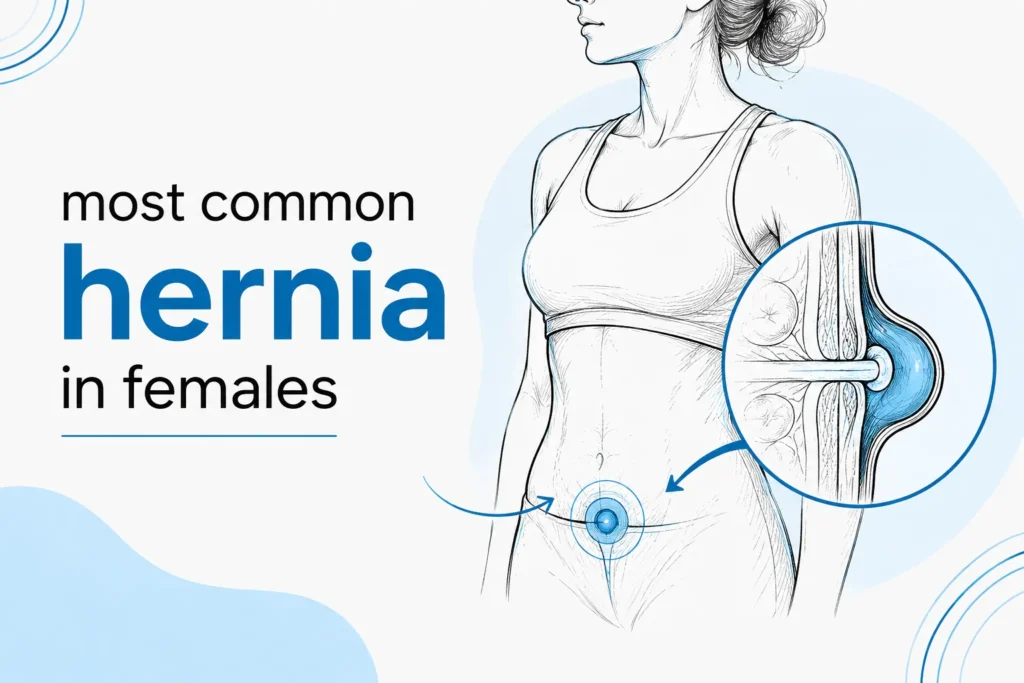
Hernias are often discussed more in men, but many women also develop hernias. In females, hernia symptoms may sometimes be missed because they can look similar to digestive, pelvic, or gynecological problems.
Understanding the most common hernia in females can help patients seek medical advice early and avoid complications. This guide explains the common types of hernia seen in women, symptoms, causes, risk factors, diagnosis, and possible treatment options in simple language.
What Is a Hernia?
A hernia happens when an internal organ or fatty tissue pushes through a weak area in the muscle or tissue wall. In women, hernias may develop in the abdomen, groin, or near previous surgical scars. Some hernias are small and painless, while others may cause discomfort or swelling.
What Is the Most Common Hernia in Females?
The most common hernia in females is usually an inguinal hernia or a femoral hernia, depending on age and body structure.
- Inguinal Hernia: An inguinal hernia develops in the groin area when tissue pushes through a weak spot in the lower abdominal wall. Although inguinal hernias are more common in men, women can also develop them.
- Femoral Hernia: Femoral hernias are relatively more common in women compared to men because of the wider female pelvis. These hernias appear slightly below the groin and may carry a higher risk of complications if untreated.
Most Common Hernia in Females by Age & Conditions
Conditions | Hernia More Commonly Seen |
Pregnancy | Umbilical Hernia |
Older women | Femoral Hernia |
Obesity | Umbilical or Incisional Hernia |
Previous abdominal surgery | Incisional Hernia |
Heavy lifting or chronic cough | Inguinal Hernia |
Types of Hernia Commonly Seen in Women
1. Inguinal Hernia: This is one of the most common hernia in females affecting the groin area.
Symptoms may include:
- Groin swelling
- Pain while coughing or lifting
- Burning sensation
- Heaviness in the lower abdomen
- Discomfort during standing for long periods
2. Femoral Hernia
A femoral hernia develops near the upper thigh or groin.
It may appear as:
- Small lump near the groin
- Sudden pain
- Nausea or vomiting in severe cases
3. Umbilical Hernia
This hernia develops near the belly button.
It may occur in:
- Women after pregnancy
- Individuals with obesity
- Patients with increased abdominal pressure
Symptoms can include:
- Bulge near the navel
- Mild discomfort
- Pain during strain or coughing
4. Incisional Hernia
An incisional hernia can develop after abdominal surgery, such as:
- Cesarean section (C-section)
- Gallbladder surgery
- Gynaecological surgery
Causes of the Most Common Hernia in Females
- Pregnancy
- Obesity
- Chronic constipation
- Heavy lifting
- Persistent cough
- Previous abdominal surgery
- Weak abdominal muscles
- Aging
Can Obesity Increase Hernia Risk in Women?
Yes, obesity may increase abdominal pressure and may raise the risk of developing the most common hernia in females.
Excess body weight can also:
- Weaken abdominal muscles
- Increase strain on tissues
- Affect recovery after surgery
Final Thoughts
The most common hernia in females may include inguinal, femoral, umbilical, or incisional hernias. Symptoms can sometimes be mild or mistaken for other conditions, which is why proper medical evaluation is important.
Treatment depends on the type of hernia, symptoms, and overall health condition. If you notice unusual swelling, groin pain, or abdominal discomfort, consulting a qualified healthcare professional may help with timely diagnosis and management.