Digestive Health Institute
by Dr. Muffi
Digestive Health Institute
by Dr. Muffi
Bariatric Surgery vs. Weight-Loss Medication: What's Right for You?
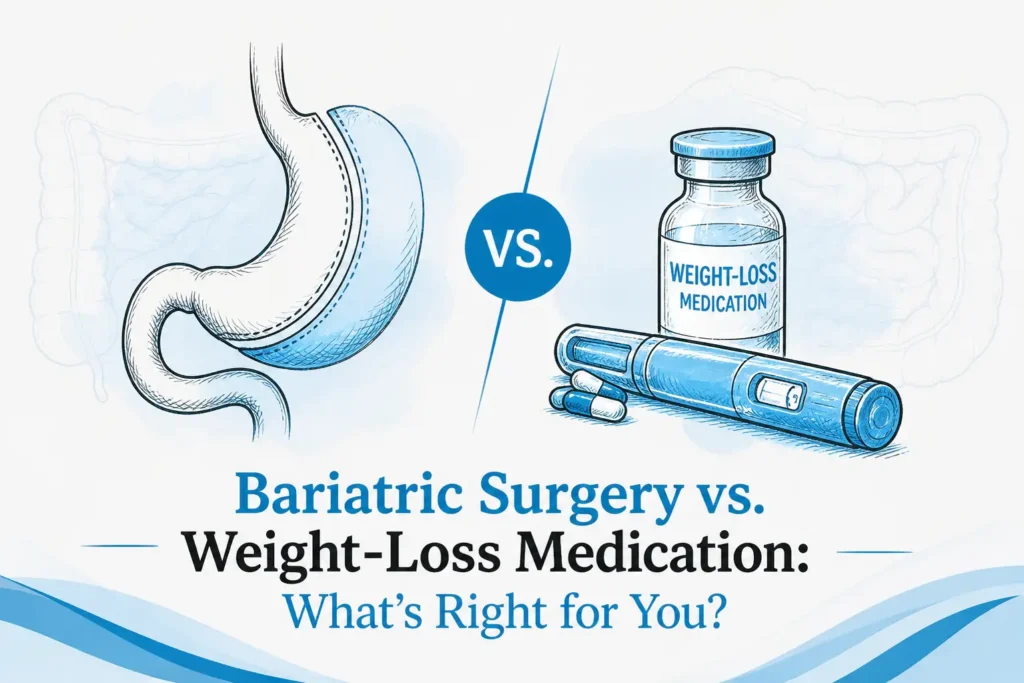
The obesity treatment landscape has changed dramatically. Here’s how to make the right choice for your body, your life, and your long-term health.
A few years ago, the conversation about obesity treatment was relatively straightforward. Diet, exercise, and if those failed surgery. Today, a new category of weight-loss medications has entered the picture, and patients across the world including right here in India are asking the same question: Do I really need surgery, or can I just take a pill?
It’s a fair question. And as someone who has performed thousands of bariatric procedures and watched the field evolve over two decades, I want to give you an honest, clear answer not one designed to steer you toward the operating table, but one that helps you understand what each path truly offers
First, Let's Be Clear: Both Options Work
GLP-1 receptor agonists medications like semaglutide and liraglutide represent a genuine breakthrough in obesity medicine. They reduce appetite, improve blood sugar regulation, and have shown meaningful weight loss in clinical trials. For many patients, they are a valuable tool.
Bariatric surgery, including sleeve gastrectomy, gastric bypass, and newer procedures like SADI, has decades of evidence behind it. It produces substantial, durable weight loss and has been shown to resolve or significantly improve conditions like Type 2 diabetes, hypertension, sleep apnoea, and PCOS.
The question isn’t which one is ‘better.’ The question is: which one is right for you — right now, at this stage of your health journey?
The goal isn’t to lose weight. The goal is to reclaim your health and the right treatment is the one that gets you there permanently.
What Weight-Loss Medications Can Offer
Medications are best suited for patients who have a BMI in the overweight to moderately obese range (27–35), are in the early stages of obesity-related health complications, have tried lifestyle interventions with limited success, or are not yet candidates for surgery, or prefer to try a non-surgical route first.
The key word in that last point is ‘yet.’ Medications require ongoing use to maintain their effect. When patients stop taking them, weight regain is common, sometimes substantial. This isn’t a flaw unique to these drugs; it reflects the chronic nature of obesity itself. But it does mean that for patients with severe obesity or serious comorbidities, medications alone may not be sufficient.
What Bariatric Surgery Offers
Surgery is not a shortcut. It is a metabolic intervention, one that physically alters how the body processes food, regulates hormones like ghrelin and insulin, and responds to hunger signals. The results, for the right patient, are life-changing.
Patients who are best suited for bariatric surgery typically have a BMI of 35 or above, or a BMI of 30+ with significant health conditions, have been living with obesity for several years without sustained success, have comorbidities such as diabetes, fatty liver disease, or joint deterioration, and are psychologically ready for the lifestyle changes surgery demands.
Side-by-Side: Medication vs. Bariatric Surgery
Use this table to understand how the two options compare across key factors:
| Factor | Weight-Loss Medication | Bariatric Surgery | Best Choice When… |
|---|---|---|---|
| Average Weight Loss | 5–15% body weight | 25–35% body weight | Severe obesity (BMI 35+) |
| Duration of Effect | Ongoing (needs continuous use) | Long-term / permanent changes | Need for durable, lasting results |
| Invasiveness | Non-surgical | Surgical (1–2 hrs, laparoscopic) | Prefer non-surgical first |
| Diabetes Remission | Partial improvement | Up to 80% remission | Type 2 diabetes with obesity |
| Cost (Long-term) | Ongoing monthly expense | One-time surgical investment | Long-term cost planning |
| Side Effects | Nausea, GI discomfort, fatigue | Surgical risks, nutritional needs | Weighing risk vs. benefit |
| Weight Regain Risk | High if medication stopped | Low with lifestyle follow-through | Sustainability matters most |
| Comorbidity Resolution | Moderate improvement | Significant/complete resolution | PCOS, sleep apnoea, fatty liver |
Note: This table is a general guide. Individual outcomes vary based on health profile, adherence, and clinical factors. Always consult a specialist for a personalised assessment.
The Honest Conversation About Long-Term Results
Here is something that doesn’t get discussed enough in social media posts or pharmacy ads: weight loss is easy to achieve in the short term. Sustaining it is the challenge.
Bariatric surgery has over 20 years of outcome data showing durable weight loss not just in year one, but across five, ten, even fifteen years when patients follow through with nutritional guidance and lifestyle support. At DHI, this long-term care is built into how we approach every single patient.
Medication outcomes, while promising, are still being studied over longer time horizons. The rebound risk when treatment is discontinued remains a significant clinical concern.
The best decision isn’t always the least invasive one. It’s the one that addresses the root of the problem, not just the number on the scale.
Can You Combine Both?
Yes, and in some cases, this is exactly what we recommend. At DHI, we have patients who use GLP-1 medications as a bridge before surgery, or as a short-term tool to achieve pre-operative weight loss. We also have patients in post-surgical care who use medication to support metabolic management alongside dietary guidance.
Obesity is a complex, chronic condition. Treating it well often means not thinking in either/or terms but in a continuum of care, where the right intervention is matched to the right stage of the journey.
Questions to Ask Yourself
Before you decide, bring these to your consultation: What is the root cause of my weight gain, hormonal, metabolic, behavioural, or a combination? Am I dealing with serious comorbidities that need urgent metabolic correction? Am I prepared for the lifestyle changes both options require? What does my long-term plan look like, not just for weight loss, but for sustained health?
The Bottom Line
There is no universal answer to this question. Obesity medicine has grown richer and more nuanced precisely because every patient’s story is different, their biology, their health history, their life circumstances.
What I would caution against is making this decision based on cost alone, fear alone, or social media trends alone. Both options carry real commitments. Both require real follow-through. And both deserve to be considered seriously, with guidance from someone who has looked at your specific case.
Frequently Asked Questions
These are the questions we hear most often in the clinic answered honestly.
1. Am I a candidate for bariatric surgery if my BMI is under 35?
Yes, in many cases. If you have a BMI of 30 or above alongside serious comorbidities, such as Type 2 diabetes, hypertension, or severe sleep apnoea surgery may be recommended. At DHI, we evaluate each patient holistically, not by BMI alone.
Can I stop taking weight-loss medication once I reach my goal weight?
Most GLP-1 medications require continued use to maintain results. Clinical data consistently shows significant weight gain after stopping. If you’re considering a long-term exit strategy from medication, a specialist consultation is essential.
2. Is bariatric surgery safe?
When performed by an experienced surgical team, bariatric surgery carries a very low risk profile comparable to common procedures like gallbladder removal. At DHI, our team has performed thousands of bariatric procedures with outcomes that match international benchmarks.
3. How long is the recovery after bariatric surgery?
Most patients are mobile within 24 hours and return to light daily activities within 2 weeks. Full recovery and dietary adjustment typically takes 4–6 weeks. Our team provides comprehensive post-operative support through every stage.
4. Will weight-loss medication work for me if I’ve tried dieting before?
It may, especially if hormonal or metabolic factors are contributing to your weight. Medications like semaglutide work best when paired with dietary guidance and behavioural support. They are not a standalone solution.
5 Can I combine medication and surgery?
Yes. In some cases, we use medication as a pre-surgical bridge to reduce operative risk, or post-operatively to support metabolic health. Your treatment plan at DHI is always individualised.
6. Does insurance cover bariatric surgery in India?
Coverage varies by insurer and policy. Many health insurance providers in India do cover bariatric surgery for patients meeting clinical criteria. Our team can help you navigate the documentation process.