Digestive Health Institute
by Dr. Muffi
Digestive Health Institute
by Dr. Muffi
Pain in Right Side 2 Years After Gallbladder Removal
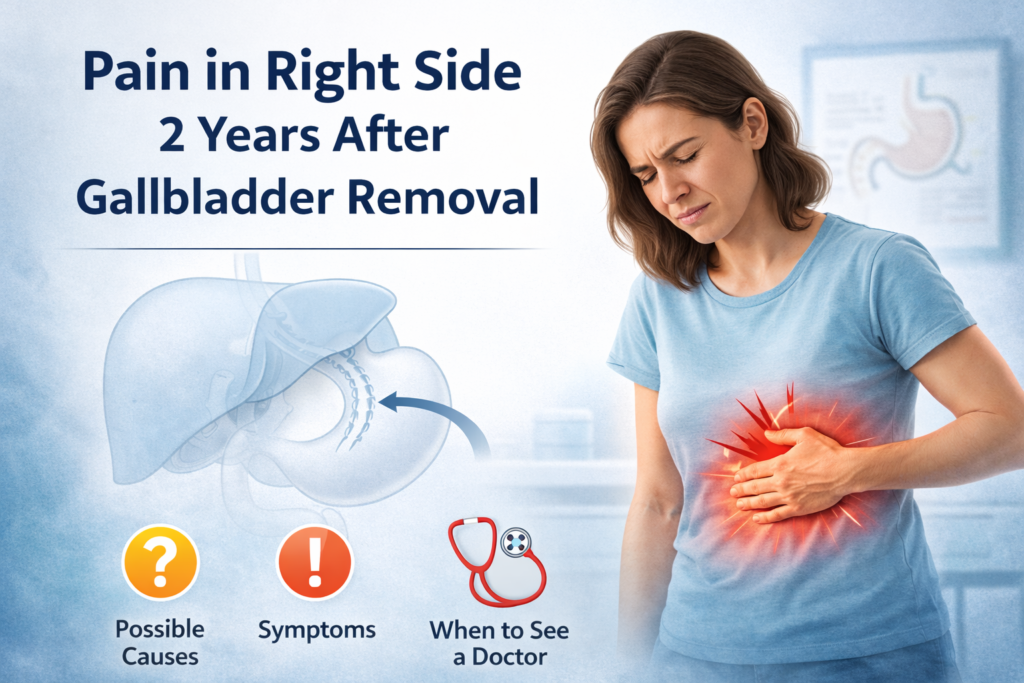
Pain in Right Side 2 Years After Gallbladder Removal: Causes, Diagnosis & Treatment Guide
Still experiencing pain in the right side even 2 years after gallbladder removal?
You’re not alone and more importantly, this symptom should not be ignored.
Gallbladder removal is generally a safe and effective procedure. Most patients feel better after surgery. However, some individuals develop persistent or new right upper abdominal pain months or even years later.
Understanding why this happens is the first step toward proper treatment.
Understanding Gallbladder Removal Surgery
Gallbladder removal, medically known as Cholecystectomy, is performed to treat:
- Gallstones
- Gallbladder inflammation
- Gallbladder infection
- Biliary colic
Today, most procedures are done laparoscopically (minimally invasive), allowing faster recovery and less pain.
Once the gallbladder is removed:
- Bile flows directly from the liver into the small intestine
- The body adapts to this change over time
But in some patients, this altered bile flow may contribute to ongoing digestive symptoms.
Is It Normal to Have Pain 2 Years After Gallbladder Removal?
Short answer: No, it is not considered normal.
While mild digestive changes can occur early after surgery, persistent right-sided abdominal pain two years later requires evaluation.
This condition is often grouped under:
Postcholecystectomy syndrome
Postcholecystectomy syndrome (PCS) refers to ongoing or new abdominal symptoms after gallbladder removal.
Symptoms may appear:
- Immediately after surgery
- Months later
- Or even years later
Causes of Right-Side Pain Years After Gallbladder Surgery
The causes can be divided into biliary causes and non-biliary causes.
BILIARY CAUSES (Related to the Bile Duct System)
1️ Retained or Recurrent Bile Duct Stones
Sometimes:
- Small stones are left behind in the bile duct
- New stones form later
These stones can block bile flow and cause:
- Sharp right upper abdominal pain
- Fever
- Yellowing of eyes (jaundice)
- Nausea and vomiting
This condition may require endoscopic removal.
2️ Bile Duct Stricture (Narrowing)
Scar tissue can narrow the bile duct over time. This leads to:
- Chronic discomfort
- Abnormal liver function tests
- Possible jaundice
Strictures may develop gradually, explaining why pain appears years later.
3️ Sphincter of Oddi Dysfunction (SOD)
The sphincter of Oddi controls bile flow into the intestine.
If it becomes tight or dysfunctional, it can cause:
- Recurrent right upper abdominal pain
- Pain after meals
- Symptoms similar to gallstone attacks
SOD is one of the more complex causes of post-gallbladder pain.
4️ Bile Leakage (Rare Late Presentation)
Although uncommon years later, some patients may develop complications related to prior bile duct injury.
NON-BILIARY CAUSES (Not Directly Related to Bile Ducts)
Not all right-sided pain after gallbladder removal is due to bile duct problems.
Other conditions that mimic gallbladder pain include:
5️ Acid Reflux or Gastritis
After gallbladder removal, bile flow changes. Some patients develop:
- Acid reflux
- Bile reflux
- Gastritis
This may cause upper abdominal burning or discomfort.
6️ Peptic Ulcer Disease
Ulcers in the stomach or small intestine may cause right upper abdominal pain.
7️ Pancreatitis
Inflammation of the pancreas can cause:
- Severe upper abdominal pain
- Back pain
Nausea
8️ Fatty Liver Disease
Fat accumulation in the liver can sometimes cause dull right-sided discomfort. In many cases, fatty liver is associated with obesity and metabolic syndrome. Patients struggling with severe obesity may benefit from consulting a bariatric surgery specialist in Mumbai to explore medically supervised weight-loss treatments.
9️ Post-Surgical Adhesions
Scar tissue inside the abdomen may cause:
- Pulling sensations
- Movement-related pain
- Chronic mild discomfort
What Does the Pain Feel Like?
Understanding the nature of pain helps narrow the diagnosis.
The pain may be:
- Sharp and sudden (possible stone or SOD)
- Dull and persistent (fatty liver or adhesions)
- Burning (acid reflux or gastritis)
- Associated with fever (infection)
- Triggered by meals (biliary or gastric cause)
Pain lasting weeks or recurring frequently should always be investigated.
Is This Condition Dangerous?
It depends on the cause.
Seek urgent medical attention if you have:
- Fever with abdominal pain
- Yellowing of eyes or skin
- Severe vomiting
- Intense pain not relieved by rest
- Sudden worsening of symptoms
These could indicate bile duct blockage or infection.
How Is Right-Side Pain Diagnosed After Gallbladder Removal?
A proper evaluation typically includes:
1️ Detailed Clinical History
- Onset of pain
- Relation to meals
- Associated symptoms
2️ Blood Tests
- Liver function tests
- Pancreatic enzymes
- Infection markers
3️ Ultrasound
Checks for bile duct dilation or stones.
4️ MRCP (Magnetic Resonance Cholangiopancreatography)
A specialized scan to evaluate bile ducts in detail.
5️ Endoscopy
To rule out ulcers or gastritis.
Accurate diagnosis is crucial because treatment depends entirely on the underlying cause.
Treatment Options
Treatment varies based on diagnosis.
If Due to Bile Duct Stones
- Endoscopic stone removal (ERCP)
If Due to Sphincter of Oddi Dysfunction
- Endoscopic therapy
- Medications in selected cases
If Due to Stricture
- Stenting
- Balloon dilation
If Due to Acid or Ulcer Disease
- Acid-suppressing medications
- Diet modification
If Due to Adhesions
- Conservative management
- Rarely, surgical correction
Can Lifestyle Changes Help?
Yes, especially for non-biliary causes.
Helpful measures include:
- Maintaining a healthy weight
- Eating smaller meals
- Avoiding fatty, spicy foods
- Limiting alcohol
- Managing stress
However, lifestyle changes alone may not resolve structural problems like stones or strictures.
When Should You Consult a Specialist?
You should consult a surgeon or gastroenterologist if:
- Pain persists beyond a few weeks
- Symptoms interfere with daily life
- You have recurrent attacks
- New digestive symptoms develop
Early evaluation prevents complications.
FAQs Pain in Right Side 2 Years After Gallbladder Removal
1️ Why does my right side hurt with no gallbladder?
Right-side pain after gallbladder removal can happen due to bile duct stones, scar tissue, sphincter of Oddi dysfunction, acid reflux, or liver issues. Even without a gallbladder, bile flow problems can still cause discomfort.
2️ Is it normal to have pain years after gallbladder removal?
No, persistent pain years after surgery is not considered normal. While mild digestive changes may occur, ongoing right-side pain should be evaluated by a doctor.
3️ When should I be worried about right side pain?
Seek medical attention if pain is severe, persistent, associated with fever, jaundice (yellow eyes/skin), vomiting, or worsening over time. These may indicate bile duct blockage or infection.
4️ How long does post-cholecystectomy syndrome last?
Postcholecystectomy syndrome can last weeks to months, depending on the cause. In some cases, symptoms persist until the underlying problem is treated.
5️ Why do I have a sharp pain on my right side?
Sharp right-sided pain may be caused by bile duct stones, sphincter dysfunction, ulcers, or inflammation of nearby organs like the liver or pancreas.
6️ How do I know if I have a bile leak after gallbladder removal?
A bile leak may cause severe abdominal pain, fever, nausea, abdominal swelling, or jaundice shortly after surgery. It is a medical emergency and requires immediate treatment.
7️ What are the symptoms of liver problems after gallbladder removal?
Symptoms may include dull right upper abdominal pain, fatigue, yellowing of the eyes, dark urine, swelling in the abdomen, and abnormal liver test results.