Digestive Health Institute
by Dr. Muffi
Digestive Health Institute
by Dr. Muffi
Weight Loss ICD-10 Codes
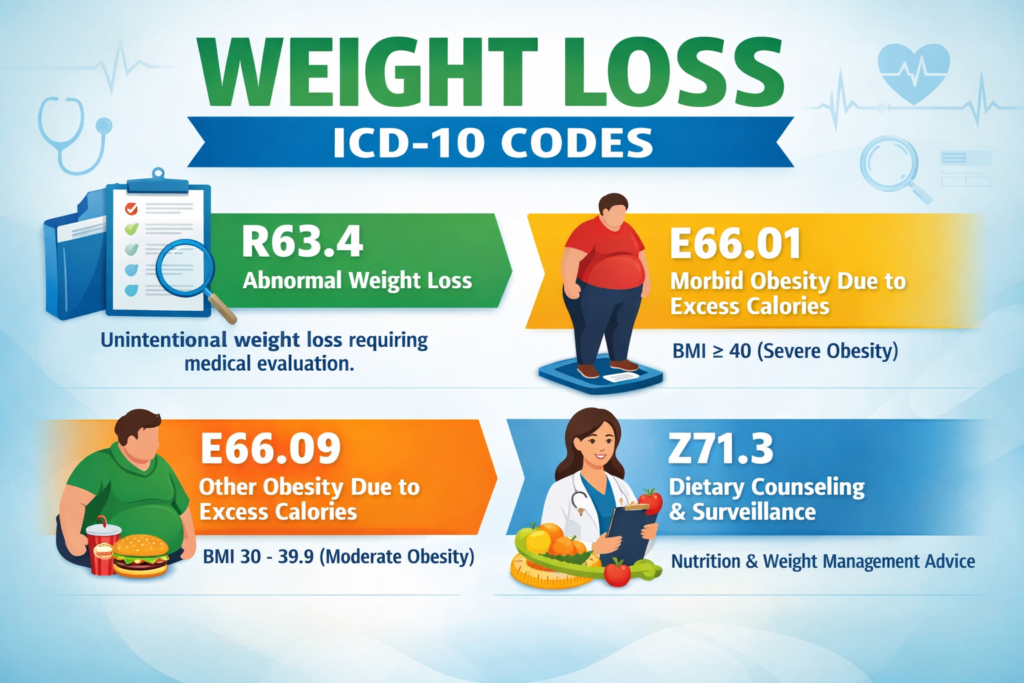
Weight Loss ICD-10 Codes (2026 Updated Guide for Billing & Documentation)
Accurate ICD-10 coding for weight loss is essential for proper medical documentation, insurance claims, and reimbursement. Whether documenting unintentional weight loss, obesity-related conditions, or post-bariatric status, selecting the correct ICD-10 code ensures compliance and clarity.
This guide outlines the most commonly used Weight Loss ICD-10 codes for 2026.
What Is the ICD-10 Code for Weight Loss?
The primary ICD-10 code used for abnormal or unexplained weight loss is:
R63.4 – Abnormal weight loss
This code is used when a patient experiences significant, unintended weight loss that requires medical evaluation.
It is commonly reported when:
- Weight loss is not intentional
- The cause is under investigation
No confirmed diagnosis has been established yet
ICD-10 Codes Related to Obesity
When documenting weight-related conditions, obesity codes are frequently used.
E66.9 – Obesity, unspecified
Used when obesity is diagnosed but not further classified.
Other commonly used obesity codes include:
- E66.01 – Morbid (severe) obesity due to excess calories
- E66.3 – Overweight
These codes are important when documenting weight management consultations and treatment planning.
BMI ICD-10 Codes (Z68 Series)
BMI codes are used as secondary codes to support obesity documentation.
Examples include:
- Z68.30–Z68.39 – BMI 30.0–39.9 (Obesity range)
- Z68.41–Z68.45 – BMI 40 and above
BMI codes must be reported alongside a diagnosis code such as E66.01.
ICD-10 Code for Bariatric Surgery Status
For patients who have previously undergone weight loss surgery, use:
Z98.84 – Bariatric surgery status
This code indicates a history of bariatric surgery and is important for long-term follow-up documentation.
It is commonly used with procedure documentation for:
- Gastric Sleeve Surgery
- Gastric Bypass Surgery
When to Use R63.4 vs Obesity Codes
Use R63.4 (Abnormal weight loss) when:
- Weight loss is unexplained
- The patient is being evaluated
- No confirmed underlying condition exists
Use E66 series codes when:
- Obesity is diagnosed
- Weight management treatment is provided
- The condition is clearly documented
Accurate documentation in the medical record is essential before assigning any code.
Documentation Tips for Accurate Coding
- Clearly specify whether weight loss is intentional or unintentional
- Document BMI values
- Include related comorbidities (diabetes, hypertension, etc.)
- Update codes if diagnosis changes
Regular auditing and code updates help prevent claim denials.
Common Mistakes in Weight Loss ICD-10 Coding
- Using BMI codes without a supporting diagnosis
- Assigning obesity codes without documentation
- Using R63.4 when weight loss is intentional
- Failing to update coding after diagnosis confirmation
Avoiding these errors ensures smoother reimbursement processes.
Final Thoughts
Proper ICD-10 coding for weight loss improves documentation accuracy, supports insurance claims, and ensures regulatory compliance. Whether coding abnormal weight loss, obesity, or post-bariatric status, selecting the appropriate ICD-10 code is critical for clinical and administrative accuracy.
For bariatric-related ICD guidance, you may also refer to your detailed bariatric surgery coding resources.
FAQs: Weight Loss ICD-10 Codes
1 What Is the ICD-10 Code for Weight Loss?
The ICD-10-CM code for abnormal (unintentional) weight loss is R63.4. It is used when a patient has clinically significant weight loss that is not intentional and requires medical evaluation. If the underlying cause is known, that condition should be coded first.
2 What Is the Difference Between E66.09 and E66.01?
- E66.01 = Morbid (severe) obesity due to excess calories (usually BMI 40 or higher).
- E66.09 = Other obesity due to excess calories (typically BMI 30–39.9).
A BMI code (Z68.-) should also be reported when documented.
3 What Is Diagnosis Code Z71.3?
Z71.3 is used for dietary counseling and surveillance. It applies when a patient receives nutrition or weight management counseling, including bariatric or preventive care visits.
4 What Is the ICD-11 Code for Weight Loss?
In ICD-11, abnormal weight loss is coded as MG22. It replaces ICD-10 code R63.4 in systems that use the newer ICD-11 classification.
5 What Are the Treatments for Weight Loss?
Treatment depends on the goal:
- For intentional weight loss: diet changes, exercise, medications, or bariatric surgery.
- For unintentional weight loss: identify and treat the underlying medical condition and provide nutritional support.