Digestive Health Institute
by Dr. Muffi
Digestive Health Institute
by Dr. Muffi
SADI Bariatric Surgery
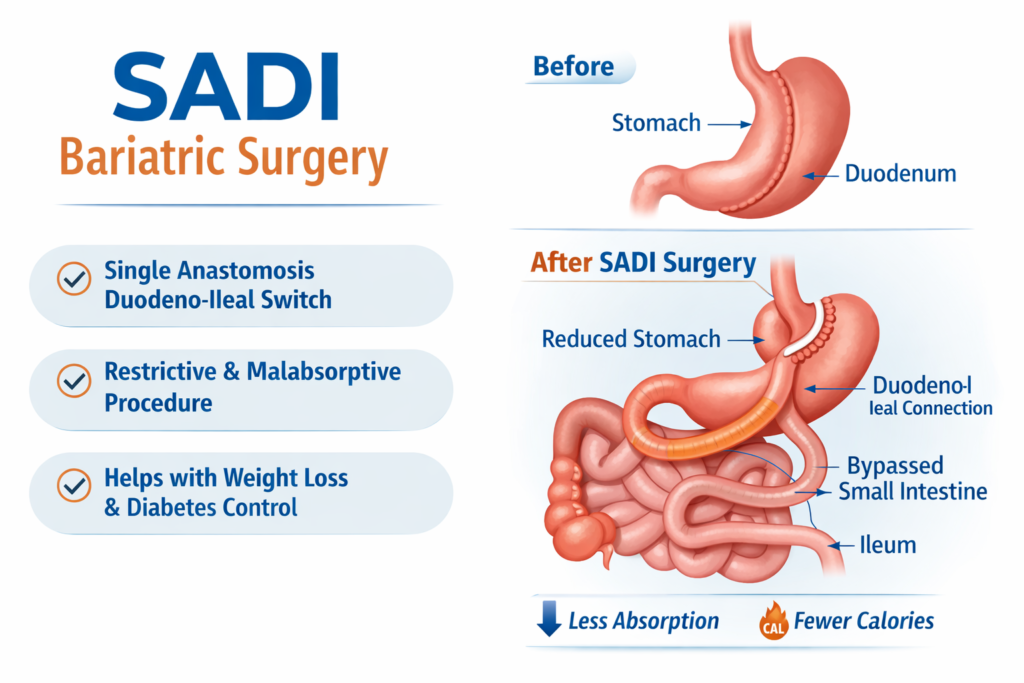
SADI Bariatric Surgery: A Complete Guide to Single Anastomosis Duodeno-Ileal Bypass
SADI bariatric surgery (Single Anastomosis Duodeno-Ileal Bypass with Sleeve Gastrectomy) is an advanced metabolic and weight-loss surgery designed for people with severe obesity who need significant and long-term weight reduction. It is considered a simplified and safer evolution of the traditional duodenal switch procedure, offering powerful weight loss with fewer surgical connections.
In this guide, you’ll learn what SADI surgery is, how it works, who it’s best for, benefits, risks, recovery, diet, and expected weight-loss results.
Patients comparing advanced options may also want to explore robotic bariatric surgery, which uses robotic precision for selected weight-loss procedures.
What Is SADI Bariatric Surgery?
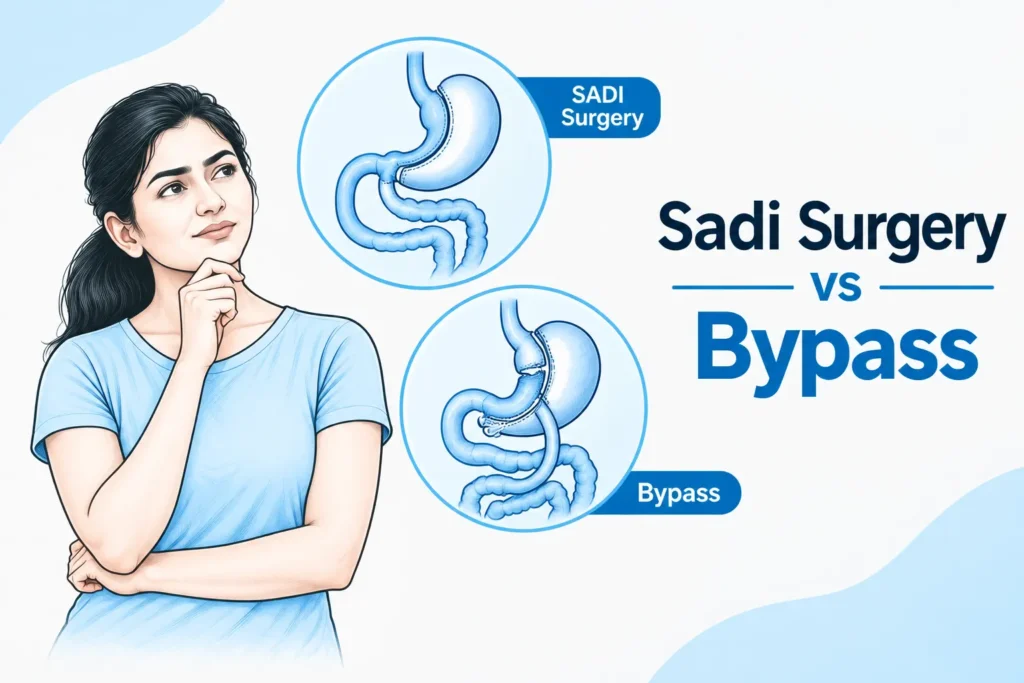
SADI bariatric surgery is a combined restrictive and malabsorptive procedure. It involves two main steps:
- Sleeve gastrectomy – About 70–80% of the stomach is removed, reducing hunger and food intake.
- Single intestinal bypass – The duodenum is connected to the ileum with one surgical connection (single anastomosis), reducing calorie and fat absorption.
Because SADI uses only one intestinal connection, it is less complex than traditional duodenal switch surgery while maintaining excellent metabolic results.
How Does SADI Surgery Work?
SADI works through three powerful mechanisms:
- Stomach restriction – Smaller stomach means you feel full faster
- Hormonal changes – Reduced hunger hormones and improved insulin sensitivity
- Malabsorption – Shorter intestine length limits calorie and fat absorption
This combination makes SADI highly effective for morbid obesity and type 2 diabetes remission.
Who Is a Good Candidate for SADI Surgery?
You may be a good candidate for SADI bariatric surgery if:
- Your BMI is over 40, or
- Your BMI is over 35 with obesity-related conditions (diabetes, sleep apnea, hypertension)
- You have severe or long-standing type 2 diabetes
- You failed to achieve results with other bariatric surgeries
- You can commit to lifelong follow-up and nutritional supplements
Many patients reach this stage after trying structured exercise plans such as daily walking programs and calorie-restricted diets without achieving sustainable results.
A bariatric surgeon will evaluate your medical history, lifestyle, and goals before recommending SADI.
Benefits of SADI Bariatric Surgery
SADI offers several advantages over other weight-loss procedures:
- Significant and sustained weight loss
- Excellent diabetes remission rates
- Simpler surgery compared to classic duodenal switch
- Only one intestinal connection (lower leak risk)
- Reduced hunger and better appetite control
- Long-term improvement in obesity-related diseases
Many patients lose 70–85% of excess weight within 18–24 months.
SADI vs Other Bariatric Surgeries
SADI vs Gastric Sleeve
- Greater weight loss with SADI
- Better diabetes control
- Sleeve has fewer nutritional risks
SADI vs Gastric Bypass
- SADI offers stronger metabolic effects
- Bypass has more dumping syndrome
- SADI requires stricter vitamin monitoring
SADI vs Duodenal Switch
- Similar weight loss
- Fewer complications
Simpler surgical technique
Choosing between SADI and other procedures depends on BMI, metabolic condition, and long-term goals. A detailed consultation helps determine the most suitable surgical approach.
Risks and Side Effects of SADI Surgery
Like any major surgery, SADI has potential risks:
- Nutritional deficiencies (iron, calcium, vitamins A, D, E, K)
- Diarrhea or loose stools
- Protein malnutrition (if diet is poor)
- Acid reflux (in some patients)
- Surgical risks: infection, bleeding, leaks
Strict adherence to supplements and follow-up visits is essential to avoid long-term complications.
Recovery After SADI Bariatric Surgery
Hospital stay: 2–3 days
Return to work: 2–4 weeks
Full recovery: 6–8 weeks
Patients usually experience rapid weight loss in the first year. Regular follow-ups help monitor nutrition, weight, and metabolic health.
Diet After SADI Surgery
Your post-SADI diet progresses in stages:
Following a structured pre-bariatric surgery diet before the procedure significantly improves surgical safety and recovery outcomes.
- Liquid diet (first 1–2 weeks)
- Pureed foods
- Soft foods
- Regular high-protein meals
Key diet rules:
- High protein intake (80–100g/day)
- Daily vitamin and mineral supplements
- Avoid sugary and fatty foods
- Drink plenty of water
- Eat small, frequent meals
Expected Weight Loss Results
Most patients experience:
- Rapid weight loss in first 6 months
- Peak results by 18–24 months
- Long-term weight maintenance with lifestyle changes
SADI is especially effective for super-obese patients and those with uncontrolled diabetes.
Is SADI Surgery Permanent?
Yes, SADI bariatric surgery is considered permanent and irreversible. While revisions are possible in rare cases, the procedure is intended as a lifelong solution supported by healthy habits.
Final Thoughts
SADI bariatric surgery is one of the most powerful and advanced weight-loss surgeries available today. It offers exceptional results for patients struggling with severe obesity and metabolic disease, especially when other treatments have failed.
However, success depends on long-term lifestyle changes, nutritional discipline, and regular medical follow-up. If you are considering SADI surgery, consult an experienced bariatric surgeon to determine if it’s the right option for you.
Need help choosing the right bariatric surgery?
Schedule a personalized consultation to discuss your BMI, health conditions, and long-term weight goals with an experienced bariatric surgeon.
FAQs About SADI Bariatric Surgery
What is SADI in bariatric surgery?
SADI (Single Anastomosis Duodeno-Ileal Bypass with Sleeve Gastrectomy) is an advanced bariatric surgery that combines a gastric sleeve with a single intestinal bypass. It reduces stomach size and limits calorie absorption, leading to significant weight loss and improved metabolic health. SADI is especially effective for people with severe obesity and type 2 diabetes.
Is SADI better than gastric bypass?
SADI may be better than gastric bypass for patients who need greater and longer-lasting weight loss or stronger diabetes control. It preserves the pyloric valve, reduces dumping syndrome, and involves only one intestinal connection. However, it requires stricter long-term vitamin supplementation, so the best option depends on individual health needs.
What are the cons of SADI surgery?
The main disadvantages of SADI surgery include a higher risk of vitamin and mineral deficiencies, loose stools, and the need for lifelong nutritional supplements. Some patients may experience digestive changes or malabsorption-related issues. Regular follow-ups are essential to prevent long-term complications.
How much weight will I lose with SADI?
Most patients lose 70–85% of their excess weight within 18–24 months after SADI surgery. Weight loss is usually rapid during the first year and continues steadily with proper diet, exercise, and medical follow-up. Results vary based on lifestyle and adherence to nutritional guidelines.
Can you gain weight after SADI surgery?
Yes, weight regain is possible after SADI surgery if dietary guidelines are not followed or lifestyle changes are not maintained. However, long-term weight regain is less common compared to other bariatric procedures. Consistent follow-ups, high-protein diets, and healthy habits help maintain results.