Digestive Health Institute
by Dr. Muffi

Digestive Health Institute
by Dr. Muffi
Before and After Hernia Surgery
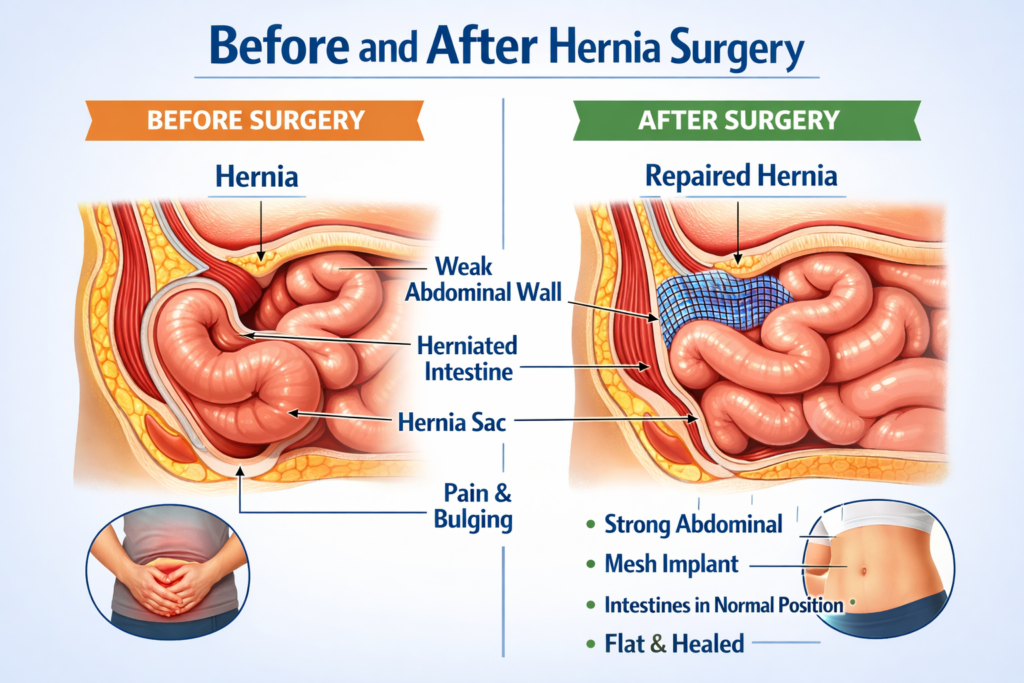
Before and After Hernia Surgery: What Patients Really Experience
If you’re here, chances are you’re dealing with a hernia or you’ve been told surgery is needed.
And like most people, you’re probably wondering:
“What will really change after hernia surgery?”
Not just medically.
But in daily life, pain, movement, and peace of mind.
Let’s talk honestly about what patients feel before and after hernia surgery.
Life Before Hernia Surgery
Most people don’t rush into hernia surgery. They wait. They adjust. They tolerate.
The Pain That Slowly Becomes Normal
At first, the pain feels mild. Then it shows up while:
- Standing too long
- Walking or climbing stairs
- Lifting bags or children
- Coughing or bending
Over time, many patients stop calling it pain and start calling it “discomfort.”
But it’s still there every day.
The Bulge You Can’t Ignore
One of the clearest signs of a hernia is the visible bulge in the abdomen or groin.
- It becomes more noticeable during activity
- It may reduce when lying down
- It often brings embarrassment or self-consciousness
People change how they dress. Some avoid social or physical activities.
Daily Life Feels Limited
Before surgery, patients often:
- Avoid exercise
- Fear worsening the hernia
- Feel unsure about sudden movements
There’s always a question in the back of the mind:
“What if it gets worse?”
The Decision to Go for Hernia Surgery
Most patients decide on surgery when:
- Pain increases
- The bulge becomes larger
- Daily routine is affected
- Doctor explains future risks
Modern hernia surgery is safe, quick, and effective, especially when done early.
What Happens After Hernia Surgery?
This is where the real change begins.
The First Few Days
- Mild pain or soreness around the incision
- Pain is usually controlled with medicines
- Walking is encouraged
Most patients are surprised by how manageable this phase is.
The Bulge Is Gone
One of the first noticeable changes:
- The swelling disappears
- The repaired area looks normal
- The constant awareness of the hernia is gone
This alone brings huge relief.
Pain Improves Week by Week
- Hernia-related pain reduces steadily
- Post-surgery discomfort fades
- Movements feel easier
By 2–3 weeks, many patients say:
“I feel lighter and more comfortable than before surgery.”
Back to Normal Life
After proper recovery:
- Walking feels natural again
- Sitting and standing are comfortable
- Confidence returns
Work, travel, and daily activities slowly become normal.
Hernia Surgery Recovery Timeline (What Patients Usually Experience)
Time After Surgery | Realistic Experience |
Day 1–3 | Rest, mild pain, short walks |
Week 1 | Normal walking, light activities |
Week 2–3 | Minimal pain, routine work |
Week 4–6 | Full recovery in most cases |
(Recovery may vary based on hernia type and surgery method.)
Before vs After Hernia Surgery: The Real Difference
Before Surgery
- Ongoing pain or discomfort
- Visible bulge
- Restricted movement
- Constant worry
After Surgery
- Pain relief
- No bulge
- Free movement
- Mental peace
Is Hernia Surgery Worth It?
Most patients say yes, especially those who waited too long.
Delaying surgery can lead to:
- Increased pain
- Larger hernia
- Higher risk of complications
Early treatment usually means:
- Easier surgery
- Faster recovery
Better long-term results
Final Thoughts
Hernia surgery doesn’t just fix a physical problem.
It removes a daily limitation.
When patients look back, many say:
“The hardest part wasn’t the surgery, it was living with the hernia for so long.”
If you’re struggling with symptoms, understanding the before and after hernia surgery experience can help you make a confident decision.
FAQs Before and After Hernia Surgery
How long is recovery from a hernia operation?
Recovery from hernia surgery usually takes 2 to 6 weeks, depending on the type of hernia and the surgery method used.
- Most patients can walk the same day
- Light daily activities are possible within a few days
- Office work usually resumes in 1–2 weeks
- Heavy lifting and intense exercise are avoided for 4–6 weeks
Many people feel better than before surgery within two weeks, as hernia-related pain and discomfort start to disappear.
How painful is hernia surgery?
Hernia surgery is not as painful as most people expect.
- Mild to moderate pain is common for the first 2–3 days
- Pain is usually well controlled with medications
- Discomfort improves quickly each day
Most patients say the pain after surgery is less troublesome than the ongoing pain they had before surgery.
What is the hardest day after hernia surgery?
For most patients, the first or second day after surgery is the hardest.
During this time, you may feel:
- Soreness around the incision
- Tightness or pulling sensation
- Mild difficulty getting in and out of bed
This phase is temporary. By day 3, pain and stiffness usually start improving significantly.
What is the fastest way to recover from hernia surgery?
The fastest recovery happens when you follow simple but important steps:
- Walk short distances daily to improve blood flow
- Avoid heavy lifting and sudden movements
- Take prescribed medicines on time
- Eat a fiber-rich diet to prevent constipation
- Keep the surgical area clean and dry
- Follow your doctor’s recovery instructions carefully
Rushing recovery or ignoring advice can delay healing.
What are red flags after hernia surgery?
You should contact your doctor immediately if you notice:
- Increasing pain instead of improvement
- Fever or chills
- Redness, swelling, or pus at the incision site
- Severe abdominal pain or bloating
- Persistent vomiting
- Difficulty passing stool or gas for several days
These symptoms may indicate infection or complications and should not be ignored.