Digestive Health Institute
by Dr. Muffi

Digestive Health Institute
by Dr. Muffi
Why Am I Bleeding 10 Years After a Hysterectomy?
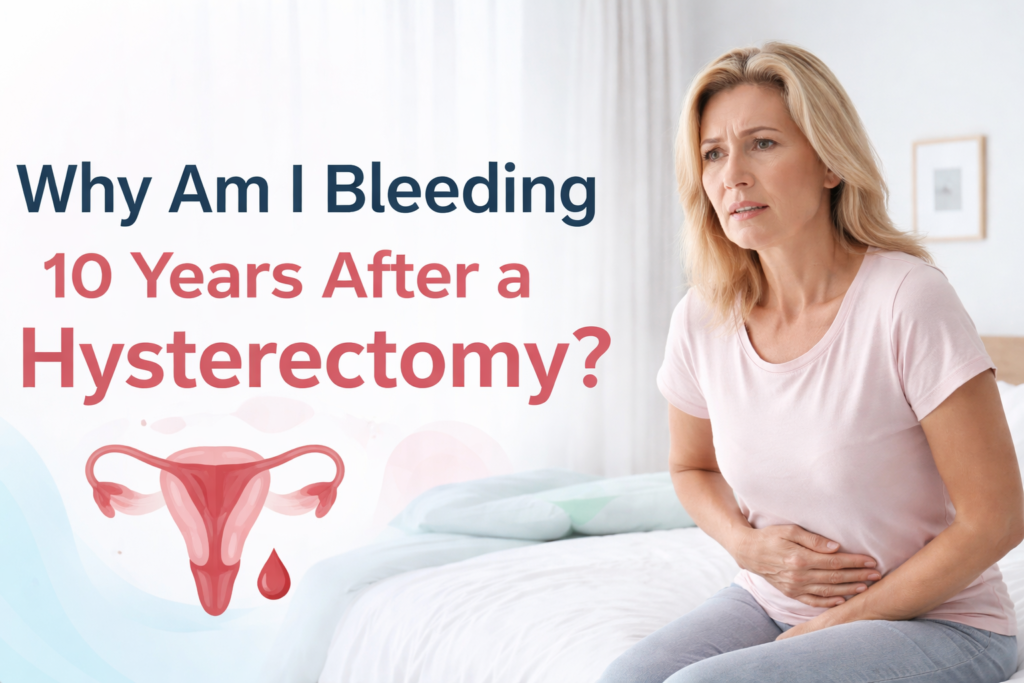
Why Am I Bleeding 10 Years After a Hysterectomy?
Bleeding 10 years after a hysterectomy is not common, but it can happen. A hysterectomy removes the uterus, which means menstrual periods should stop permanently. If vaginal bleeding occurs years later, it is important to understand the possible reasons and consult a doctor.
In many cases, the cause is not serious, but a medical evaluation is still necessary
Is Bleeding Years After a Hysterectomy Normal?
No, bleeding years after a hysterectomy is not considered normal. Some women may experience light spotting shortly after surgery, but bleeding many years later should always be checked by a doctor.
Possible causes can include hormonal changes, vaginal tissue thinning, scar tissue, infections, or rarely cancer.
Common Causes of Bleeding 10 Years After a Hysterectomy
1. Vaginal Atrophy (Thinning of Vaginal Tissue)
After menopause, estrogen levels drop. This can cause the vaginal lining to become thin and fragile, a condition called vaginal atrophy.
Symptoms may include:
Vaginal dryness
Irritation or burning
Bleeding after intercourse
Light spotting
2. Vaginal Cuff Granulation Tissue
After a hysterectomy, the top part of the vagina is closed with stitches. This area is called the vaginal cuff.
Sometimes scar tissue called granulation tissue develops there and may cause:
Light bleeding
Spotting
Bleeding after sex
This is a common and usually harmless cause.
3. Infection
Infections of the vaginal area can sometimes lead to bleeding.
Other symptoms may include:
Vaginal discharge
Pelvic pain
Unpleasant odor
Treatment usually involves antibiotics.
4. Polyps or Benign Growths
Small growths called polyps can develop in the vaginal tissue and may cause light bleeding or spotting. These are usually non-cancerous but should be evaluated by a doctor.
5. Cervical Tissue Remaining After Surgery
In some hysterectomy procedures, the cervix is not removed. This is called a supracervical hysterectomy. If cervical tissue remains, it can still develop problems that may cause bleeding.
6. Cancer (Rare)
Although rare, bleeding after hysterectomy could be related to:
Vaginal cancer
Cervical cancer (if the cervix remains)
This is why any unexpected bleeding should always be checked.
When Should You See a Doctor?
You should seek medical advice if you notice:
Any vaginal bleeding years after hysterectomy
Bleeding after intercourse
Persistent spotting
Pelvic pain
Unusual vaginal discharge
Even small amounts of bleeding should be evaluated.
How Doctors Diagnose the Cause
Doctors may perform tests such as:
Pelvic examination
Pap smear (if the cervix remains)
Ultrasound scan
Biopsy if abnormal tissue is found
These tests help determine the exact reason for the bleeding.
Treatment Options
Treatment depends on the cause and may include:
Estrogen cream for vaginal atrophy
Removal or cauterisation of granulation tissue
Antibiotics for infections
Removal of polyps or abnormal tissue
Most causes are treatable once diagnosed.
Key Takeaway
Bleeding 10 years after a hysterectomy is uncommon and should not be ignored. While the cause is often minor, it is important to consult a doctor to identify the reason and receive appropriate treatment.
Early evaluation helps rule out serious conditions and ensures better health outcomes.
FAQs: Why Am I Bleeding 10 Years After a Hysterectomy?
1. Why would I bleed 10–15 years after a hysterectomy?
Light bleeding years after a hysterectomy can happen due to vaginal atrophy, scar tissue at the vaginal cuff, infections, polyps, or rarely cancer. Any bleeding after hysterectomy should be evaluated by a doctor.
2. Where does blood come from after a total hysterectomy?
Bleeding usually comes from the vaginal tissues, the vaginal cuff (the area where the uterus was removed), or from small growths or irritated tissue in the vagina.
3. Why am I spotting after 10 years of no period?
Spotting may occur due to vaginal dryness, fragile vaginal tissue, infection, or granulation tissue at the surgical site. Even light spotting should be checked by a healthcare professional.
4. What tests are done to find the cause of bleeding after a hysterectomy?
Doctors may perform a pelvic exam, ultrasound scan, Pap smear (if the cervix remains), or a biopsy to determine the exact cause of bleeding.
5. What are the red flags after a hysterectomy?
Warning signs include vaginal bleeding years after surgery, severe pelvic pain, foul-smelling discharge, fever, or persistent spotting. These symptoms require medical attention.
6. What problems can occur years after a hysterectomy?
Possible long-term issues include vaginal atrophy, pelvic organ prolapse, scar tissue, infections, or rarely cancer in the vaginal or cervical tissue.