
Digestive Health Institute
by Dr. Muffi
Digestive Health Institute
by Dr. Muffi
Whipple's Surgery
Introduction | Advantages | Recovery
What is Whipple's Surgery?
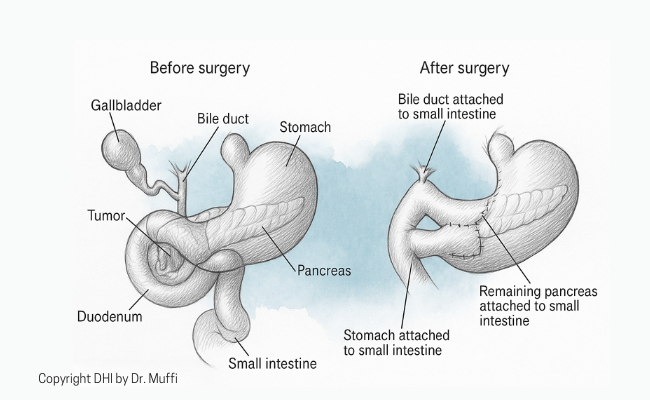
Whipple’s surgery, formally known as pancreaticoduodenectomy, is a major, highly specialized operation used to treat cancers that primarily affect the head of the pancreas, along with nearby structures such as the bile duct, duodenum, and sometimes a portion of the stomach. The procedure involves removing these affected parts and then carefully reconnecting the remaining organs—the pancreas, bile duct, and stomach—to the small intestine so food and digestive enzymes can continue to move normally through the system.
Why Is It Done?
This surgery is most often used for:
- Pancreatic cancer
- Bile duct or ampullary cancer
- Benign pancreatic tumors
Minimally Invasive Options
Laparoscopic and robotic Whipple’s surgery in select patients, offer:
- Smaller cuts
- Less pain
- Quicker recovery
- Shorter hospital stays
Recovery & Support
Whipple’s surgery is complex and recovery takes time:
- Hospital stay: 7–10 days
- Full recovery: 1–3 months
- Close follow-up and full support from our care team
What specific cancers and conditions are treated with Whipple’s Surgery?
Whipple’s surgery is primarily used to treat cancers of the head of the pancreas, but it is also a definitive treatment for cancers of the bile duct (cholangiocarcinoma), the duodenum, and certain types of neuroendocrine tumors (NETs) in the pancreatic head.
What is the typical recovery time after a Whipple Procedure?
Recovery from Whipple’s surgery is significant. Patients typically require a hospital stay of 7 to 10 days. A return to normal activities usually takes about 6 to 12 weeks, as the body adjusts to the changes in the digestive system and the new connections (anastomoses) heal.
Can Whipple’s Surgery be performed using minimally invasive techniques?
Yes. In specialized centers, the Whipple procedure can be performed using robotic or laparoscopic techniques. While still complex, a minimally invasive pancreaticoduodenectomy offers benefits like smaller incisions, less blood loss, and a shorter hospital stay compared to traditional open surgery.
Does a patient need to change their diet permanently after the Whipple Procedure?
Yes, major dietary adjustments are often necessary. Patients may need to eat smaller, more frequent meals and often require pancreatic enzyme supplements to properly digest food, as the procedure affects the flow of digestive enzymes.