
Digestive Health Institute
by Dr. Muffi

Digestive Health Institute
by Dr. Muffi
video-assisted Thoracoscopy (VATS)
Introduction | Advantages | Recovery
What is VATS?
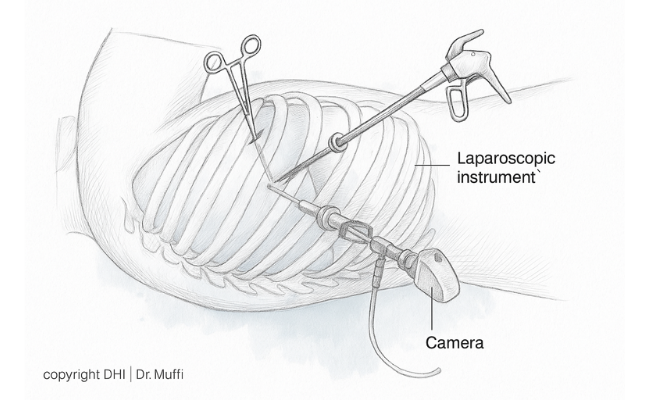
Video-Assisted Thoracoscopic Surgery (VATS)—commonly known as keyhole chest surgery—is a highly advanced, minimally invasive technique used to diagnose and treat conditions inside the chest, including issues related to the lungs and pleura. Instead of making a large incision, the surgeon works through small keyhole-sized cuts using a high‑definition thoracoscope (a tiny camera) that provides a clear, magnified view of the chest cavity.
Who Is VATS Suitable For?
VATS is ideal for patients needing chest surgery with less trauma and quicker healing.
VATS is used to:
- Remove lung nodules or tumors
- Treat collapsed lungs (pneumothorax)
- Drain fluid or infection from the chest cavity
- Perform biopsies of lung or chest tissue
- Remove part of the lung (lobectomy) in early-stage lung cancer
Benefits of VATS Compared to Open Surgery
- Smaller incisions and minimal scarring
- Less pain after surgery
- Lower risk of complications
- Shorter hospital stay
- Faster recovery and return to normal life
Recovery & Hospital Stay
- Most patients stay 2 to 4 days in the hospital after VATS.
- Some may go home in 24–48 hours for less complex procedures.
- You’ll be closely monitored for pain, breathing, and chest drainage.
- Recovery at home usually takes 1 to 3 weeks, depending on the procedure.
What conditions can be treated using VATS surgery?
VATS surgery is highly versatile and is used to treat conditions such as early-stage lung cancer, removing lung nodules or tumors, managing pleural effusion (fluid around the lung), treating collapsed lungs (pneumothorax), and diagnosing certain chest infections.
What are the main benefits of VATS compared to traditional open chest surgery (Thoracotomy)?
The primary advantages of VATS over open surgery are significantly reduced post-operative pain, minimal scarring, a lower risk of infection, and a much shorter hospital stay. Patients also experience a faster return to normal activity due to the minimally invasive nature of the keyhole chest surgery.
How long is the typical recovery time after VATS surgery?
Patients undergoing VATS surgery usually remain in the hospital for only 3 to 5 days. Full recovery is often achieved within 2 to 4 weeks, which is considerably shorter than the several months required to recover from a traditional open thoracotomy.
Where can I find expert VATS and keyhole chest surgery in Mumbai?
Look for a surgical team specializing in advanced thoracic surgery with a track record of high-volume VATS procedures. The specialists at the Digestive Health Institute in Mumbai prioritize minimal access techniques for optimal patient outcomes.