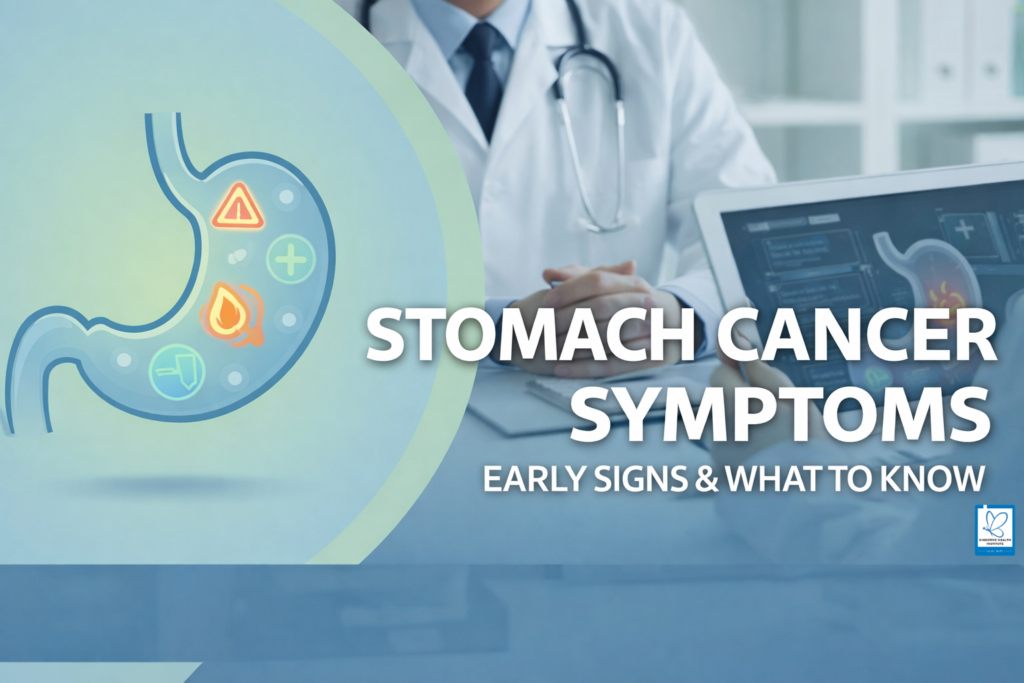
Stomach cancer (also called gastric cancer) often develops silently. In its early stages, symptoms are mild and easily mistaken for common digestive problems, which is why many cases are diagnosed late.
Understanding stomach cancer symptoms by stage can help with early detection, timely treatment, and better survival outcomes.
Stomach cancer occurs when abnormal cells grow uncontrollably in the lining of the stomach. Over time, these cancer cells can spread deeper into the stomach wall and to nearby organs.
It is more common in people:
With a family history of gastric cancer
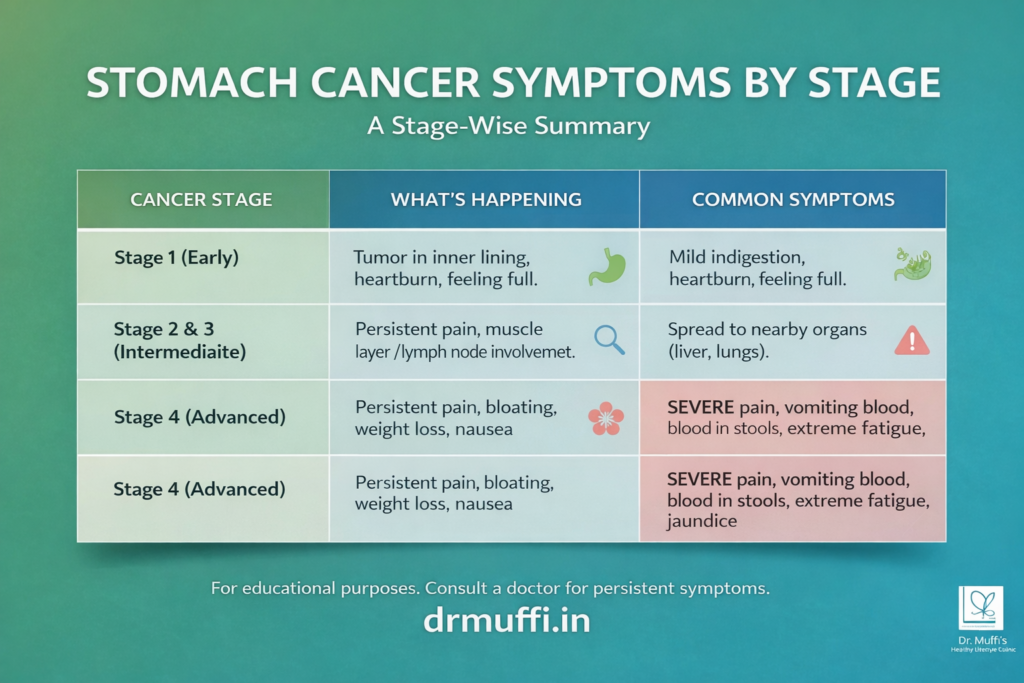
In Stage 1 stomach cancer, symptoms are often vague or absent, which makes early diagnosis difficult.
Important: These symptoms may look harmless, but if they persist for more than 2–3 weeks, medical evaluation is essential.
As the cancer grows deeper into the stomach wall, symptoms become more noticeable.
At this stage, cancer is still treatable with good outcomes if diagnosed early.
In advanced stages, stomach cancer symptoms become severe and systemic as the cancer spreads.
These symptoms require immediate medical attention.
You should consult a doctor if you experience:
Early detection significantly improves survival rates.
Doctors may recommend:
Diagnosis at an early stage allows for less aggressive treatment and better recovery.
Yes. Early stomach cancer is often confused with:
That is why persistent symptoms should never be ignored, especially in high-risk individuals.
Stomach cancer is highly treatable when detected early. Treatment options include:
Early-stage patients have a much higher survival rate than those diagnosed late.
Stomach cancer symptoms often start subtly but worsen over time. Recognizing early warning signs and understanding stage-wise symptoms can save lives.
If digestive symptoms persist or worsen, timely evaluation by a specialist can make a life-changing difference.
1.What are the first signs of stomach cancer?
The earliest signs include indigestion, feeling full quickly, appetite loss, and mild stomach discomfort.
2.Can stomach cancer cause acidity symptoms?
Yes, early stomach cancer can mimic acidity or gastritis, making diagnosis challenging.
3.Are stomach cancer symptoms different in men and women?
Symptoms are generally similar in both men and women, though women may experience delayed diagnosis due to subtle early signs.
4.Can stomach cancer symptoms come and go?
Yes, early stomach cancer symptoms can come and go, which often causes delays in diagnosis. Mild indigestion, bloating, or discomfort may temporarily improve but return over time. Persistent or recurring symptoms should always be medically evaluated.
5.How long do stomach cancer symptoms take to appear?
Stomach cancer symptoms may take months or even years to become noticeable. Early-stage cancer often has no clear symptoms, which is why regular checkups are important for high-risk individuals or those with long-term digestive issues.