
Digestive Health Institute
by Dr. Muffi

Digestive Health Institute
by Dr. Muffi
Splenectomy (Removal Of Spleen)
Introduction | Advantages | Recovery
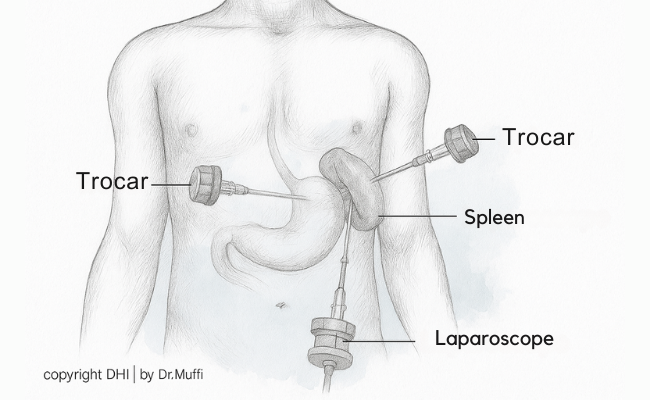
What is Splenectomy ?
A Splenectomy is a surgical procedure to remove the spleen—a soft, fist-sized organ located under the left rib cage. The spleen plays a vital role in immunity by filtering the blood, removing old or damaged blood cells, and helping the body fight certain infections. Removal is typically necessary due to severe trauma (like a rupture), or to manage specific blood disorders like ITP or TTP.
Why a Splenectomy May Be Recommended
Spleen removal (splenectomy) is suggested for the following reasons:
- Ruptured spleen – Often due to trauma, can cause life-threatening internal bleeding.
- Enlarged spleen (splenomegaly) – Causing pain, discomfort, or pressure on nearby organs.
- Blood disorders – Such as ITP, thalassemia, or polycythemia vera when unresponsive to treatment.
- Cancers – Including CLL, lymphoma, or hairy cell leukemia affecting the spleen.
- Severe infections or abscesses – When unresponsive to antibiotics.
- Benign tumors or cysts – That is large or difficult to remove without removing the spleen
Benefits of laparoscopic surgery include:
- Shorter hospital stay (same-day discharge possible)
- Less postoperative pain
- Quicker return to daily activities (within 1–2 weeks)
In some complex cases, open surgery may be necessary.
What conditions typically make Spleen Removal necessary?
Splenectomy is most often recommended for cases involving physical trauma leading to a ruptured spleen, or for managing blood disorders like Idiopathic Thrombocytopenic Purpura (ITP), Thrombotic Thrombocytopenic Purpura (TTP), or certain blood cancers (lymphoma/leukemia) that cause the spleen to become severely enlarged or overactive.
Can you live a normal life without a spleen?
Yes. While the spleen is important, other organs (like the liver and bone marrow) take over its essential functions. However, because the body’s primary filtering mechanism is removed, patients require specific vaccinations and may need to take antibiotics long-term to protect against serious infections following Spleen Removal Surgery.
What is the recovery time for a Laparoscopic Splenectomy?
A laparoscopic splenectomy is minimally invasive, allowing patients to be discharged in just 1 to 2 days. The splenectomy recovery time for a return to light activities is usually 1 to 2 weeks, with a full return to normal activity after about 4 to 6 weeks.
Where can I find expert Spleen Removal Surgery in Mumbai?
Seek out a center and surgical team with specialized experience in laparoscopic Splenectomy for complex blood disorders or trauma. The specialists at the Digestive Health Institute utilize this minimally invasive approach to ensure precise and safe outcomes for all patients.