Digestive Health Institute
by Dr. Muffi
Digestive Health Institute
by Dr. Muffi
Sleeve+
Process | Dietary Requirements | Ideal Patients
What is Sleeve+?
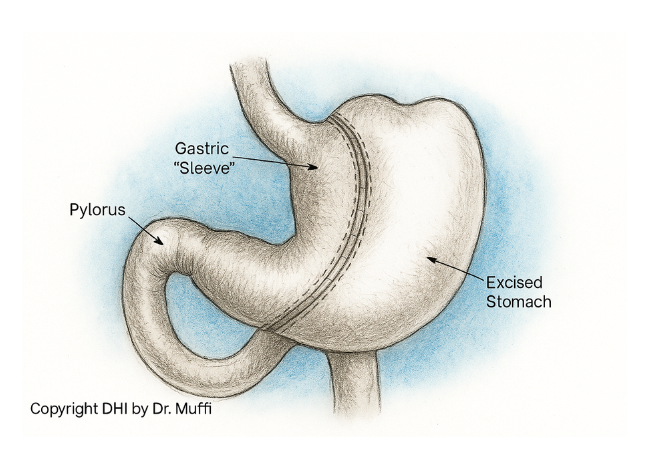
What is Sleeve Plus Surgery? Sleeve Plus is a specialized, modified version of the standard Sleeve Gastrectomy. Like the standard procedure, it reduces the stomach size to restrict food intake. However, the Sleeve Plus technique incorporates key surgical and anatomical modifications designed to enhance metabolic benefits (improving Type 2 diabetes and hypertension) and significantly reduce the post-operative risk of acid reflux (GERD). This makes it a preferred option for individuals seeking better symptom control or those who may not achieve optimal results with a conventional sleeve alone.
Key Features of Sleeve+
- Superior Weight Loss : Helps shed more weight and maintain it longer
- Metabolic Boost : Improves diabetes, hypertension, and lipid profiles
- Reduced Acid Reflux : Modified approach specifically designed to minimize GERD symptoms
- Minimally Invasive : Performed laparoscopically for smaller scars and faster recovery
- Ideal for Complex Cases : Perfect for those needing an upgrade from standard sleeve procedures
Who is it recommended for:
This procedure is ideal for individuals who are:
- Individuals struggling with inadequate weight loss after sleeve gastrectomy
- Patients with a BMI of > 40, or > 35 and obesity related health issues like metabolic syndrome
- People looking for enhanced metabolic results, including better blood sugar and cholesterol control
Nutrition Care Plan for Pre- and Post-Bariatric Procedure
Before your surgery, you’ll need to follow a 7-day liquid diet. This helps shrink the liver and prepare your body for a safe procedure.
After the procedure:
- Week 1-2: Liquid diet
- Weeks 3-4: Soft or pureed foods
- Week 4+: Gradually reintroduce healthy solids
This step-by-step plan helps your stomach heal and supports healthy weight loss.
How does Sleeve Plus reduce the risk of acid reflux (GERD)?
The standard Sleeve Gastrectomy can sometimes worsen or cause acid reflux post-operatively. The Sleeve Plus technique incorporates an additional step—often involving a fundoplication or specific anatomical adjustments—that reinforces the anti-reflux mechanism at the juncture between the esophagus and the stomach, significantly lowering the risk of post-operative GERD.
Who is the ideal candidate for Sleeve Plus instead of a standard Sleeve Gastrectomy?
The Sleeve Plus surgery is generally recommended for individuals who have pre-existing or severe acid reflux, those with poorly controlled Type 2 Diabetes requiring maximum metabolic impact, or those who have concerns about achieving sufficient weight loss with the standard procedure.
Does Sleeve Plus require a longer recovery time than a conventional sleeve?
While the surgical steps are slightly more involved, the recovery time for Sleeve Plus surgery is comparable to a standard laparoscopic sleeve. Patients typically experience a similar short hospital stay and a recovery period of 1–3 weeks before returning to normal activities.
Are the long-term weight loss results better with Sleeve Plus?
The Sleeve Plus procedure is designed to optimize results, particularly in challenging metabolic cases. While its weight loss efficacy is comparable to a highly successful standard sleeve, its superior control over comorbidities and reflux often translates to better overall long-term patient health and quality of life.