Digestive Health Institute
by Dr. Muffi
Digestive Health Institute
by Dr. Muffi
SADI Procedure
Process | Dietary Requirements | Ideal Patients
What is SADI?
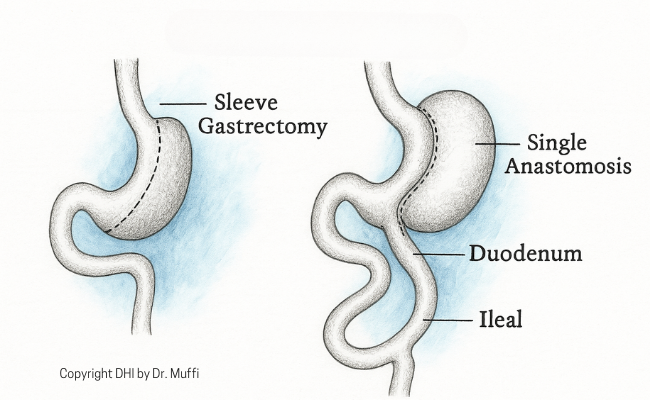
SADI (Single Anastomosis Duodeno-Ileal Bypass) is an advanced bariatric surgery that combines two highly effective weight-loss techniques: a sleeve gastrectomy (to restrict food intake) with a single-loop intestinal bypass (to limit calorie and nutrient absorption). By reducing stomach size and rerouting the digestive pathway, the SADI procedure supports significant, sustained weight reduction and is particularly effective at improving metabolic conditions like type 2 diabetes.
Key Features of SADI
- Substantial Weight Loss: Patients often lose 70–80% of excess weight
- Improved Metabolic Health: Helps resolve or improve conditions like type 2 diabetes, high blood pressure, and sleep apnea.
- Minimally Invasive: Typically performed laparoscopically/ robotic, leading to faster recovery and less scarring.
- Lower Risk of Dumping Syndrome: Preserves the pylorus, which helps regulate food passage and reduces unpleasant symptoms
Who is it recommended for
- Patients with severe obesity who need a long-term weight loss solution, for individuals with a BMI ≥ 40
- Individuals with Type 2 Diabetes, struggling with blood sugar control
- Patients with weight regain post bariatric surgery/revisional surgery.
Nutrition Care Plan for Pre- and Post-Bariatric Procedure
Before Surgery:
Follow a 7-day liquid diet to help shrink your liver and prepare your body for a safer procedure.
After Surgery:
You’ll follow a structured diet plan to support healing and healthy weight loss:
- Week 1-2: Clear and full liquids
- Weeks 3-4: Soft or pureed foods
- Week 4 and beyond: Gradual reintroduction of healthy solid foods
This step-by-step plan helps your stomach heal and supports healthy weight loss.
To minimize digestive discomfort, avoid:
- High-fat foods (fried, greasy, creamy)
- Simple carbs (sweets, white bread, pasta, sugary cereals)
- Lactose-containing products (milk, some protein shakes)
How is SADI Different from Other Bariatric Procedures?
|
Feature
|
Gastric Bypass (RNY)
|
Sleeve Gastrectomy
|
SADI
|
|---|---|---|---|
How does the SADI procedure differ from Gastric Bypass (RYGB)?
The primary difference lies in the number of intestinal connections (anastomoses). SADI has only one connection, simplifying the surgery compared to the two connections required for Roux-en-Y Gastric Bypass (RYGB). SADI is also known for having a greater metabolic impact, making it highly effective for patients with high-severity Type 2 diabetes.
Is the SADI procedure reversible?
While generally considered a permanent procedure, the malabsorptive component of the SADI bypass is technically reversible. However, the restrictive component (the sleeve gastrectomy) is permanent. Any decision regarding reversibility would be complex and made on a case-by-case basis by your specialist in Mumbai.
Are vitamin supplements necessary after SADI surgery?
Yes. Due to the significant alteration of the small intestine, the SADI procedure reduces the absorption of vitamins and minerals. Lifelong daily supplementation, closely monitored by your bariatric team, is mandatory to prevent potential nutritional deficiencies.
Is SADI often used as a revisional surgery?
Yes, the SADI procedure is increasingly used as a highly effective revisional surgery. It is often the recommended option for patients who have undergone a primary Sleeve Gastrectomy but have experienced insufficient weight loss or significant weight regain.