Digestive Health Institute
by Dr. Muffi
Digestive Health Institute
by Dr. Muffi
Roux En Y Gastric Bypass (RYGB)
Process | Dietary Requirements | Ideal Patients
What is Roux-en-Y Gastric Bypass?
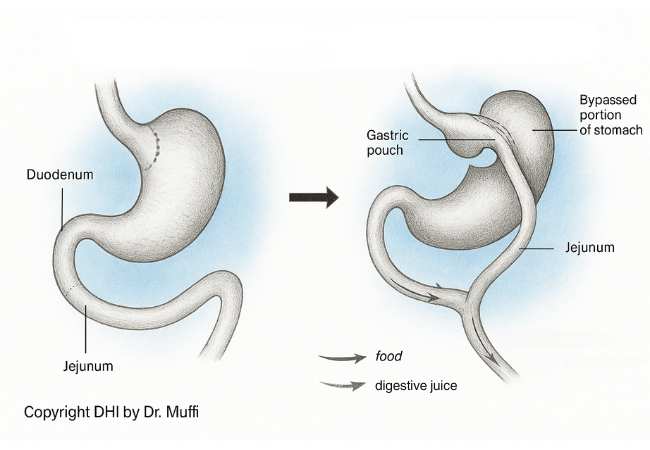
The Roux-en-Y Gastric Bypass (RYGB) is considered the gold standard of metabolic and weight-loss surgery. It is a restrictive and malabsorptive procedure where the surgeon creates a small stomach pouch and directly connects it to the small intestine, bypassing the duodenum and a section of the jejunum. This dual mechanism limits food intake (restriction) and reduces calorie absorption (malabsorption), leading to profound and sustained weight reduction, often resulting in the remission of obesity-related conditions.
Who is it Recommended For?
Roux-en-Y Gastric Bypass is especially suitable for individuals who:
- Have a BMI ≥ 40 or ≥ 35 with health issues like diabetes or hypertension
- Have not succeeded with diet, exercise, or medication
- Need rapid weight loss for medical reasons
- Are experiencing weight regain or unresolved symptoms after sleeve gastrectomy
- Need a more effective second-line procedure after previous bariatric surgeries
Key Advantages
- Effective Weight Loss : Significantly reduces stomach size and changes the digestive pathway to promote long-term weight reduction
- Improves Co-morbidities : Helps manage or resolve related conditions like diabetes, high blood pressure, sleep apnea, joint pain, and GERD
- Minimally Invasive : Laparoscopic and robotic techniques ensure faster healing and minimal scarring
- Reversible Option : Though rarely needed, the procedure can be reversed in specific medical scenarios
Pre-Surgery Dietary Guidelines
All patients are required to follow a 7-day liquid diet before surgery, prescribed by our expert bariatric nutritionists. This helps reduce liver size, ease surgery, improve outcomes
Post-Surgery Dietary Guidelines
A structured reintroduction of food is followed:
- Week 1-2: liquids and protein-rich fluids
- Week 3-4: Soft and semi-solid foods
- Week 4 onwards: Transition to a customized solid diet plan
This phased approach ensures healing, minimizes complications, and supports sustainable weight loss.
How much weight can I expect to lose after a Gastric Bypass?
The Roux-en-Y Gastric Bypass is highly effective, with most patients losing between 60% to 80% of their excess body weight within the first 12 to 18 months. Furthermore, the procedure is very effective at resolving or improving co-morbidities like Type 2 diabetes and hypertension.
How does Gastric Bypass differ from a Sleeve Gastrectomy?
The Sleeve Gastrectomy is only restrictive (reducing stomach size), whereas Gastric Bypass is both restrictive and malabsorptive. Due to the intestinal rerouting, Gastric Bypass often yields greater initial weight loss and is generally considered more effective for patients with severe acid reflux or uncontrolled Type 2 diabetes.
What is the "Dumping Syndrome" and how can I avoid it after RYGB?
Dumping Syndrome is a common side effect of Gastric Bypass caused by rapid movement of high-sugar or high-fat foods from the stomach pouch into the small intestine. Symptoms include nausea, dizziness, and cramping. It is avoided by strictly following the post-surgical dietary guidelines provided by your nutritional team in Mumbai.
Will I need to take vitamins and supplements permanently after a Gastric Bypass?
Yes. Due to the malabsorptive nature of the Roux-en-Y Gastric Bypass—which bypasses nutrient-absorbing sections of the small intestine—patients are required to take specific bariatric vitamin and mineral supplements for the rest of their lives to prevent nutritional deficiencies.