
Digestive Health Institute
by Dr. Muffi

Digestive Health Institute
by Dr. Muffi
Revisional Bariatric Surgery
Process | Dietary Requirements | Ideal Patients
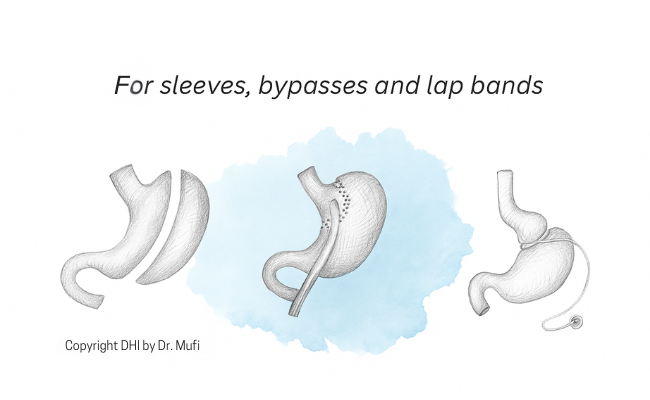
What is this procedure?
Revisional bariatric surgery is a specialized, follow-up procedure performed after an initial weight-loss operation (such as gastric bypass, sleeve gastrectomy, or banding). It is performed either to correct medical complications (like severe reflux, persistent strictures, or device failure) or to improve inadequate weight loss or address significant weight regain experienced after the primary surgery. The revisional procedure modifies or converts the original anatomy to achieve better long-term health and weight management outcomes.
Who is it recommended for?
- Experienced weight regain or inadequate weight loss with previous surgery
- Have new or worsening medical issues
- Are suffering from complications of your original procedure
- Are committed to lifestyle changes and follow-up care
Advantages of the Surgery
- Minimal Scarring
- Faster Recovery
- Enhanced Weight Loss
Types of Revisions:
- Sleeve Gastrectomy Revision : If you're not losing enough weight or have acid reflux after a sleeve, it may be converted to a gastric bypass or corrected.
- Gastric Bypass Revision : For weight regain or issues like dumping syndrome, your bypass may be repaired or adjusted.
- Duodenal Switch Revision : If you’ve had weight regain or low nutrient levels, your duodenal switch can be revised to improve results.
- Pouch or Stoma Adjustment : If your stomach pouch has stretched, it may be tightened to restore portion control.
- Conversion to Duodenal Switch (BPD/DS) : If a previous surgery like a band or sleeve didn’t work well, it can be converted to a more effective option like the duodenal switch.
Nutrition Care Plan for Pre- and Post-Bariatric Procedure
Before your surgery, a 7-day liquid diet is advised . This helps shrink the liver and prepare your body for a safe procedure.
Post-Surgery:
A structured reintroduction of food is followed:
- Week 1-2: liquids and protein-rich fluids
- Week 3-4: Soft and semi-solid foods
- Week 4 onwards: Transition to a customized solid diet plan
This phased approach ensures healing, minimizes complications, and supports sustainable weight loss.
When is a second weight-loss surgery or revisional procedure necessary?
Revisional bariatric surgery is typically advised when the patient is experiencing serious medical issues (like intractable reflux, severe nutritional problems, or a stricture) or when the patient has regained a substantial amount of weight or failed to achieve the expected weight loss 18–24 months after the initial operation.
Is revisional bariatric surgery more complex than primary surgery?
Yes, revisional bariatric surgery is generally more complex than a primary procedure. It requires greater surgical skill and expertise due to scar tissue, altered anatomy, and the complexity of modifying a previous operation. Patients seeking revision surgery in Mumbai should prioritize a surgeon with specific experience in complex conversions.
What types of primary surgeries can be revised?
Nearly all primary bariatric procedures can be revised. Common revisions include converting a failed Gastric Band to a Sleeve or Bypass, correcting complications from a Sleeve Gastrectomy, or converting one type of bypass to another to optimize results.
Will I lose more weight after a revisional bariatric surgery?
The primary goal of a revision performed for weight regain is to kickstart the weight loss process and reset the metabolism. Many patients do achieve significant further weight loss after a successful revision, particularly when combined with renewed commitment to diet and exercise.