Digestive Health Institute
by Dr. Muffi
Digestive Health Institute
by Dr. Muffi
Large Intestine Cancer
Info | Symptoms | Diagnosis | Treatment Options
What You Need to Know
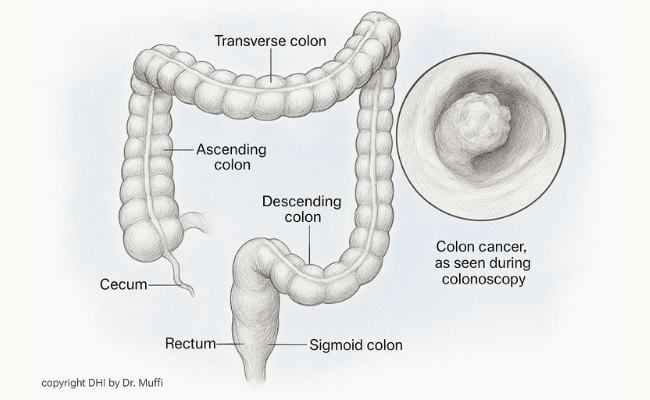
Colorectal Cancer Large intestine cancer—also known as colorectal cancer—develops when abnormal cells begin to grow rapidly in the colon or rectum. Critically, it often starts as small, harmless polyps that can become cancerous over time if not detected early through routine screening, making it one of the most preventable forms of cancer.
Common Symptoms of Large Intestine Cancer
If you experience any of the following, consult your doctor:
- Changes in bowel habits (diarrhea, constipation, or narrowing of stool lasting more than a few days)
- Blood in stool
- Abdominal pain, cramping, or bloating
- Feeling of incomplete bowel emptying
- Unexplained weight loss
- Fatigue or weakness
- Loss of appetite
Diagnosis & Evaluation
- Colonoscopy (with biopsy)
- Imaging scans (CT, MRI, PET)
- Blood tests (including CEA tumor marker)
- Stool tests (for occult blood or DNA changes)
Treatment Options
Treatment depends on the location, stage, and spread of the cancer. A personalized plan may include:
Surgery (Primary Treatment for Most Patients)
- Colectomy (Colon Resection)
Partial Colectomy: Removal of the cancerous section of the colon along with nearby lymph nodes.
Total Colectomy: Removal of the entire colon in more extensive cases. - Proctectomy
Removal of part or all of the rectum (for rectal cancer). - Proctocolectomy with Ileostomy
Removal of both the colon and rectum, often followed by the creation of a stoma (ileostomy). - Colostomy or Ileostomy Creation
A stoma may be created temporarily or permanently, depending on the location and extent of surgery. - Transanal Minimally Invasive Surgery (TAMIS)
A less invasive approach for early-stage rectal cancers, performed through the anus without external incisions. - Pelvic Exenteration
A complex surgery for advanced rectal cancers that have spread to nearby organs, involving removal of the rectum and surrounding structures.
Other Treatments
- Chemotherapy: Before or after surgery to shrink tumors or kill remaining cancer cells.
- Radiation Therapy: Especially for rectal cancers, often combined with chemotherapy.
- Targeted Therapy & Immunotherapy: For advanced or metastatic cases, depending on tumor biology.
What are the main symptoms or warning signs of Colorectal Cancer?
The most common colorectal cancer warning signs include a persistent change in bowel habits (diarrhea or constipation), blood in the stool or rectal bleeding, unexplained fatigue due to anemia, and persistent abdominal discomfort or cramping.
At what age should I start routine screening for Large Intestine Cancer?
Screening guidelines recommend that individuals with average risk should begin routine colonoscopy screening at age 45. Those with a family history of colorectal cancer or polyps may need to start screening earlier, based on physician advice.
What is a Laparoscopic Colectomy?
A Laparoscopic Colectomy is the surgical removal of the cancerous part of the colon or rectum using small incisions and specialized cameras (keyhole surgery). This minimally invasive approach results in less pain, reduced blood loss, and a significantly faster recovery compared to traditional open surgery.
Can lifestyle changes reduce my risk of Colorectal Cancer?
Yes. Maintaining a healthy weight, eating a high-fiber diet rich in fruits and vegetables, limiting red and processed meats, engaging in regular physical activity, and avoiding smoking and excessive alcohol consumption are crucial steps in colorectal cancer prevention.