

In most cases, stomach cancer is not hereditary. However, a small percentage is linked to inherited genetic conditions that can increase your risk significantly.
If you have a family history of stomach cancer, understanding your risk early can help with prevention and timely treatment.
Gastric Cancer is a condition where abnormal cells grow in the lining of the stomach. It often develops gradually and may not show symptoms in early stages, which is why awareness and early screening are important.
Most Cases Are Not Hereditary
Around 90–95% of stomach cancer cases are linked to:
When It Can Be Hereditary
About 5–10% of cases are caused by inherited genetic mutations passed through families.
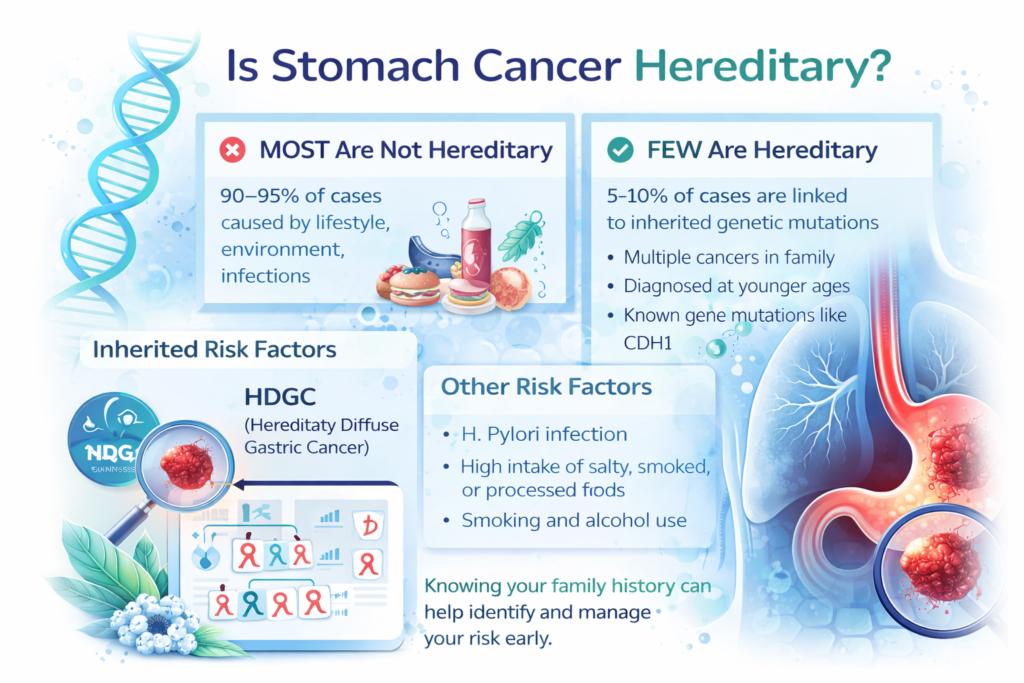
Some inherited syndromes increase the risk:
You may be at higher risk if:
Even without genetics, these increase your risk:
While genetic risk cannot be changed, you can take steps to reduce overall risk:
Genetic Screening
If you have a family history, consult a specialist for genetic testing and early evaluation.
Healthy Lifestyle
Regular Check-Ups
High-risk individuals may benefit from periodic endoscopic screening.
While weight loss and fat loss are related, they represent different processes in the body. Weight loss refers to a decrease in overall body weight, which may include fat, muscle, and water. Fat loss, on the other hand, focuses specifically on reducing excess body fat while maintaining muscle mass.
For better health, improved metabolism, and long-term fitness results, focusing on fat loss rather than simply lowering body weight is usually the most effective approach.
Consult a doctor if you notice:
Early detection can significantly improve treatment outcomes.
Regardless of where you live, stomach cancer is often diagnosed late because symptoms can be subtle in the early stages.
If you have a family history or ongoing digestive symptoms, early consultation with a specialist can help detect risks sooner and improve outcomes.
Stomach cancer is rarely hereditary, but genetic factors can increase risk in some individuals. The key is awareness knowing your family history and taking early preventive steps can make a life-saving difference.
What is the root cause of stomach cancer?
The exact cause of Gastric Cancer is not always known, but it usually develops due to a combination of factors. The most common root cause is long-term infection with Helicobacter pylori, which damages the stomach lining over time.
Other contributing causes include:
What are the first warning signs of stomach cancer?
Early-stage stomach cancer often has mild or no symptoms, which makes it difficult to detect. However, some early warning signs include:
If these symptoms persist, it’s important to consult a doctor for proper evaluation.
Is cancer in the stomach curable?
Yes, stomach cancer can be curable, especially when detected early.
Treatment options may include:
Early diagnosis plays a crucial role in improving survival rates.
What is the average age for stomach cancer?
Stomach cancer is more commonly diagnosed in older adults, with the average age being around 65–70 years.
However, it can occur at a younger age, especially in people with: