Digestive Health Institute
by Dr. Muffi
Digestive Health Institute
by Dr. Muffi
Hydatid cyst removal
Introduction | Recovery | Precautions
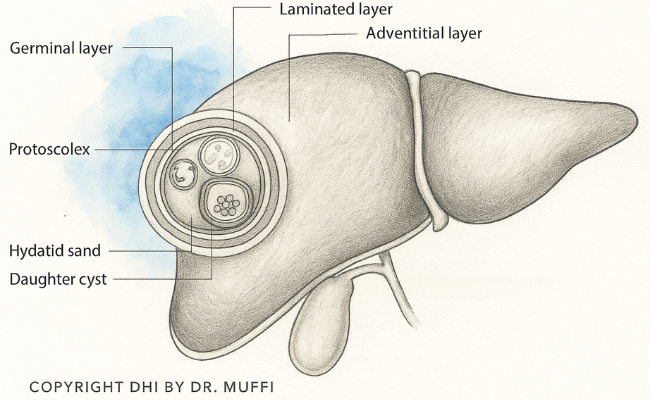
What is a Hydatid Cyst?
A Hydatid Cyst is a fluid-filled sac that develops due to a parasitic infection, most commonly caused by the Echinococcus tapeworm. These cysts typically appear in the liver or lungs, though they can also form in the spleen, kidneys, or even the brain. Because they grow slowly, many people don’t experience symptoms until the cyst becomes large or ruptures, which can lead to serious, life-threatening complications.
When is Surgery Needed?
Surgical removal is the preferred treatment in cases where the cyst:
- Is large or growing
- Causes symptoms (pain, bloating, jaundice, breathing difficulty)
- Is at risk of rupture
- Does not respond to medications
Key Features:
Laparoscopic & Robotic Surgery
- Minimally Invasive Surgery
- Small incisions, less pain
- Faster healing and less scarring
- Shorter hospital stay (1–2 days)
- Safe and precise removal
How do humans contract the parasite that causes Hydatid Cysts?
Humans are generally accidental hosts. The infection is contracted by ingesting the eggs of the Echinococcus tapeworm, often found in the feces of infected animals like dogs. Good hygiene and avoiding contact with contaminated food or soil are essential preventive measures.
Is surgery always required for Hydatid Cyst treatment?
Not always. Treatment options range from anti-parasitic medication to minimally invasive techniques like PAIR (Puncture, Aspiration, Injection, Re-aspiration). However, large cysts or cysts in risky locations often require complex surgical excision to completely remove the parasitic sac and minimize the risk of rupture.
What are the dangers if a Hydatid Cyst ruptures?
The rupture of a Hydatid Cyst is a serious medical emergency. It can lead to severe allergic reactions (anaphylaxis) due to the release of cyst fluid, and it can also cause the parasitic contents to spread, potentially creating new cysts in other organs.
What makes a surgeon specialized in Liver Cyst Removal in Mumbai?
Specialists in Liver Cyst Removal in Mumbai must have advanced training in hepatobiliary surgery and be experienced in managing the unique risks associated with parasitic cysts. The surgical team at the Digestive Health Institute focuses on techniques that ensure the complete, safe removal of the cyst while protecting surrounding liver tissue.