
Digestive Health Institute
by Dr. Muffi

Digestive Health Institute
by Dr. Muffi
Hernia Surgery
Introduction | Treatment | Recovery
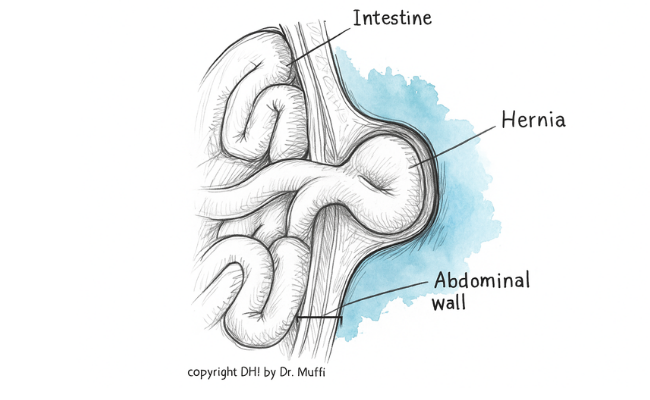
What Is a Hernia?
A hernia occurs when an internal organ or fatty tissue pushes through a weak spot in the surrounding muscle or connective tissue wall. This often results in a visible bulge and discomfort, especially during activities like coughing, lifting, or straining. The most common types are inguinal (groin), umbilical (navel), and hiatal (upper stomach/chest) hernias.
Common Types of Hernias
- Inguinal Hernia : In the groin area (most common)
- Umbilical Hernia : Near the belly button
- Hiatal Hernia : Part of the stomach pushes into the chest
- Incisional Hernia : At the site of a previous surgery
Signs & Symptoms
- A bulge under the skin (in the belly or groin)
- Pain or pressure at the site
- Discomfort when lifting, coughing, or standing
- Heartburn or acid reflux (in hiatal hernia)
- Nausea or vomiting in severe cases
Seek medical help if the pain gets worse or the bulge becomes firm and can’t be pushed in — this may be a sign of a strangulated hernia, which is an emergency.
Key Features:
Minimally invasive hernia repair using laparoscopic or robotic techniques, which means:
- Small incisions & quicker recovery
- Less pain and fewer complications
- Strong, long-lasting repair using mesh (if needed)
- Can be combined with bariatric surgery if appropriate
What are the main types of hernias and who is at risk
The primary types are Inguinal Hernias (in the groin, most common in men) and Umbilical Hernias (near the navel). Risk factors include heavy lifting, chronic coughing, obesity, and previous abdominal surgery.
What is the recovery time for Laparoscopic Hernia Surgery?
Laparoscopic hernia surgery is a minimally invasive technique that significantly speeds up recovery. Most patients are discharged the same day or the following morning and can resume light, normal activities within 3 to 7 days, with heavy lifting restricted for a few weeks.
Can a hernia be treated without surgery?
No. Surgery is the only definitive cure for a hernia as it physically strengthens the weakened muscle wall. While a truss or binder may temporarily manage symptoms, it does not address the underlying problem and does not prevent the risk of a severe complication like strangulation.
How do I know if my hernia is an emergency?
A hernia becomes an emergency if the bulge suddenly becomes hard, extremely painful, and cannot be pushed back in (incarceration), often accompanied by fever, nausea, or vomiting. This is known as a strangulated hernia and requires immediate surgical intervention from a hernia specialist.