
Digestive Health Institute
by Dr. Muffi

Digestive Health Institute
by Dr. Muffi
GEJ (Gastroesophageal Junction) Cancer
Why Us | About | Risk | Symptoms | Diagnosis | Treatment
What we offer
Gastric cancer (stomach cancer) and gastroesophageal junction cancer (GEJC) are serious and closely related diseases that affect the stomach and the area where the esophagus meets the stomach. Although relatively rare, they require expert, timely care because they can progress quietly in their early stages, making accurate and early diagnosis challenging.
What Are These Cancers?
- Gastric cancer begins in the stomach lining.
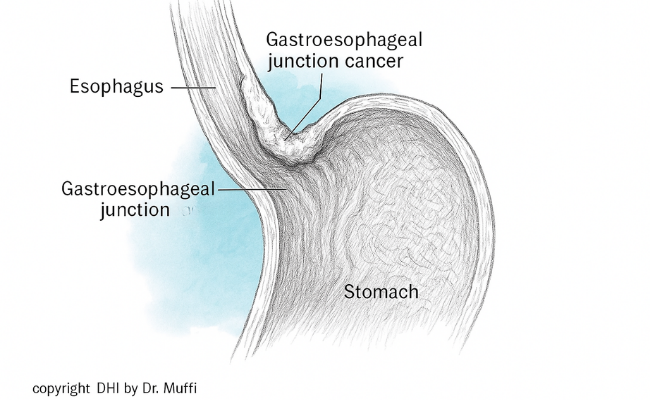
- GEJ cancer starts where the esophagus meets the stomach.
These cancers often go unnoticed in early stages because symptoms can be vague or mistaken for common digestive issues.
Risk Factors
Several factors may increase your risk:
- Chronic acid reflux or GERD
- Barrett’s esophagus
- H. pylori infection
- Smoking, alcohol use, or poor diet (e.g., salty or smoked foods)
- Family history of GI cancers
- Age over 55, especially in men
Common Symptoms
- Unexplained weight loss
- Heartburn or indigestion that doesn’t improve
- Difficulty swallowing
- Vomiting or blood in stool
- Persistent fatigue or anemia
These symptoms often overlap with non-cancerous GI conditions but should not be ignored especially if they persist or worsen.
Diagnosis & Treatment
Diagnosis typically involves:
- Endoscopy
- Imaging (CT scans)
- Biopsy
Treatment Options
Treatment depends on the stage of the cancer and your overall health.
- Robotic or laparoscopic surgery for tumor removal
- Chemotherapy to reduce recurrence risk
- Targeted therapies (for specific cancer types)
Even with early treatment, recurrence is common—so ongoing monitoring is key.
What is the main difference between Gastric Cancer and GEJ Cancer?
Gastric cancer originates in the main body or lining of the stomach. GEJ cancer (Gastroesophageal Junction Cancer) originates in the small area where the esophagus connects to the stomach. While anatomically close, the surgical approaches and treatment protocols for these two cancers can differ significantly.
What are the risk factors for developing Gastric and GEJ Cancers?
Key risk factors for gastric cancer include chronic infection with the H. pylori bacteria, a diet high in salted or smoked foods, a history of smoking, and obesity. GEJ cancer is often linked to chronic reflux disease (GERD) leading to Barrett’s esophagus.
What are the benefits of Robotic Surgery for Stomach Cancer?
Robotic surgery for conditions like gastric cancer and GEJC offers the surgeon enhanced precision, visualization, and dexterity. For the patient, this translates to smaller incisions, less blood loss, a reduction in post-operative pain, and the shortest possible recovery time from complex cancer surgery.
What is the primary surgery for treating Gastric and GEJ Cancer?
The primary surgical treatment is the Gastrectomy (removal of part or all of the stomach) or Esophagectomy (removal of part of the esophagus and stomach). The exact procedure is chosen by the Gastric Cancer Specialist based on the tumor’s location and size to ensure complete removal while preserving function.