
Digestive Health Institute
by Dr. Muffi
Digestive Health Institute
by Dr. Muffi
Epigastric Hernia Symptoms
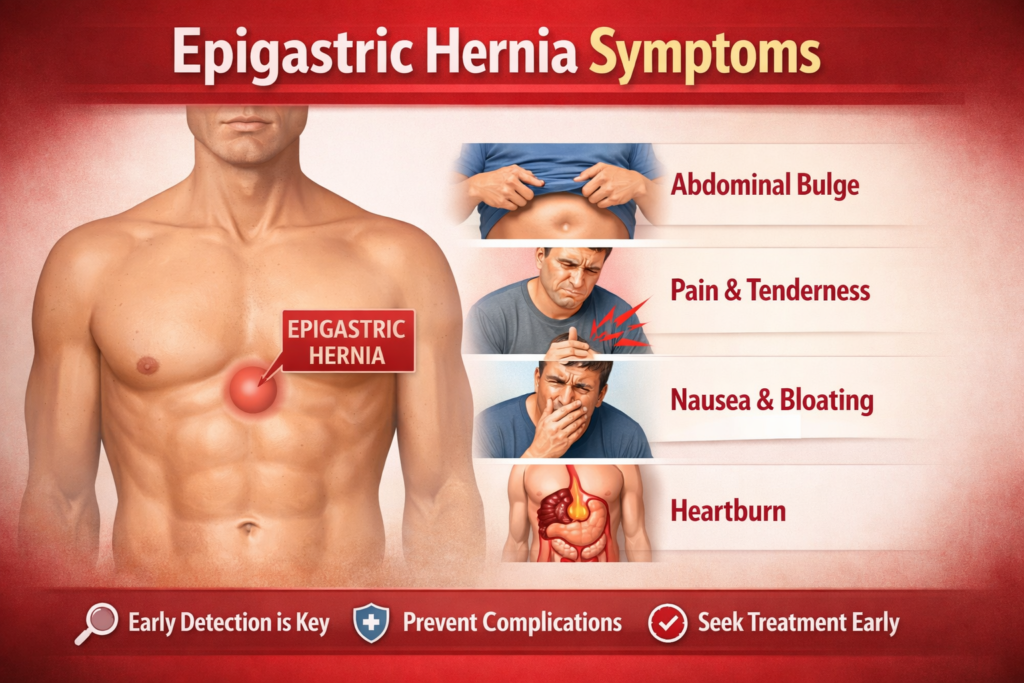
A small lump above your belly button might seem harmless , but it could be an epigastric hernia. Many people ignore early symptoms because they are mild or come and go.
However, without treatment, the condition can worsen and lead to complications.
Here are the key epigastric hernia symptoms you should watch for.
Quick List: Epigastric Hernia Symptoms
- Small lump in the upper abdomen
- Pain while coughing, lifting, or bending
- Discomfort after eating
- Burning or tenderness over the bulge
- Symptoms that come and go
- Feeling of pressure or heaviness
- Gradually worsening pain
What Does an Epigastric Hernia Feel Like?
Epigastric hernia symptoms can vary. Some people feel only mild discomfort, while others experience noticeable pain.
Most patients describe:
- A pulling sensation
- A feeling of pressure in the upper abdomen
- Discomfort that worsens with activity
Common Epigastric Hernia Symptoms
1. Small Lump or Bulge in the Upper Abdomen
- Appears between the chest and belly button
- Becomes more visible when standing or straining
- May disappear when lying down
This is usually the first and most noticeable sign.
2. Pain or Discomfort in the Upper Abdomen
- Dull ache or sharp pain
- Worse during lifting, coughing, or bending
- Improves with rest
3. Pain or Pressure After Eating
- Feeling of fullness
- Increased discomfort after meals
- Pressure in the upper abdomen
Happens due to increased abdominal pressure.
4. Burning or Tender Sensation
- Mild burning feeling over the bulge
- Area may feel sore when touched
- Tight clothing can worsen discomfort
5. Symptoms That Come and Go
- Pain is not constant
- Bulge appears only during activity
- Symptoms gradually worsen over time
This is why many people delay treatment.
Less Common Symptoms
In some cases, you may also notice:
- Nausea
- Bloating
- Tightness in the upper abdomen
These symptoms are more likely if the hernia becomes larger.
When to See a Doctor Immediately
Seek urgent medical care if you experience:
- Sudden severe abdominal pain
- Nausea or vomiting
- Redness or warmth over the bulge
- A bulge that becomes hard or cannot be pushed back
These may be signs of strangulated hernia, a serious condition requiring emergency treatment.
Can Epigastric Hernia Symptoms Get Worse?
Yes. Without treatment:
- The hernia may increase in size
- Pain can become more frequent
- Daily activities may become difficult
Epigastric hernias do not heal on their own.
How Is an Epigastric Hernia Diagnosed?
Doctors usually diagnose it through:
- Physical examination
- Discussion of symptoms
- Imaging tests (ultrasound or CT scan) if needed
What Can Be Mistaken for an Epigastric Hernia?
Some conditions may look similar, including:
- Lipoma (fatty lump)
- Muscle strain
- Acid reflux or gastritis
- Diastasis recti
- Abdominal wall cysts
A proper medical evaluation is important for accurate diagnosis.
Final Thoughts
Epigastric hernia symptoms often start small but should not be ignored.
If you notice a lump in the upper abdomen or persistent discomfort, early diagnosis can help prevent complications and make treatment easier.
FAQs: Epigastric Hernia Symptoms
1. How do you diagnose an epigastric hernia?
An epigastric hernia is usually diagnosed through a physical examination. A doctor checks for a visible bulge in the upper abdomen and may ask you to cough or strain. In some cases, imaging tests like an ultrasound or CT scan are used to confirm the diagnosis.
2. Can an epigastric hernia heal itself?
No, an epigastric hernia does not heal on its own. Over time, it may increase in size and cause more noticeable symptoms. Medical evaluation is recommended to prevent complications.
3. What are the 5 warning signs of a hernia?
The most common warning signs include:
- A visible lump or bulge in the abdomen
- Pain or discomfort during lifting or straining
- A feeling of pressure or heaviness
- Burning or aching sensation at the site
- Gradually worsening pain
4. What is mistaken for an epigastric hernia?
Several conditions can mimic an epigastric hernia, including lipoma (fatty lump), muscle strain, gastritis, diastasis recti, and abdominal wall cysts. A proper medical examination helps confirm the exact cause.
5. How is epigastric hernia repair done?
Epigastric hernia repair is performed through surgery. The procedure involves pushing the protruding tissue back into place and strengthening the abdominal wall, often using stitches or a surgical mesh. It can be done as open surgery or laparoscopic (minimally invasive) surgery.
6. Is an Epigastric Hernia Dangerous?
Most epigastric hernias are not immediately dangerous, but they can become serious if untreated. Complications like incarceration or strangulation can occur, which require urgent medical care.
7. Can an Epigastric Hernia Cause Shortness of Breath?
Epigastric hernias usually do not directly cause shortness of breath. However, large hernias or discomfort in the upper abdomen may create a feeling of pressure that makes deep breathing uncomfortable.
8. Epigastric Hernia Symptoms in Women
Symptoms in women are generally similar, including:
- Upper abdominal lump
- Pain or discomfort
- Symptoms worsening with activity
Hormonal changes or pregnancy may sometimes make symptoms more noticeable.
-
 Can You Live Without a Colon
 -
 Is Stomach Cancer Hereditary
 -
 Difference Between Weight Loss and Fat Loss
 -
 Can I Go Back to Work 2 Weeks After a Hysterectomy?
 -
 why am i bleeding 10 years after a hysterectomy
 -
 Pain in Right Side 2 Years After Gallbladder Removal
 -
 Bariatric Surgery for GERD
 -
 Does Diarrhea Cause Weight Loss