Digestive Health Institute
by Dr. Muffi
Digestive Health Institute
by Dr. Muffi
Endoscopic-Gastric Balloon
Process | Dietary Requirements | Ideal Patients
What Is a Gastric Balloon?
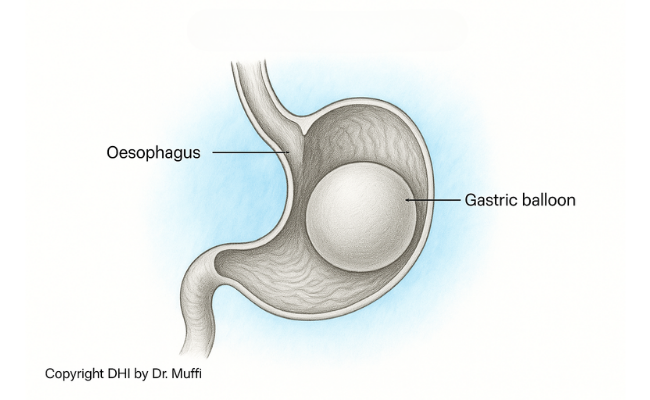
The Gastric Balloon is a non-surgical, temporary, and reversible endoscopic weight-loss procedure. A soft silicone balloon is placed inside the stomach and then filled with a sterile saline solution. The inflated balloon occupies significant space in the stomach, promoting early and sustained satiety (fullness). This mechanism helps patients naturally reduce food intake, leading to gradual weight loss when combined with necessary dietary and lifestyle modifications.
Who Is It Recommended For?
This procedure is ideal for individuals who are:
- Slightly overweight, with a BMI between 27 and 30
- Looking to lose 10–15 kilograms
- Not candidates for surgery or prefer a non-surgical option
- Motivated to follow a structured lifestyle, diet, and fitness plan
Key Features of the Procedure
- Minimally invasive: No cuts, no scars, no hospital stay
- Reversible: The balloon can be removed anytime if needed
- Adjustable (for 1-year balloons): Can be refilled or modified endoscopically for comfort and effectiveness
- Swallowable balloons available: Some advanced balloon types do not require endoscopy for removal, offering added convenience
Nutrition Care Plan for Pre- and Post-Bariatric Procedure
Before the procedure: Follow a 4–5 day liquid diet to prep your digestive system.
After the procedure:
- Week 1: Liquid diet
- Weeks 2–3: Soft or pureed foods
- Week 4+: Gradually reintroduce healthy solids
Avoid fatty, sugary, and carbonated items to reduce discomfort and support healing.
Who is the ideal candidate for the Gastric Balloon procedure?
The procedure is generally suitable for patients who are struggling with obesity but do not qualify for traditional bariatric surgery or prefer a non-surgical option. It is most effective for those committed to significant, long-term changes in diet and activity.
How much weight can I expect to lose with a Gastric Balloon?
While results vary, patients typically lose a significant percentage of their excess body weight, often achieving between 10% to 15% of their total body weight loss. Success is highly dependent on adherence to the prescribed nutrition and lifestyle program monitored by your care team in Mumbai.
Is the Gastric Balloon permanent, and how long does it stay in the stomach?
The gastric balloon is designed as a temporary intervention. Depending on the type of balloon used, it remains in the stomach for 4 to 12 months. After this period, the balloon is removed via a similar non-surgical endoscopic procedure.
What are the main advantages of a non-surgical weight loss procedure like the Gastric Balloon?
The primary advantages are the lack of permanent anatomical changes, shorter recovery time, and the fact that it is reversible. It provides a critical tool to help patients start their weight-loss journey and establish healthy habits.