

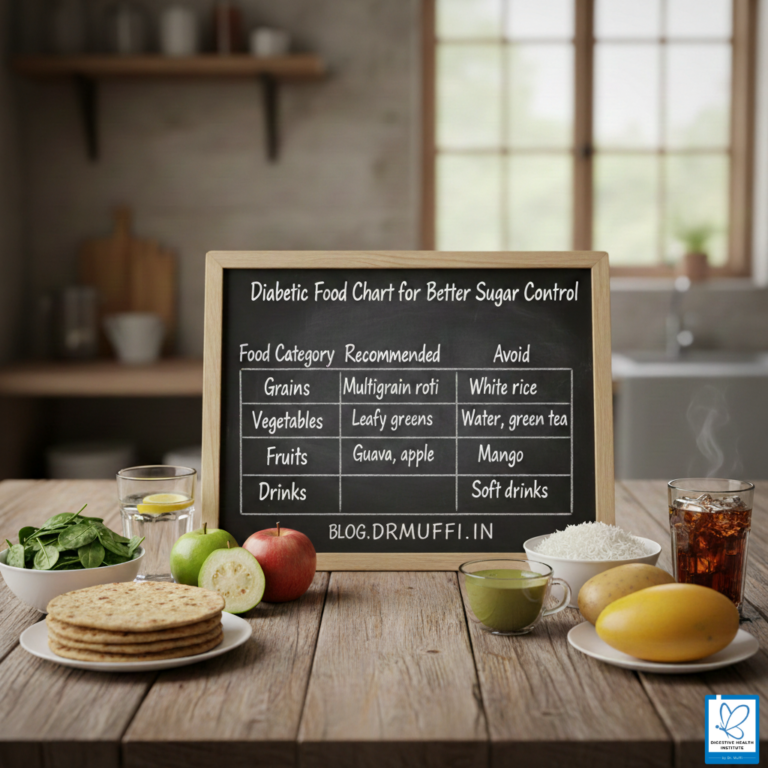
Managing diabetes starts with the right diet. A well-planned diabetic food chart helps control blood sugar levels, prevents complications, and improves overall health.
This guide provides a simple sugar patient diet chart, explains which vegetables diabetics should avoid, and offers an Indian-friendly meal plan for daily use.
A structured diabetic food chart helps to:
For sugar patients, what you eat and when you eat matters as much as medication.
Early Morning
Warm water with soaked fenugreek (methi) seeds
5–6 soaked almonds or walnuts
Breakfast
Vegetable oats / multigrain dosa
Boiled eggs or paneer
Unsweetened green tea
Mid-Morning Snack
One low-GI fruit (guava, apple, pear)
Coconut water (without malai)
Lunch
1–2 multigrain rotis OR small portion of brown rice
Dal or grilled fish/chicken
Cooked vegetables (low-carb)
Raw salad (cucumber, carrot, leafy greens)
Evening Snack
Roasted chana or sprouts
Green tea / lemon water
Dinner (Light & Early)
Vegetable soup or sautéed vegetables
Paneer / tofu / grilled chicken
Avoid rice at night
Bedtime (if needed)
Haldi milk with low-fat milk (no sugar)
Low-Glycemic Vegetables
Protein-Rich Foods
Healthy Fats
Not all vegetables are safe for sugar patients. Some cause rapid blood sugar spikes.
-> Tip: These vegetables are high in starch and should be eaten in small portions only, not daily.

Yes, but in controlled portions:
Avoid rice at night
A proper diabetic food chart does not mean starvation. It means smart food choices, portion control, and consistency. By avoiding high-starch vegetables and following a balanced sugar patient diet chart, blood sugar can be effectively managed.
Always personalize your diet based on your sugar levels and medical advice.