Digestive Health Institute
by Dr. Muffi
Digestive Health Institute
by Dr. Muffi
Cholecystectomy (Gallbladder Surgery)
Process | Advantages | Precautions
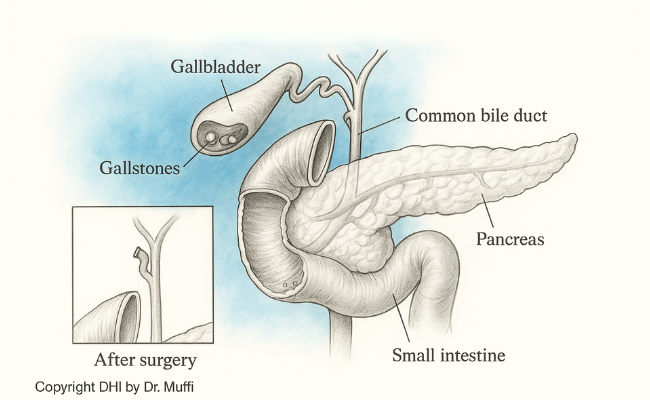
What Is the Gallbladder?
What is Gallbladder Disease? The gallbladder is a small organ located beneath the liver that stores bile—a fluid produced by the liver that helps digest fats. Problems arise when this bile hardens into crystals and then stones (Cholelithiasis), which can block the normal flow of bile, causing intense pain, nausea, and potentially serious infection (Cholecystitis).
What Is Cholecystectomy?
Cholecystectomy is the surgical removal of the gallbladder. It’s the most effective and permanent solution for problems caused by gallstones or gallbladder inflammation.
Who is it recommended for:
You may be recommended for gallbladder removal if you have:
- Gallstones causing pain (especially after eating)
- Inflammation or infection of the gallbladder (cholecystitis)
- Nausea, bloating, or indigestion from gallbladder dysfunction
- Stones blocking bile ducts, risking liver or pancreas problems
Key Features:
Laparoscopic and robotic-assisted cholecystectomy, offering:
- Small incisions (keyhole surgery)
- Faster healing and less pain
- Minimal scarring
- Short hospital stay (often same-day discharge)
- Quick return to normal activities
What are the main risk factors and causes of gallstones?
While the exact cause is often unclear, key risk factors for gallstones include obesity, rapid weight loss, hormonal factors that make women more susceptible, age over 40, a family history of gallbladder disease, and certain blood disorders.
What is a Laparoscopic Cholecystectomy and how long is the recovery?
Laparoscopic Cholecystectomy is the standard, minimally invasive procedure for gallbladder removal. The surgery uses small incisions, leading to discharge within 24 hours for most patients, and a gallbladder surgery recovery time of about one week for a return to normal, light activities.
Can a person live a normal life without their gallbladder?
Absolutely. Once the gallbladder is removed, bile flows directly from the liver to the small intestine. The body adjusts quickly, and most people experience no long-term dietary restrictions or changes in their lifestyle after gallbladder removal surgery.
What are the emergency warning signs of a severe gallbladder attack?
Seek immediate medical attention if you experience severe, sudden pain in the upper right abdomen or middle abdomen that lasts more than five hours, along with fever, chills, or yellowing of the skin (jaundice).