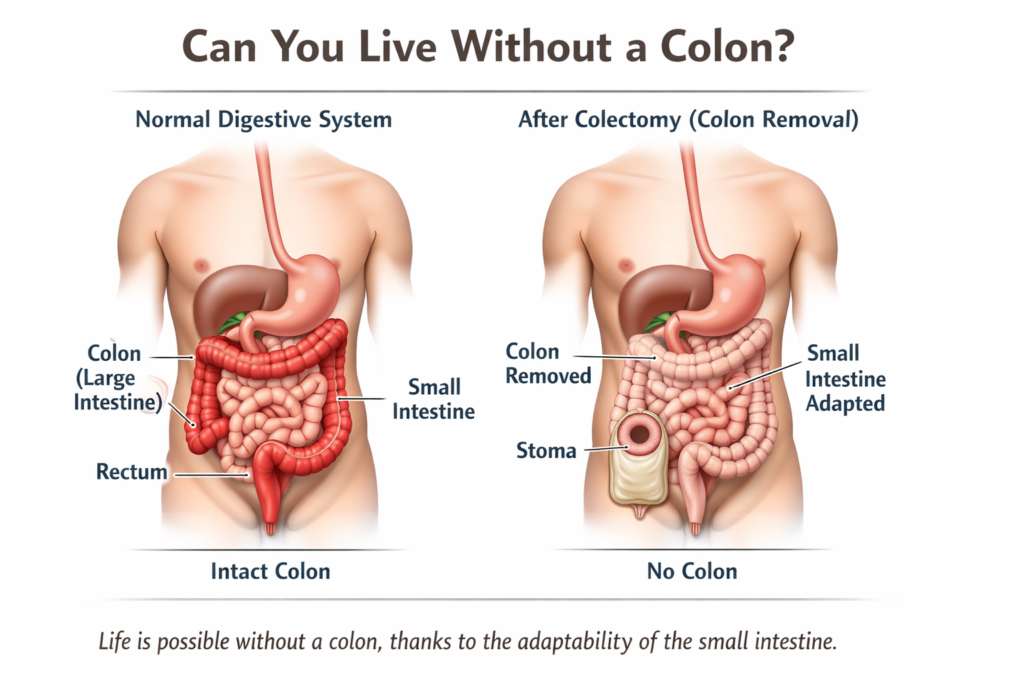
Yes, you can live without a colon, but your life will change in important ways.
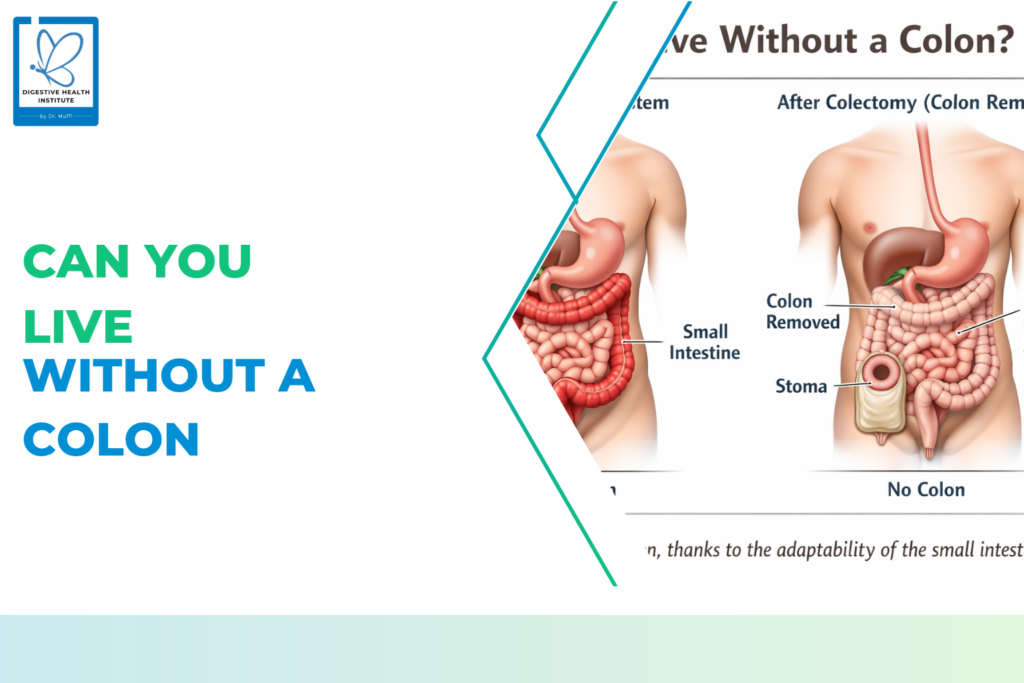
The colon (large intestine) plays a key role in absorbing water and forming stool, but it is not essential for survival. Many people live healthy lives after colon removal surgery, medically known as a colectomy
After colon removal, the small intestine takes over digestion, but bowel movements become more frequent and watery. Most people can still live a normal life with proper care.
Doctors recommend colon removal in serious conditions like:
Depending on the condition, surgery may include:
1. Partial Colectomy
Only part of the colon is removed.
2. Total Colectomy
Entire colon is removed.
3. Proctocolectomy
Colon + rectum removed (more complex)
Life without a colon is different, but manageable.
Common Changes:
Long-Term Adaptation:
Not always.
Some patients may need a colostomy or ileostomy, where waste exits into a bag outside the body.
Diet plays a major role in recovery.
Recommended:
Avoid:
Like any major surgery, risks include:
Always follow medical advice and regular follow-ups.
Life expectancy after colon removal depends on the underlying condition, but many people live a full and healthy life with proper care.
For example:
Yes, most people can:
The key is:
Proper diet + hydration + medical follow-up
Consult a specialist if you experience:
At Digestive Health Institute (DHI), advanced gastrointestinal surgeries are performed using minimally invasive techniques, improving recovery and outcomes.
Can a person survive without a colon?
Yes, a person can survive without a colon. The small intestine adapts to handle digestion, though bowel habits change.
Is life difficult after colon removal?
Initially, it can be challenging, but most people adapt and live a normal life over time.
How long does it take to recover from colon surgery?
Recovery usually takes 4–8 weeks, depending on the type of surgery.
Do you always need a bag after colon removal?
No, many patients do not need a permanent colostomy bag.