Digestive Health Institute
by Dr. Muffi

Digestive Health Institute
by Dr. Muffi
Can I Go Back to Work 2 Weeks After a Hysterectomy?
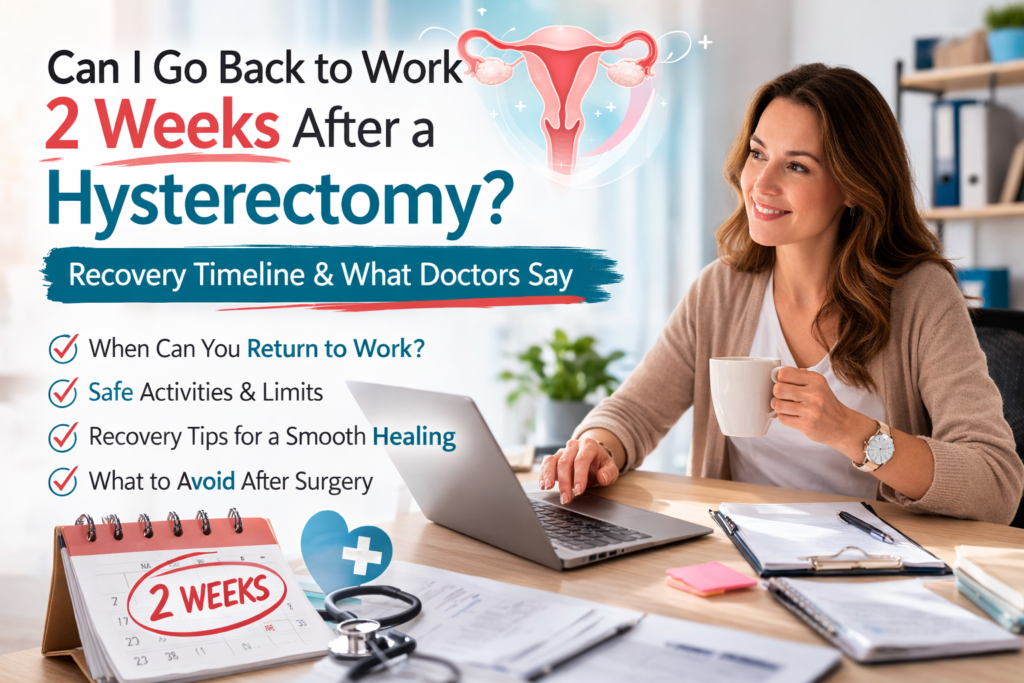
Many women ask this question during recovery: “Can I go back to work 2 weeks after a hysterectomy?”
The short answer is sometimes, but it depends on the type of surgery and the nature of your job. Some women with desk-based jobs and minimally invasive hysterectomy procedures may return to light work after two weeks. However, most doctors recommend 3 to 6 weeks of recovery before returning to regular work activities.
Because a hysterectomy involves the removal of the uterus, the body needs time to heal internally even if the external wounds appear small.
Quick Answer
You may be able to return to work 2 weeks after a hysterectomy if:
Your surgery was laparoscopic or vaginal
Your job is sedentary or desk-based
You are not experiencing pain, bleeding, or fatigue
Your doctor has cleared you to return
For physically demanding jobs, doctors usually recommend waiting 6–8 weeks.
How Long Does It Take to Recover from a Hysterectomy?
Recovery time depends on the type of hysterectomy performed.
Abdominal Hysterectomy
This procedure requires a larger incision in the abdomen.
Typical recovery timeline:
Hospital stay: 2–3 days
Return to normal activity: 6–8 weeks
Return to work: usually 6 weeks or more
Returning to work after only two weeks is generally not recommended.
Laparoscopic Hysterectomy
This minimally invasive procedure uses small incisions and a camera.
Typical recovery timeline:
Hospital stay: same day or overnight
Recovery time: about 3–4 weeks
Some patients may return to light desk work after 2 weeks
However, strenuous activity should still be avoided.
Vaginal Hysterectomy
In this approach, the uterus is removed through the vagina without external abdominal incisions.
Typical recovery timeline:
Recovery: 3–4 weeks
Light work may be possible after 2–3 weeks
But lifting heavy objects or standing for long hours should still be avoided.
What Happens If You Return to Work Too Soon?
Going back to work before your body has healed can cause complications.
Possible problems include:
Increased pelvic pain
Vaginal bleeding
Fatigue or weakness
Slower healing of internal tissues
Risk of infection
Even if you feel better externally, internal healing continues for several weeks after surgery.
Types of Jobs That May Require More Recovery Time
The type of work you do plays a big role in when you can safely return.
Jobs that may require longer recovery include:
Healthcare workers
Retail staff
Construction workers
Factory or warehouse workers
Jobs that require lifting or prolonged standing
These roles often require 4 to 8 weeks of recovery before returning.
Signs You May Not Be Ready to Return to Work
If you plan to return to work two weeks after surgery, watch for warning signs that your body still needs rest.
These include:
Persistent pelvic pain
Vaginal bleeding or discharge
Extreme fatigue
Swelling or redness around incisions
Fever or signs of infection
If you notice any of these symptoms, you should contact your doctor immediately.
Tips for Returning to Work After a Hysterectomy
If your doctor allows you to go back to work after two weeks, taking a gradual approach can help prevent complications.
Helpful recovery tips include:
Start with shorter work hours
Part-time work or remote work can make the transition easier.
Avoid heavy lifting
Most doctors recommend not lifting anything heavier than 4–5 kg for several weeks.
Take frequent breaks
Standing or sitting for long periods can increase pelvic pressure.
Stay hydrated and eat well
Proper nutrition supports healing.
Listen to your body
If you feel pain or fatigue, rest and reduce activity.
When Should You See Your Doctor?
You should attend your post-surgery follow-up appointment before returning to work. During this visit, your doctor will check:
Incision healing
Internal recovery
Signs of complications
Your doctor can provide a personalized recovery timeline based on your surgery and overall health.
Final Thoughts
Returning to work two weeks after a hysterectomy may be possible for some women, particularly if the surgery was minimally invasive and the job is not physically demanding.
However, many patients need three to six weeks or longer before they can safely resume normal work activities.
The most important factor is allowing your body enough time to heal and following your doctor’s advice to avoid complications and ensure a smooth recovery.
FAQs: Can I Go Back to Work 2 Weeks After a Hysterectomy?
1. What should I be doing 2 weeks after a hysterectomy?
Two weeks after a hysterectomy, most patients should focus on gentle recovery activities. Light walking, short daily movements, and basic self-care are usually encouraged to improve circulation and prevent stiffness. However, heavy lifting, strenuous exercise, and intense household work should still be avoided. It is important to listen to your body and follow your doctor’s recovery instructions.
2. How far can you walk 2 weeks after a hysterectomy?
Most women can safely walk short distances several times a day two weeks after surgery. Gentle walking helps improve blood circulation and supports healing. However, long walks or strenuous activity should be avoided until your doctor confirms that your body has recovered enough for increased physical activity.
3. How long should you stay home from work after a hysterectomy?
The recommended time off work after a hysterectomy depends on the type of surgery and the nature of your job. Many patients return to desk-based work after 2–4 weeks, while physically demanding jobs may require 6–8 weeks of recovery. Your doctor will advise when it is safe for you to resume work.
4. When can I bend over after a hysterectomy?
Bending over should be limited during the early recovery period after surgery. Many doctors recommend avoiding repeated bending for about 4–6 weeks, especially after an abdominal hysterectomy. Gentle movements may be allowed earlier, but it is best to avoid sudden or deep bending until your doctor confirms it is safe.
5. What is the fastest way to recover from a hysterectomy?
The fastest way to recover from a hysterectomy is to follow your doctor’s post-surgery guidelines. This usually includes getting enough rest, walking gently each day, eating a healthy diet, staying hydrated, and avoiding heavy lifting. Gradually increasing activity while allowing the body time to heal can help ensure a smooth and safe recovery.