
Digestive Health Institute
by Dr. Muffi
Digestive Health Institute
by Dr. Muffi
Bariatric Vitamins
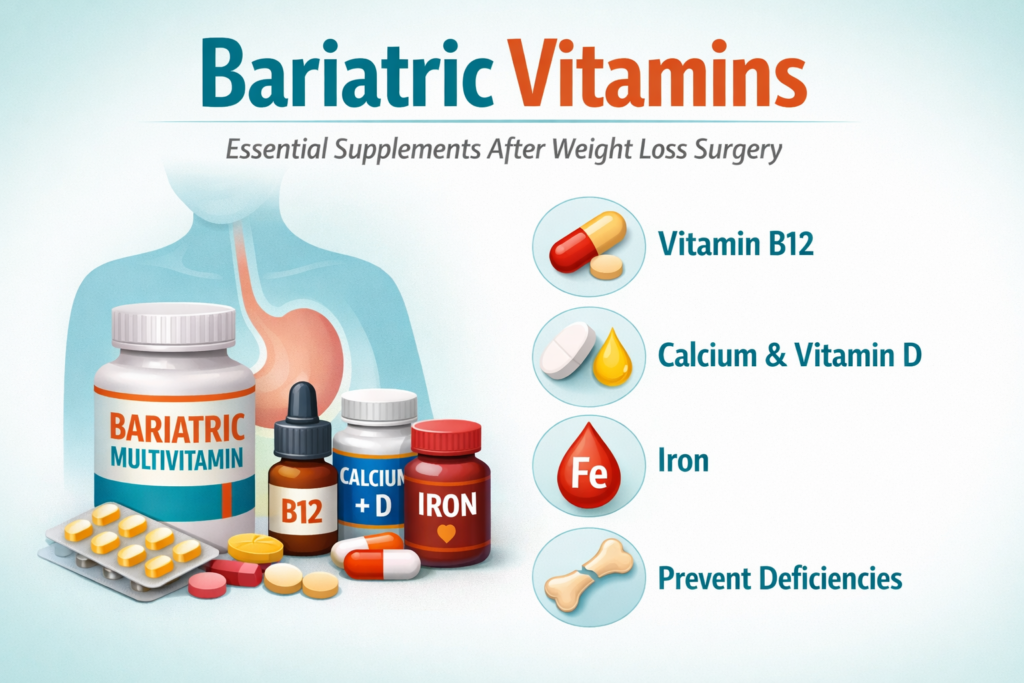
Bariatric Vitamins: Why They Are Essential After Weight Loss Surgery
If you have undergone weight loss surgery or are planning it, one thing you must understand clearly bariatric vitamins are not optional. They are lifelong essentials.
After procedures like gastric bypass or sleeve gastrectomy, your body absorbs fewer nutrients. Even if you eat healthy food, deficiencies can develop without proper supplementation.
Let’s understand everything in simple terms.
Why Are Bariatric Vitamins Important?
After bariatric surgery:
Your stomach size becomes smaller
Food intake reduces significantly
Nutrient absorption decreases (especially in bypass surgery)
Risk of vitamin and mineral deficiencies increases
Common deficiencies include:
Iron
Vitamin B12
Calcium
Vitamin D
Folate
Thiamine
Without proper supplements, this can lead to:
Fatigue
Hair loss
Anemia
Weak bones
Nerve problems
That’s why doctors strongly recommend special bariatric vitamins, not regular over-the-counter multivitamins.
What Makes Bariatric Vitamins Different?
Regular multivitamins are often not enough after weight loss surgery.
A bariatric multivitamin is specially formulated to:
- Provide higher nutrient doses
- Improve absorption
- Reduce stomach irritation
- Be easier to digest
These supplements are designed specifically for patients who have undergone procedures like gastric sleeve or gastric bypass.
Bariatric Vitamins with Iron
Iron deficiency is one of the most common problems after weight loss surgery, especially in women.
Why Iron Is Important:
Prevents anemia
Maintains energy levels
Supports oxygen transport in blood
Bariatric vitamins with iron are formulated to provide adequate iron in a form that is better absorbed and gentler on the stomach.
Patients who skip iron supplementation may experience:
Extreme tiredness
Dizziness
Hair thinning
Pale skin
Your doctor may also monitor your iron levels regularly through blood tests.
Bariatric Vitamins Chewable: Are They Better?
In the first few months after surgery, many patients prefer bariatric vitamins chewable form.
Benefits of Chewable Vitamins:
Easy to take
Better tolerance early after surgery
No swallowing difficulty
Faster absorption
Later, patients may switch to capsules or tablets depending on comfort and doctor’s advice.
Chewables are especially useful during the recovery phase when the stomach is still healing.
What About Bariatric Advantage Vitamins?
Bariatric Advantage is one of the well-known brands that manufactures supplements specifically for bariatric patients.
They offer:
Complete multivitamins
Iron supplements
Calcium citrate
Vitamin B12
Chewable and capsule options
Many surgeons recommend clinically designed brands because they follow bariatric nutritional guidelines.
However, always consult your surgeon before choosing any brand.
Common Vitamin Deficiencies After Bariatric Surgery
1️ Vitamin B12
Reduced stomach acid affects B12 absorption. Low levels may cause:
- Fatigue
- Memory problems
- Numbness or tingling
2️ Iron
Especially common in women. Deficiency may lead to anemia and weakness.
3️ Calcium & Vitamin D
Poor absorption increases the risk of bone thinning and fractures.
4️ Folate
Important for red blood cell production and overall cellular health.
Regular blood tests are essential to monitor levels.
What Happens If You Don’t Take Bariatric Vitamins?
Skipping supplements can lead to:
- Severe anemia
- Bone loss
- Hair thinning
- Chronic fatigue
- Neurological complications
- Hospitalization in extreme cases
Many patients feel fine initially, but deficiencies develop gradually. That’s why lifelong compliance is critical.
How Long Should You Take Bariatric Vitamins?
For most patients, vitamin supplementation is lifelong.
Even years after surgery, your body’s absorption remains altered. Stopping supplements can reverse health improvements and cause preventable complications.
Choosing the Right Bariatric Supplement
When selecting bariatric vitamins, look for:
- Complete multivitamin formula
- Adequate iron (if needed)
- High B12 content
- Vitamin D3
- Calcium citrate (better absorption)
- Easy-to-tolerate form (chewable, capsule, or powder)
There are several well-known bariatric-focused supplement brands available globally, including:
- Bariatric Advantage
- Bariatric Fusion
- Celebrate Vitamins
These brands offer specialized bariatric multivitamin formulations. However, the best supplement depends on your individual blood work and your surgeon’s advice.
Are Over-the-Counter Vitamins Enough?
In many cases, no.
Standard pharmacy multivitamins often:
- Contain lower doses
- Are harder to absorb
- Do not meet bariatric guidelines
A medically recommended bariatric multivitamin is usually preferred.
Monitoring After Surgery
Vitamin supplementation should always be combined with:
- Regular follow-up appointments
- Blood tests every 3–12 months
- Nutritional counselling
- Professional medical supervision
This ensures deficiencies are detected early and corrected safely.
Final Thoughts
Weight loss surgery is a powerful tool but long-term success depends on proper aftercare.
Bariatric vitamins are not just supplements. They are a lifelong commitment to protecting your health after surgery.
If you’ve undergone gastric sleeve or bypass surgery and have concerns about vitamin levels, consult your bariatric specialist for personalized guidance.
FAQs: Bariatric Vitamins
What are the best vitamins to take after bariatric surgery?
After bariatric surgery, patients need lifelong vitamin supplements to prevent deficiencies. The most important vitamins include:
- Bariatric multivitamin (specially formulated for weight loss surgery patients)
- Calcium citrate with Vitamin D to protect bone health
- Vitamin B12 for nerve and energy support
- Iron (if recommended by your doctor)
Regular blood tests and follow-up with your bariatric surgeon are important to adjust supplements as needed.
What are the best vitamins for bariatric patients?
The best vitamins for bariatric patients include a high-quality bariatric multivitamin, calcium citrate with vitamin D, vitamin B12, and iron (if recommended). These supplements help prevent nutrient deficiencies after weight loss surgery and are usually required for life.
What is a bariatric multivitamin?
A bariatric multivitamin is a specially formulated supplement designed for patients who have undergone weight loss surgery. It contains higher levels of key nutrients like vitamin B12, iron, folate, and vitamin D to support proper absorption and long-term health.
When should you start taking bariatric vitamins?
Most patients begin taking bariatric vitamins within a few days to a few weeks after surgery, as advised by their surgeon. Supplements are typically required lifelong to prevent deficiencies.
What happens if you don’t take bariatric vitamins?
Not taking bariatric vitamins can lead to serious health problems such as anemia, fatigue, hair loss, weak bones, nerve damage, and long-term nutritional deficiencies. Regular supplementation and blood tests are essential after surgery.
What is the difference between bariatric and regular vitamins?
Bariatric vitamins contain higher doses of essential nutrients and are easier to absorb compared to regular multivitamins. Standard over-the-counter vitamins may not provide enough nutrition after bariatric surgery.
How do you take bariatric vitamins correctly?
Bariatric vitamins should be taken daily as directed by your surgeon. Calcium and iron should be taken at different times for better absorption. Some patients may need chewable, liquid, or sublingual forms, especially in the early post-surgery phase.
Are bariatric vitamins safe long term?
Yes, bariatric vitamins are safe when taken as prescribed and monitored through regular blood tests. They are essential for maintaining long-term health after weight loss surgery.
-
 Can You Live Without a Colon
 -
 Is Stomach Cancer Hereditary
 -
 Difference Between Weight Loss and Fat Loss
 -
 Can I Go Back to Work 2 Weeks After a Hysterectomy?
 -
 why am i bleeding 10 years after a hysterectomy
 -
 Pain in Right Side 2 Years After Gallbladder Removal
 -
 Bariatric Surgery for GERD
 -
 Does Diarrhea Cause Weight Loss