
Digestive Health Institute
by Dr. Muffi

Digestive Health Institute
by Dr. Muffi
Adrenalectomy
Introduction | Common Conditions | Procedure
What Is an Adrenalectomy?
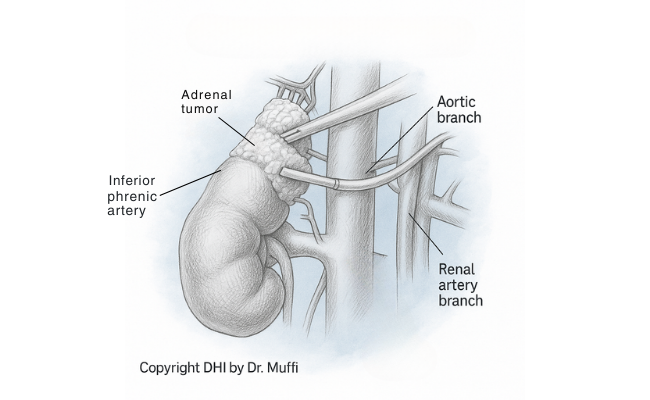
Adrenalectomy is the surgical procedure to remove one or both adrenal glands—small, triangular glands that sit above each kidney. These glands produce key hormones such as cortisol, adrenaline, and aldosterone, which influence blood pressure, metabolism, and the body’s stress response. Though not commonly required, adrenal gland surgery becomes an essential step in managing certain hormone-related or metabolic conditions, particularly when a tumor or an overactive gland affects overall health or weight.
Why Might You Need This Surgery?
Sometimes, an adrenal gland makes too much hormone, which can lead to:
- Sudden weight gain
- High blood pressure
- High blood sugar or diabetes
- Muscle weakness or feeling tired all the time
- Headaches, anxiety, or fast heartbeat
This may happen because of a tumor (usually non-cancerous) in the adrenal gland. Removing the gland helps fix the hormone problem and improve your health.
How Is Adrenalectomy Performed?
Adrenalectomy is typically done using minimally invasive laparoscopic or robotic-assisted techniques, which means:
- Smaller incisions
- Less pain and faster recovery
- Shorter hospital stay (usually 1–2 days)
If only one gland is removed, the remaining gland usually takes over hormone production. In rare cases where both glands are removed, lifelong hormone replacement therapy is necessary.
What specific conditions require adrenal gland removal?
Dr. Muffi performs adrenalectomy for severe hormonal imbalances like Cushing’s Syndrome (excess cortisol), Conn’s Syndrome (excess aldosterone), Pheochromocytoma (excess adrenaline), and the surgical removal of adrenal tumors (cancerous or benign).
Is Laparoscopic Adrenalectomy considered a major surgery?
While it is a significant procedure, the use of the laparoscopic technique makes it minimally invasive compared to traditional open surgery. This approach reduces trauma to the body, making the procedure much safer and promoting rapid healing.
What is the typical recovery time after adrenal gland surgery?
Patients undergoing laparoscopic adrenalectomy typically stay in the hospital for only 1 to 2 nights. A return to light, non-strenuous activities is possible within the first week, with full recovery generally achieved within 2 to 3 weeks.
Will I require hormone replacement after Adrenalectomy?
It depends on the extent of the adrenal surgery. If only one gland is removed, the remaining gland often compensates fully. If both adrenal glands are removed, patients will require lifelong hormone replacement therapy to maintain a healthy and active life.