
Digestive Health Institute
by Dr. Muffi

Digestive Health Institute
by Dr. Muffi
The Bristol Stool Chart: A Simple Tool Everyone Should Know
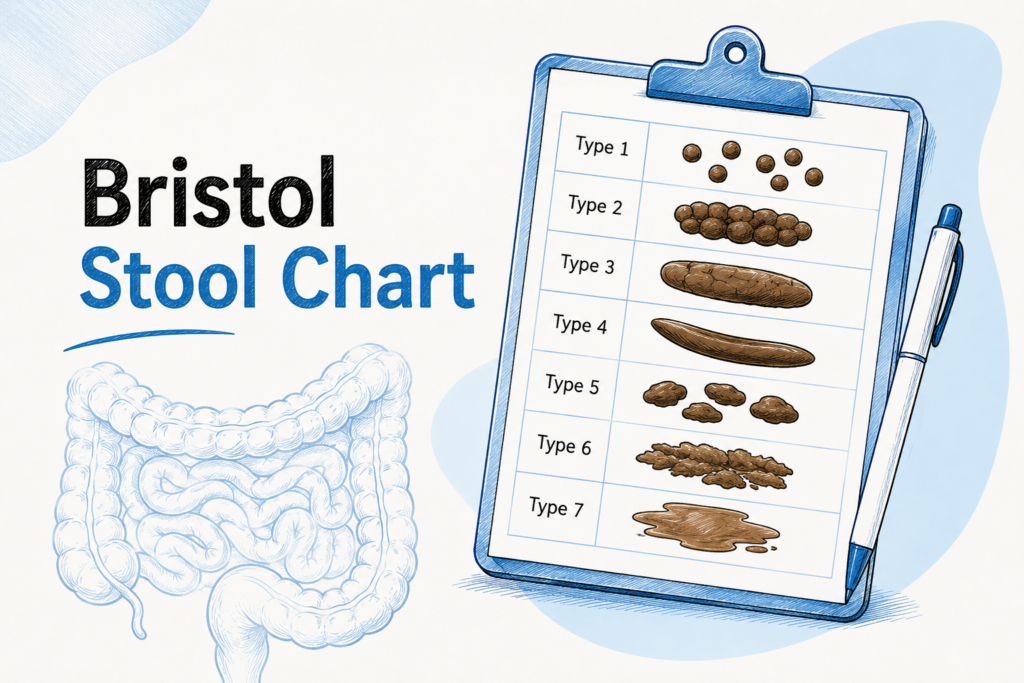
Most people don’t think much about their bowel movements until something feels off. But your stool can actually tell you a lot about your digestive health. That’s where the Bristol Stool Chart comes in, a simple,
A practical way to understand what’s happening inside your gut.
What is the Bristol Stool Chart?
The Bristol Stool Chart is a medical tool that classifies stool into seven different types, based on shape
and consistency. It helps identify whether your digestion is normal, too slow, or too fast.
Developed to make conversations about bowel habits easier, it’s widely used by healthcare professionals and can be just as useful for everyday awareness.
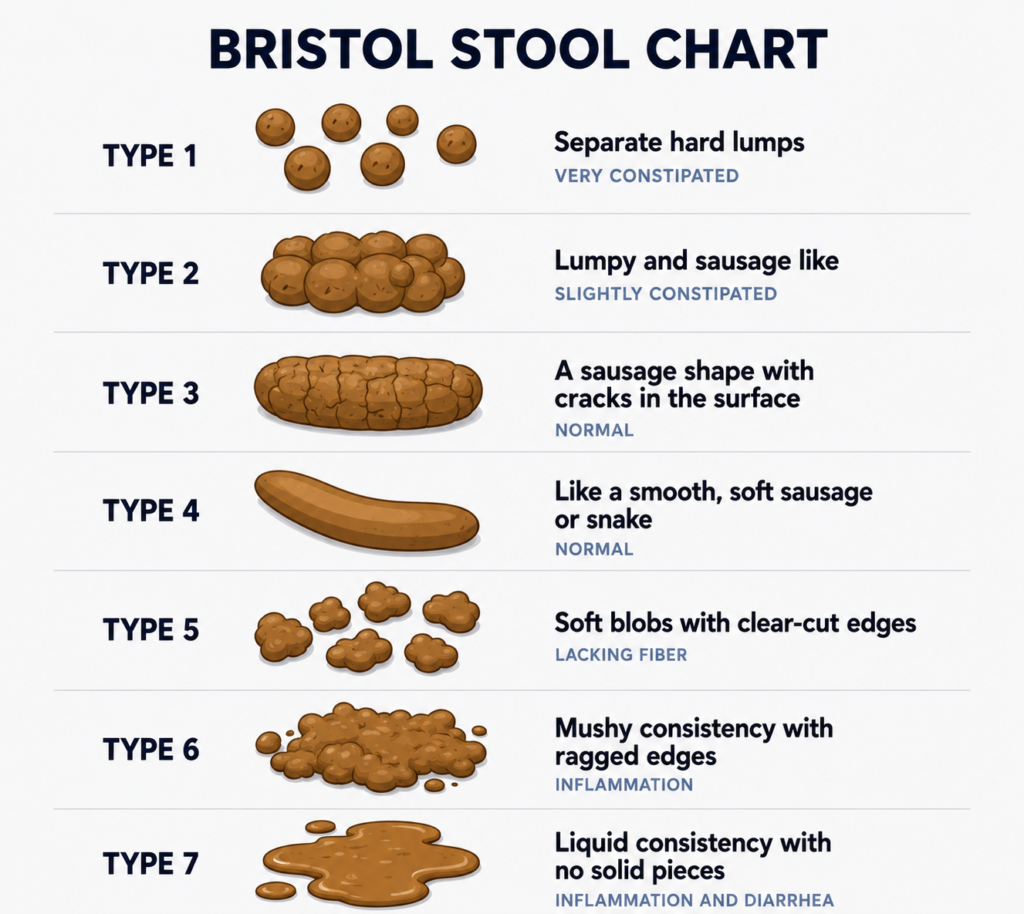
The 7 Types Explained
Type 1 & 2 – Constipation
● Hard, lumpy stools or sausage-shaped but firm
● Indicates slow movement through the gut
Type 3 & 4 – Ideal / Healthy
● Sausage-shaped with cracks (Type 3)
● Smooth and soft (Type 4)
● Easy to pass, well-formed
These are considered normal and healthy
Type 5 – Slightly Loose
● Soft blobs with clear edges
Type 6 & 7 – Diarrhoea
● Mushy or entirely liquid stools
● Suggest rapid transit through the intestines
● Can be due to infection, food intolerance, or gut irritation
Why Does It Matter?
Your stool consistency reflects how well your digestive system is functioning. Changes in your stool
The pattern can signal:
● Poor hydration
● Imbalanced diet
● Gut health issues
● Stress or lifestyle changes
Tracking it can help you catch problems early and take corrective steps
What Influences Your Stool?
Several everyday factors play a role:
● Diet: Fibre intake (fruits, vegetables, whole grains)
● Hydration: Adequate water keeps stool soft
● Physical activity: Movement supports gut motility
● Stress levels: The gut and brain are closely connected
● Medications or supplements
When Should You Be Concerned?
Occasional changes are normal. However, consider consulting a professional if you notice:
● Persistent constipation or diarrhea
● Blood in stool
● Sudden unexplained changes in bowel habits
● Abdominal pain or discomfort
Simple Tips for Healthy Bowel Movements
● Stay hydrated (1.5–2 litres daily)
● Include fibre-rich foods in your meals
● Stay physically active
● Avoid ignoring the urge to go
The Takeaway
The Bristol Stool Chart may be simple, but it’s a powerful way to understand your gut health. Paying attention to something as basic as your stool can help you make better lifestyle choices and stay one step ahead of digestive issues. Because sometimes, the simplest signs tell the most important stories about your health.
Still have questions about your digestive health? Watch our Instagram reel on the Bristol Stool Chart for a quick visual guide and follow us for more expert insights from Dr. Muffazal Lakdawala. The Digestive Health Institute.
Our Instagram is where expertise meets everyday guidance. Follow us for evidence-based tips and real
patient experiences from our clinic. 👉 @thedigestivein