
Digestive Health Institute
by Dr. Muffi

Digestive Health Institute
by Dr. Muffi
What Size of Appendix Is Dangerous? Normal vs Enlarged Appendix Explained
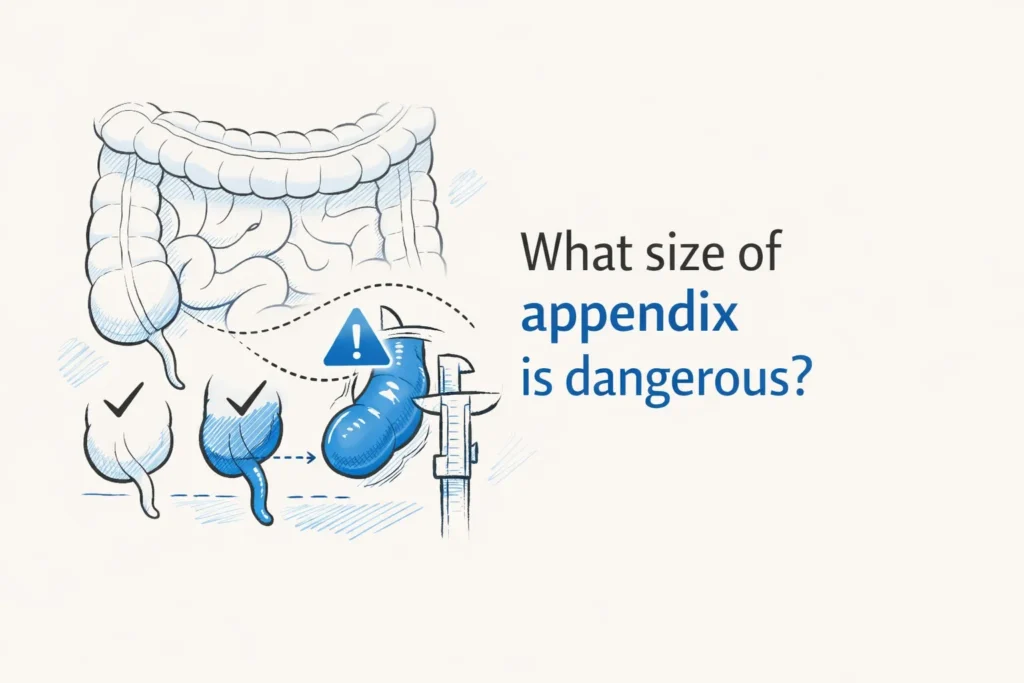
Appendicitis is one of the most common surgical emergencies, and one of the most frequent questions patients ask after a scan is: “what size of appendix is dangerous?”
When doctors evaluate appendicitis, the size of the appendix seen on ultrasound or CT scan plays a crucial role in diagnosis. However, size alone is not the only factor, symptoms and inflammation also matter.
In this detailed guide, we will explain what size of appendix is dangerous, what is considered normal, how doctors interpret imaging results, and when surgery becomes necessary.
What Is the Normal Size of the Appendix?
The appendix is a small, tube-like organ attached to the large intestine. In healthy individuals, it remains small and non-inflamed.
Normal Appendix Size
Parameter | Normal Range |
Diameter | Less than 6 mm |
Length | 5–10 cm |
Wall thickness | Thin |
If the appendix is within this range and there are no symptoms, it is considered normal.
What Size of Appendix Is Dangerous?
The key factor doctors look at is the diameter of the appendix.
Appendix Size Classification
Appendix Size | Interpretation | Risk Level |
< 6 mm | Normal | Low |
6–7 mm | Borderline | Mild concern |
7–10 mm | Inflamed (Appendicitis likely) | Moderate |
> 10 mm | Severely inflamed | High |
> 15 mm | Possible rupture/abscess | Very High |
👉 Generally, more than 6–7 mm raises suspicion, and this is where understanding what size of appendix is dangerous becomes important.
Why Does Appendix Size Increase?
The appendix enlarges due to blockage and infection.
Common Causes
Cause | Explanation |
Fecalith (stool blockage) | Most common |
Infection | Bacterial growth |
Swelling of lymph tissue | Common in younger patients |
Tumor (rare) | Obstruction |
As pressure builds, the appendix swells—leading to the stages of appendicitis.
Symptoms That Matter Along With Size
While many patients focus only on what size of appendix is dangerous, symptoms are equally important.
Key Symptoms
Symptom | Significance |
Right lower abdominal pain | Classic symptom |
Fever | Infection |
Nausea/vomiting | Digestive response |
Loss of appetite | Early sign |
Tenderness | Inflammation |
Even a slightly enlarged appendix can be dangerous if symptoms are severe.
When Is Appendix Size Considered an Emergency?
Certain sizes combined with symptoms require urgent surgery.
Emergency Indicators
Finding | Risk |
Size > 10 mm | Severe inflammation |
Size > 15 mm | Possible rupture |
Fluid around appendix | Infection spread |
Abscess formation | Complication |
These clearly indicate what size of appendix is dangerous.
Does Bigger Always Mean More Dangerous?
Not always.
Important Insight
Scenario | Interpretation |
Large size + no symptoms | May need observation |
Small size + severe pain | Still dangerous |
Borderline size + fever | Needs evaluation |
Doctors consider:
- Size
- Symptoms
- Blood tests
Stages of Appendicitis and Size Correlation
Stage | Appendix Size | Risk |
Early | 6–7 mm | Mild |
Suppurative | 7–10 mm | Moderate |
Gangrenous | 10–15 mm | High |
Perforated | >15 mm | Very High |
This explains clearly what size of appendix is dangerous at each stage.
What Happens If You Ignore an Enlarged Appendix?
Ignoring symptoms can lead to:
Complications
Complication | Description |
Rupture | Appendix bursts |
Peritonitis | Infection spreads |
Abscess | Pus collection |
Sepsis | Life-threatening |
Final Thoughts
Understanding what size of appendix is dangerous helps patients make informed decisions, especially after receiving imaging reports. While size is an important diagnostic factor, it should always be evaluated along with symptoms and clinical findings.
Early diagnosis and timely treatment can prevent complications and ensure a smooth recovery. If you experience persistent abdominal pain or have an abnormal scan report, consulting a qualified surgeon is essential.
FAQs: What Size of Appendix Is Dangerous
1. Is 7 mm appendix dangerous?
It is borderline and needs clinical evaluation.
2. Is 10 mm appendix serious?
Yes, it usually indicates appendicitis and may require surgery.
3. Can a normal-sized appendix still cause pain?
Yes, symptoms matter more than size alone.
4. What size indicates rupture?
Typically above 15 mm with other signs.
5. Should I worry about appendix size in reports?
Yes, especially if combined with symptoms.